
Auteuil-Un Passage Vouté — History & Facts
Is this a mirror — or a memory? In the delicate layers of this work, fragility emerges as both a theme and a technique, inviting the viewer to navigate a landscape that feels both familiar and elusive. Look to the left at the dappled light filtering through the arched passage. Corot’s nimble brushwork captures the interplay of shadow and illumination, leading your eye along the textured surface of the stones and lush foliage. The soft greens, combined with muted earth tones, create a serene yet haunting atmosphere that envelops the viewer.
Each stroke seems to whisper the secrets of the passage, where the interplay of light hints at stories untold. Beneath the surface, the painting evokes a poignant tension between the permanence of the stone and the ephemeral nature of the light. The contours of the archway, sturdy yet softened by the embrace of nature, speak to the fragility of existence itself. The juxtaposition of the solid structure against the fluidity of the trees symbolizes a fleeting moment where time stands still, urging us to consider what endures and what fades away. Corot painted this piece around the mid-19th century, a time when he was deeply immersed in the Barbizon school, focusing on capturing the essence of nature and everyday scenes.
His life was marked by a pursuit of tranquility in his art, echoing the Romantic ideals of the period. This work encapsulates a moment in his journey, reflecting both his personal exploration and the broader shift in the art world towards realism and impressionistic techniques.
More Artworks by Jean-Baptiste-Camille Corot
Browse all →
View of Genoa
Jean-Baptiste-Camille Corot
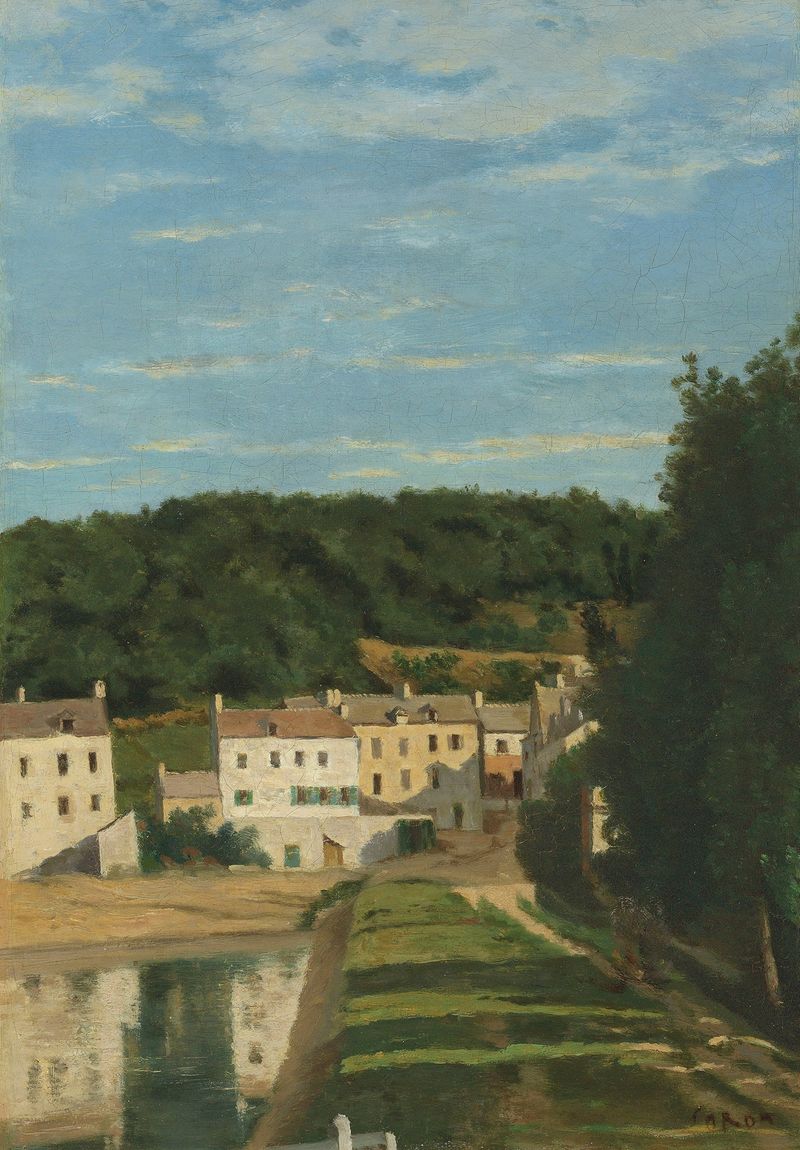
Les Maisons Cabassud À Ville D’avray
Jean-Baptiste-Camille Corot

La solitude. Souvenir de Vigen (Limousin)
Jean-Baptiste-Camille Corot
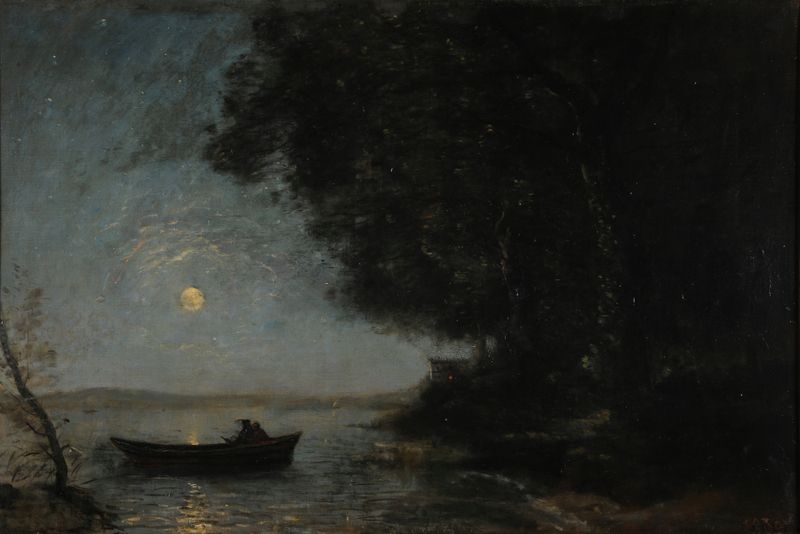
Le lac ; effet de nuit
Jean-Baptiste-Camille Corot
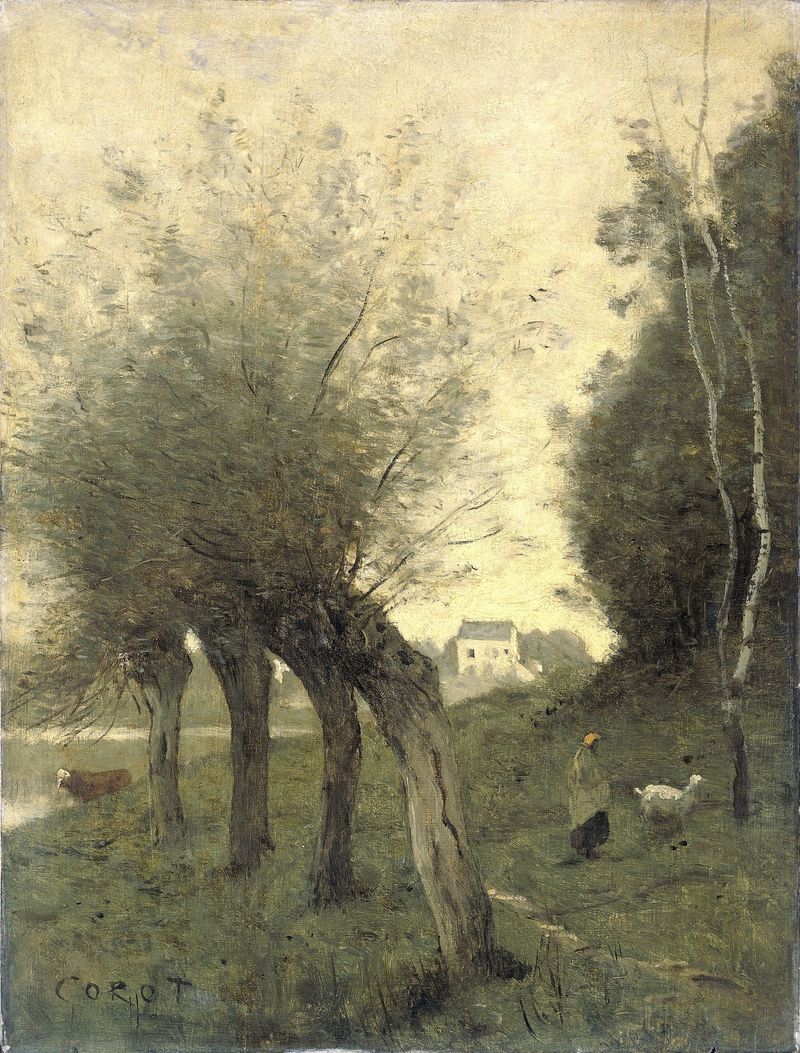
Landscape with Pollard Willows
Jean-Baptiste-Camille Corot
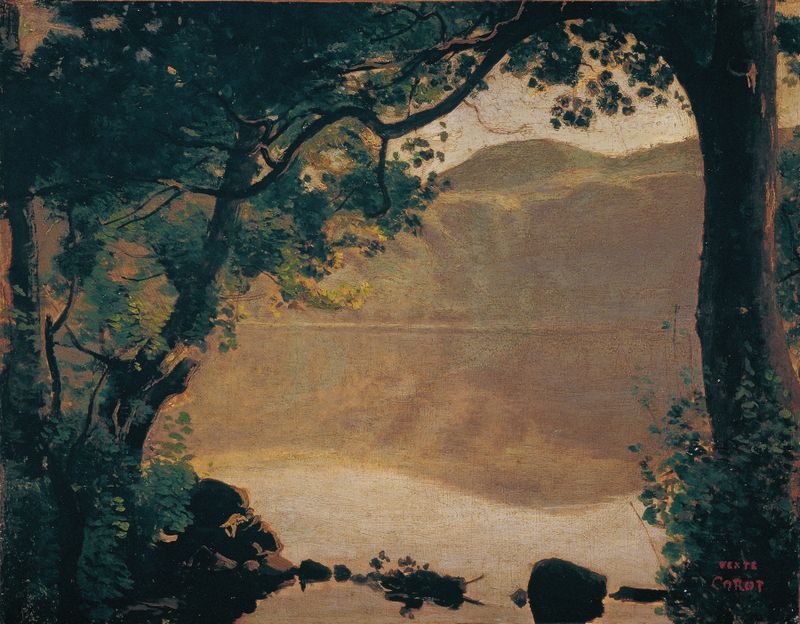
Der Nemisee
Jean-Baptiste-Camille Corot
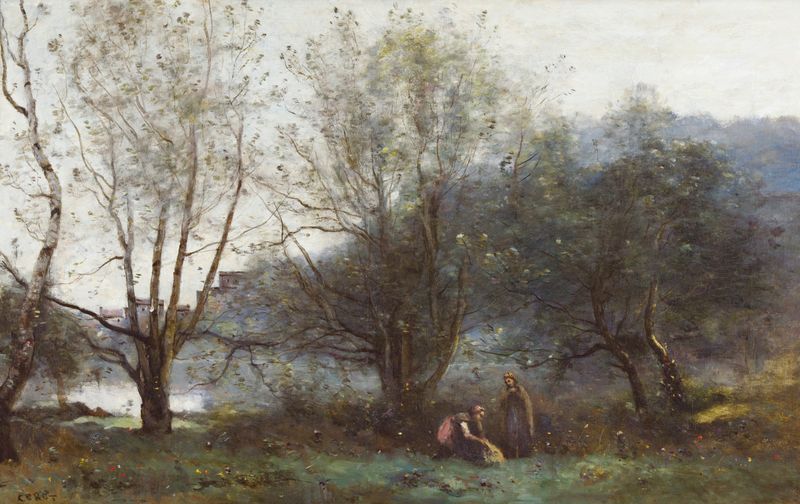
Les Étangs De Ville D’avray
Jean-Baptiste-Camille Corot
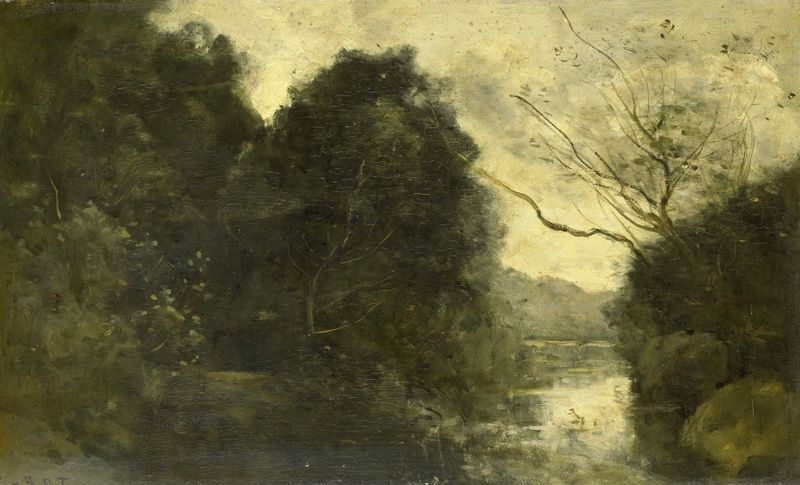
Pond in the Woods
Jean-Baptiste-Camille Corot
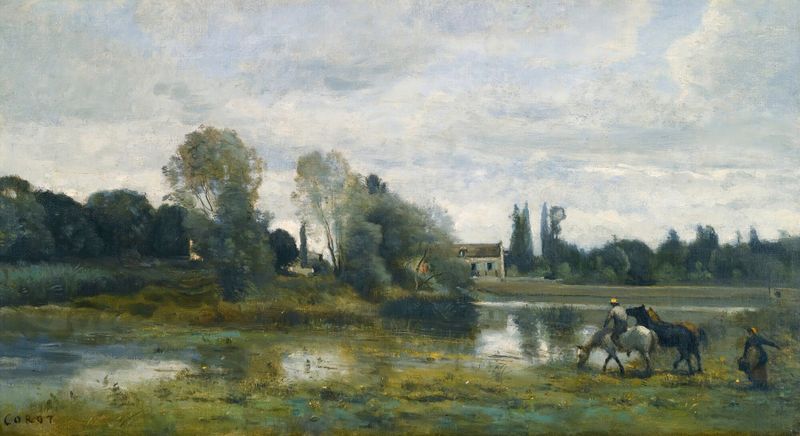
Ville D’avray; L’abreuvoir Des Chevaux
Jean-Baptiste-Camille Corot
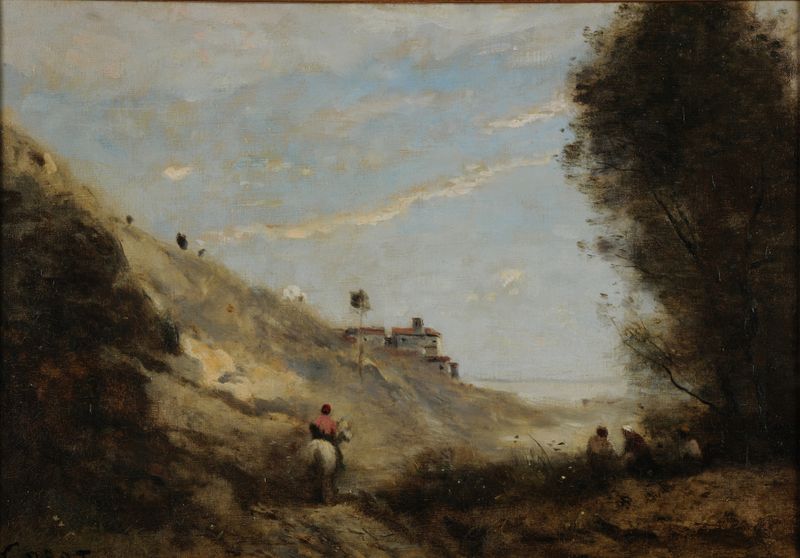
Le vallon au cavalier
Jean-Baptiste-Camille Corot





