Autumn — History & Facts
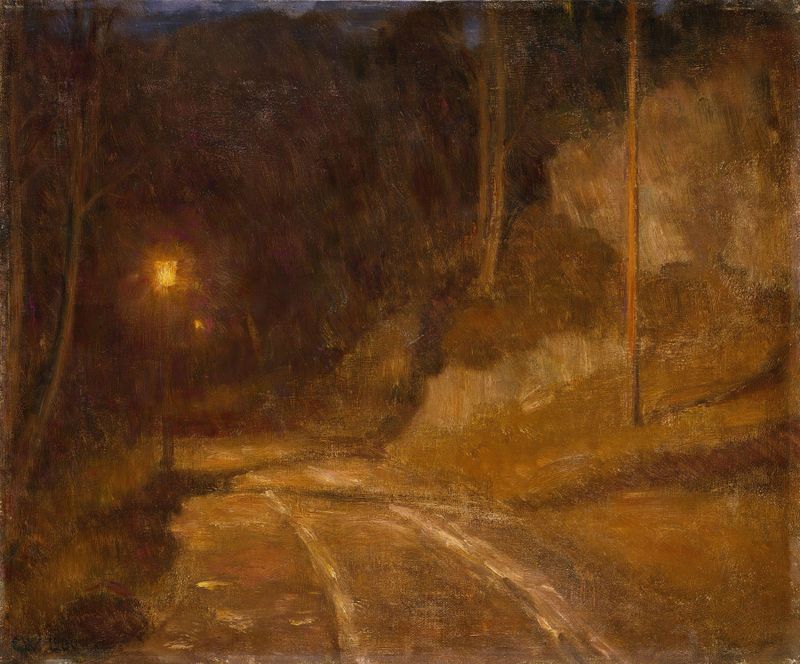
In Autumn, the delicate balance between beauty and brutality plays out across the canvas, inviting exploration of the season’s profound duality. Look to the center, where vibrant hues of orange and gold erupt in a chaotic swirl, mimicking the fierce dance of falling leaves. The artist skillfully employs thick, textured strokes, layering color upon color, as if to capture the very essence of decay intertwined with splendor. The backdrop hints at a somber landscape, muted greens and browns providing a stark contrast, emphasizing the fleeting moment of life before the inevitable chill of winter descends. The painting embodies tension, suggesting a violent struggle within nature itself.
The juxtaposition of life and death resonates deeply, as the bright colors create an illusion of warmth, while the underlying darkness evokes a sense of impending loss. Each fallen leaf, though striking, carries with it the weight of what once was, reminding viewers of the ephemeral nature of existence and the violence of change that accompanies the passage of time. Created in 1890 during a period of personal upheaval for the artist, Autumn emerged while Werenskiold grappled with shifting artistic movements throughout Europe. Immersed in the rise of symbolism and the remnants of realism, he sought to convey deeper emotional truths through his art.
The era was marked by a growing fascination with nature’s raw power, and in this work, Werenskiold expertly balances the visceral and the poetic, capturing a moment that resonates with both beauty and violence.