Autumn Fields — History & Facts
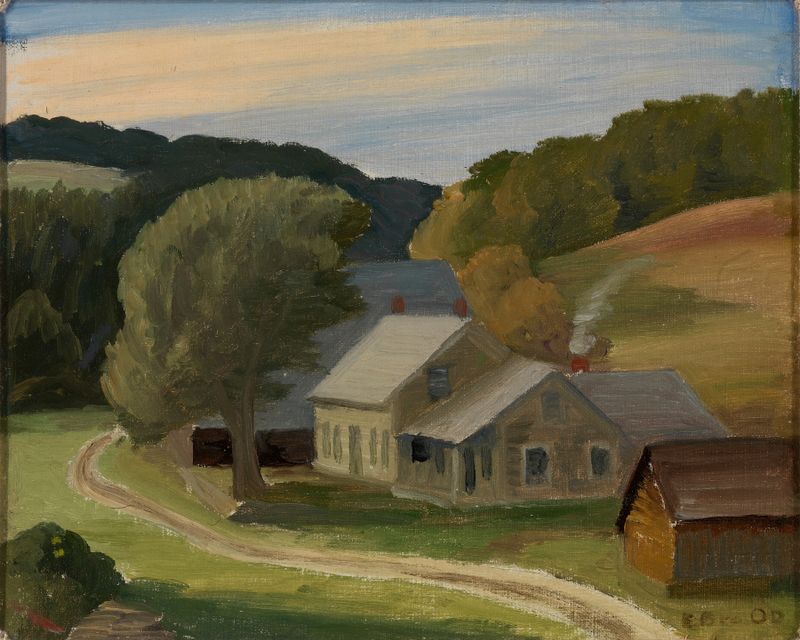
Who listens when art speaks of silence? In Edward Bruce's Autumn Fields, the unspoken whispers of nature echo the profound sense of loss that lingers in every brushstroke. Look to the center of the canvas where warm oranges and serene browns blend seamlessly, creating a tapestry of autumn’s embrace. Notice how the fields stretch toward the horizon, their gentle undulations inviting the eye to wander. The soft, diffused light bathes the scene, casting elongated shadows that hint at the day's end—the moment before dusk, rich with possibility yet tinged with melancholy. As you explore the edges, subtle details emerge: a lone tree, its leaves clinging on against the inevitable chill, symbolizes resilience amidst change.
The contrasting vibrancy of the vibrant foliage against the muted earth tones speaks to the duality of beauty and decay. Each stroke captures the tension between life and the inevitability of loss, inviting viewers to reflect on their own experiences of change and the passage of time. Between 1926 and 1934, Bruce created this piece during a period marked by personal transitions and the shifting currents of the American art scene. As modernism began to reshape artistic expression, Bruce sought to distill the essence of nature and emotion in his work.
This painting reflects not only his artistic evolution but also an introspective journey through a world increasingly aware of its fragility.