In the Cascade Mountains — History & Facts
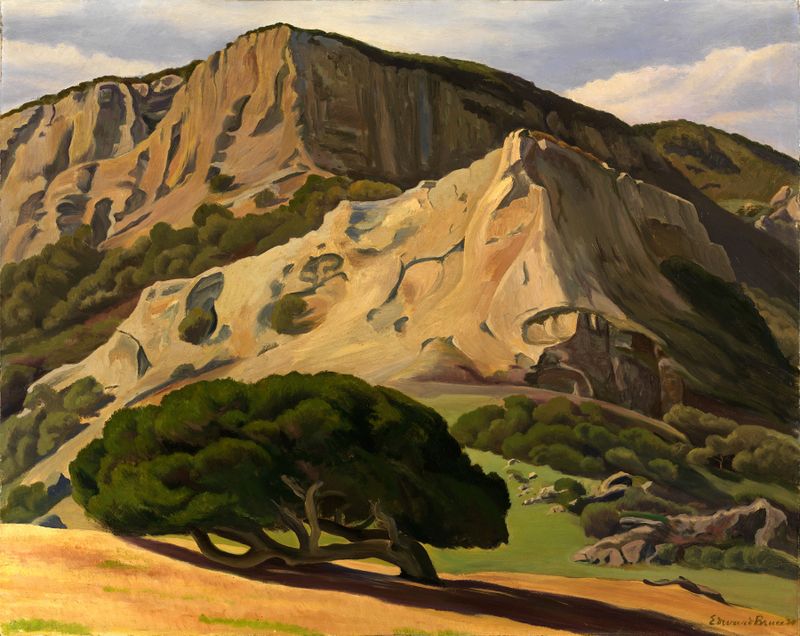
Can paint confess what words never could? In Edward Bruce's In the Cascade Mountains, the canvas becomes a silent hymn to nature's unrestrained beauty, whispering secrets that elude even the most eloquent of poets. Focus on the sweeping vista that dominates the canvas, where majestic peaks rise in a harmonious dance with the sky. The artist skillfully employs a palette of rich greens and soft blues, the brushstrokes conveying the texture of lush foliage and the tranquility of distant mountain air. Notice how the interplay of light and shadow creates an ethereal quality, as if the mountains are both solid and ephemeral, inviting you to step into a realm where nature reigns supreme. Delve deeper into the painting's emotional landscape, where the serenity of the scene masks an underlying tension.
The towering mountains symbolize both isolation and the sublime—a monumental beauty that evokes awe yet distances the viewer. Additionally, the gentle cascade of a nearby stream suggests a fleeting moment within this timeless grandeur, emphasizing the contrast between the permanence of the mountains and the transient nature of life. In 1931, Edward Bruce painted this work amid a burgeoning interest in the American landscape, reflecting a broader cultural shift towards nature as a source of inspiration. Living in a post-World War I era, the artist sought solace in the untamed wilderness, capturing a sense of yearning for connection and peace through the breathtaking scenery of the Cascade Mountains.