Bluemont Farm — History & Facts
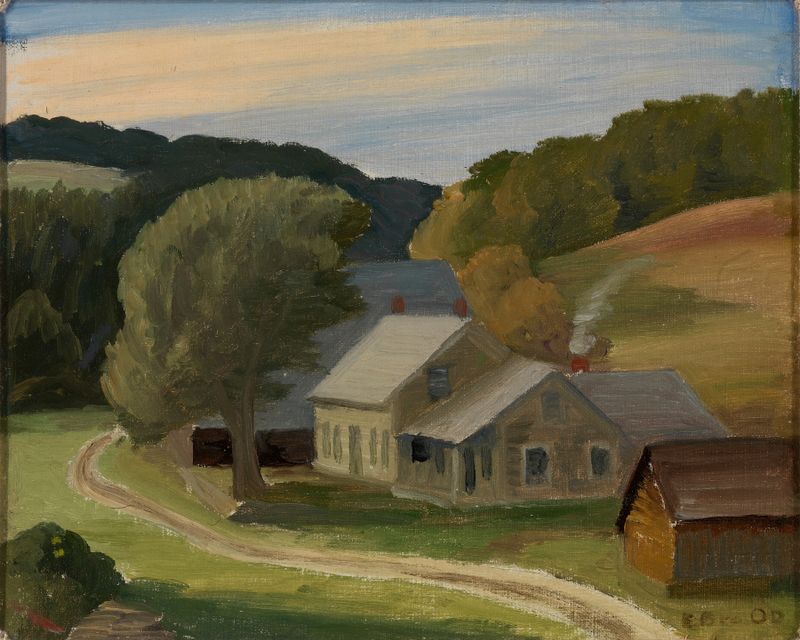
Who listens when art speaks of silence? In Bluemont Farm, the stillness becomes a character, unfolding a narrative of betrayal wrapped in the gentle embrace of nature. Focus on the tranquil expanse in the foreground, where the fields roll softly, painted in lush greens and muted browns. Notice how the light filters through the trees, casting delicate shadows that dance upon the earth. The composition’s horizon line is subtly drawn, inviting the viewer’s gaze to wander into the vastness of the landscape, yet anchoring you to the familiar intimacy of the farm.
Each brushstroke breathes life into the scene, revealing a world at once serene and haunting. Yet beneath this pastoral beauty lies a tension that speaks of hidden truths. The juxtaposition of the vibrant greenery against the oppressive, overcast sky hints at an unseen conflict—perhaps a betrayal of trust, of nature itself. The way the distant barn stands solemnly in the backdrop symbolizes the weight of unspoken secrets, suggesting that the idyllic surface belies a deeper narrative of loss or abandonment.
Every element feels like a whisper, urging the viewer to listen closely for what remains unsaid. During the years 1932 to 1937, Edward Bruce created this work amidst a tumultuous period in American history, marked by the Great Depression. As artists sought to capture the complexities of their times, Bruce found solace in rural landscapes, reflecting his own relationship with the changing world. This piece is emblematic of an era when art became a means of grappling with personal and collective struggles, blending the beauty of nature with the weight of human experience.