Oaks and Rocks–San Luis Obispo — History & Facts
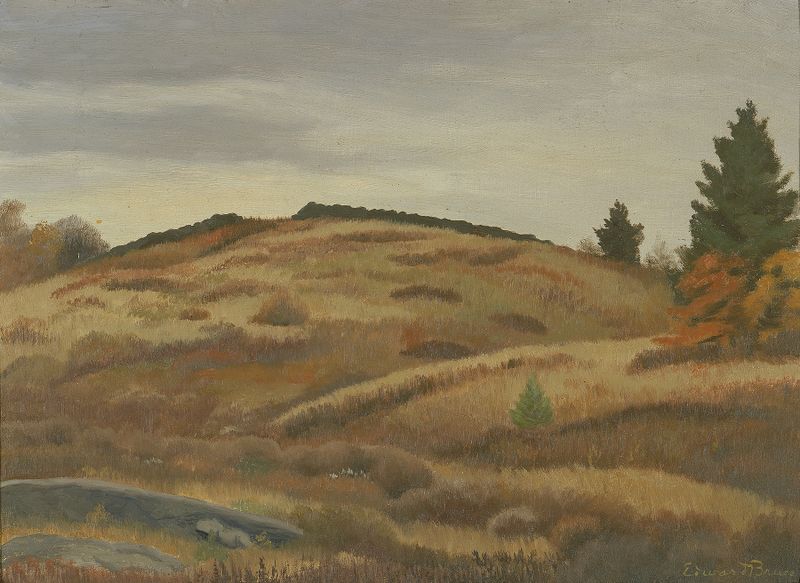
Where does light end, and longing begin? In Edward Bruce’s Oaks and Rocks–San Luis Obispo, the interplay of shadow and illumination becomes a poignant metaphor for the human experience, encapsulating the tension between the natural world and our emotional legacies. Look to the center of the canvas, where the rugged rocks emerge defiantly from a lush carpet of verdant foliage. The vibrant greens and earthy browns are punctuated by flickers of sunlight, skillfully applied with broken brushstrokes that convey movement and life. Notice how the gnarled oaks, with their sprawling branches, stretch skyward, almost as if yearning for the light that dapples through the leaves.
The composition draws the viewer's gaze to this nexus of stone and tree, a testament to nature’s enduring presence. As you delve deeper, consider the juxtaposition between the solidity of the rocks and the fluidity of the surrounding vegetation. This contrast suggests a dialogue between permanence and transience, evoking reflections on time and memory. The oaks stand as guardians of history, while the ephemeral patches of sunlight signify fleeting moments, urging contemplation of what we leave behind.
Each brushstroke captures a legacy of resilience, inviting viewers to ponder their own connections to the land and to those who walked before them. In 1930, Bruce painted this work amid the artistic revival of the American West, influenced by both realism and the burgeoning modernist movement. Residing in California, he sought to celebrate the rugged beauty of the landscape, drawing from his surroundings to craft pieces that resonate with a sense of place and identity. This painting reflects not only his personal journey but also the broader cultural shifts occurring during this transformative period in American art.