
Autumn Scene — History & Facts
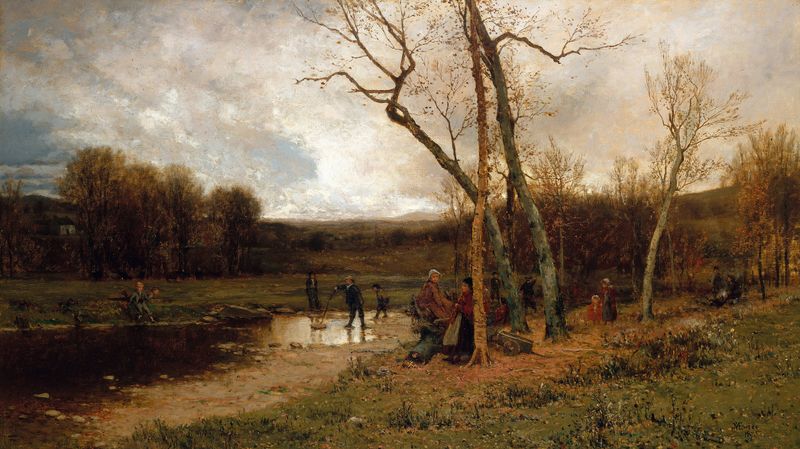
When did color learn to lie? The vibrant hues of autumn whisper secrets, yet beneath their brilliance lies an unsettling stillness, a silence echoing through the canvas. Look to the center where a river lazily winds through a landscape bathed in warm, golden light. Focus on the trees, their leaves ablaze with oranges and reds, meticulously rendered to evoke the fleeting nature of beauty. The play of light across the water creates shimmering reflections, while the gentle brushstrokes convey a sense of movement, as if the scene itself is caught in transition, teetering between the vibrancy of life and the impending quiet of winter. Delve deeper into the contrasts presented in this work: the vivid colors portraying life and richness, against the stillness that suggests an end.
The juxtaposition of the lively foliage against the placid water hints at the duality of existence; beauty and decay coexist in a delicate balance. The absence of figures evokes solitude, inviting the viewer to ponder the silence that envelops the scene, a poignant reminder of the transience of nature. In 1868, Jervis McEntee, immersed in the Hudson River School's embrace of American landscape painting, created Autumn Scene during a time of personal reflection. He grappled with the loss of a close friend, which influenced his exploration of themes surrounding life, death, and the changing seasons.
This work encapsulates the era's romanticism and reverence for nature while subtly interweaving his personal grief.
More Artworks by Jervis McEntee
Browse all →
Autumn in the Catskills
Jervis McEntee
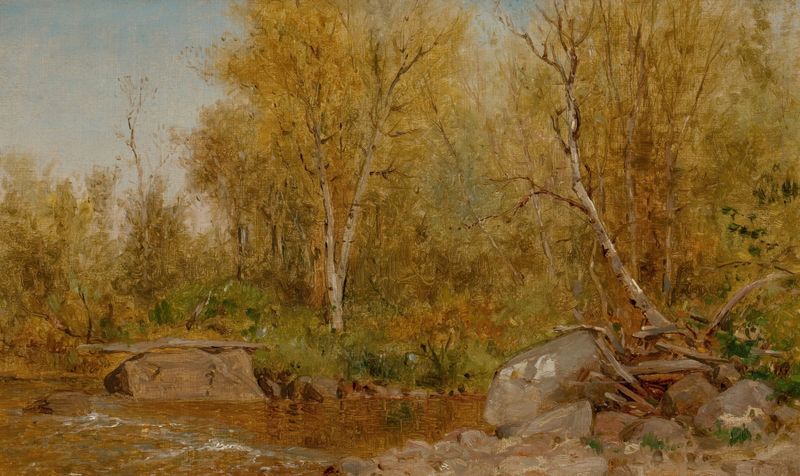
Sandy Stream, Maine Woods
Jervis McEntee
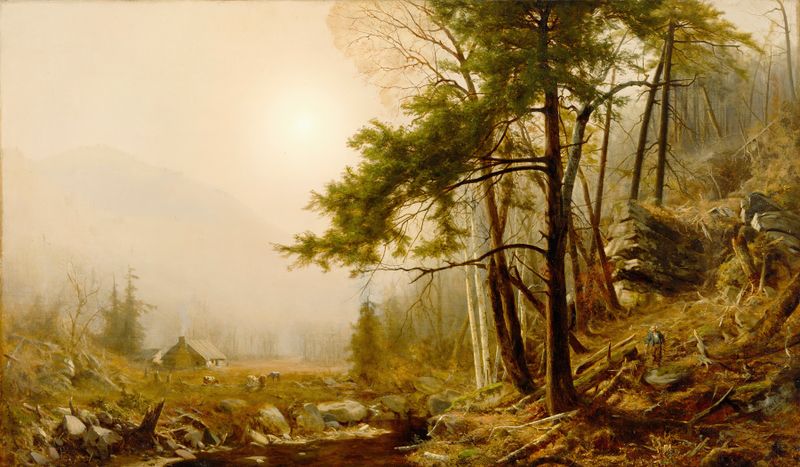
Indian Summer
Jervis McEntee

Mount Desert Island,Maine
Jervis McEntee
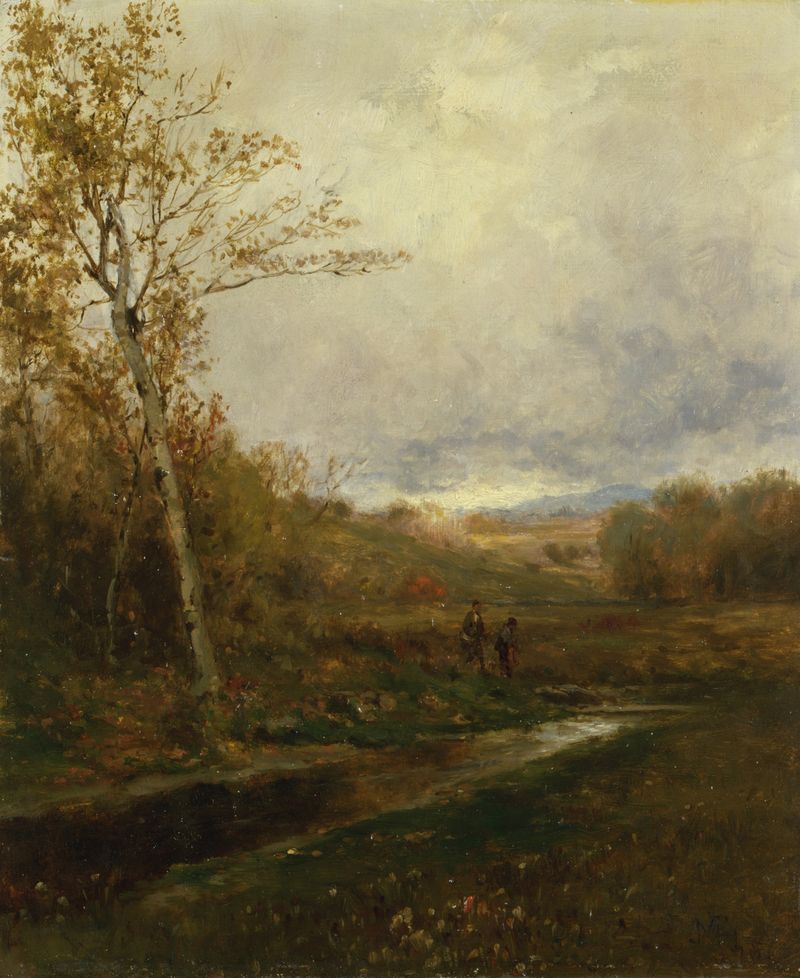
November
Jervis McEntee

Old House On Long Island
Jervis McEntee
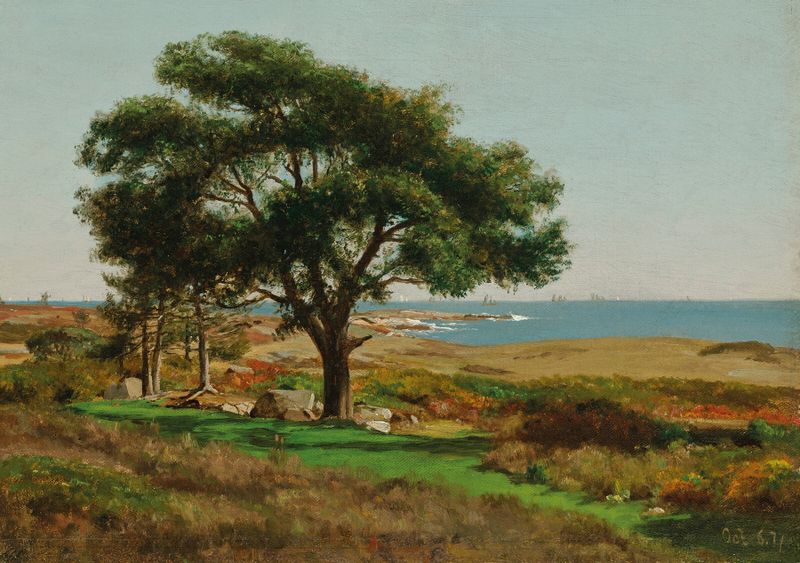
Near Kennebunkport, Maine
Jervis McEntee
Saturday Afternoon
Jervis McEntee
A Cliff in the Katskills
Jervis McEntee

A Winter Camp
Jervis McEntee





