Autumn, Varberg — History & Facts
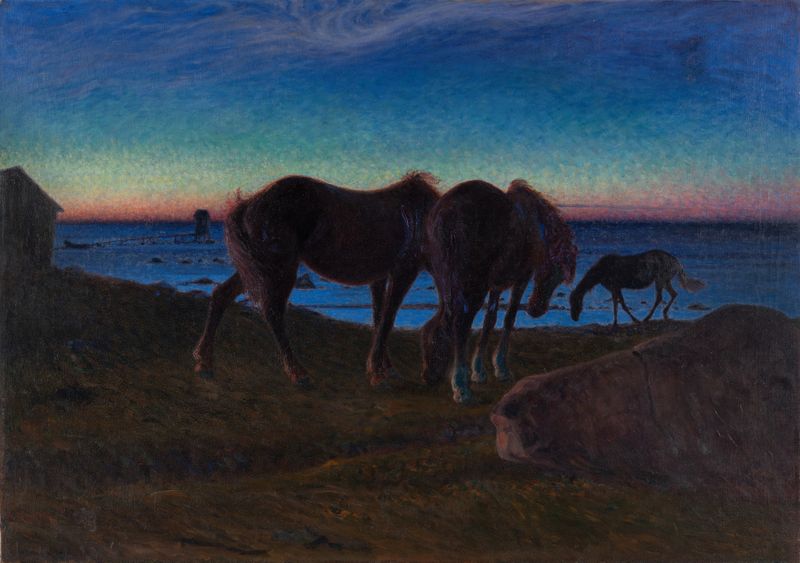
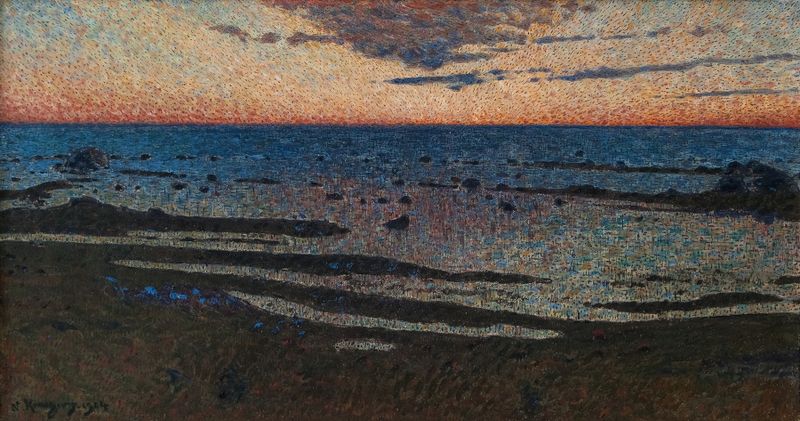
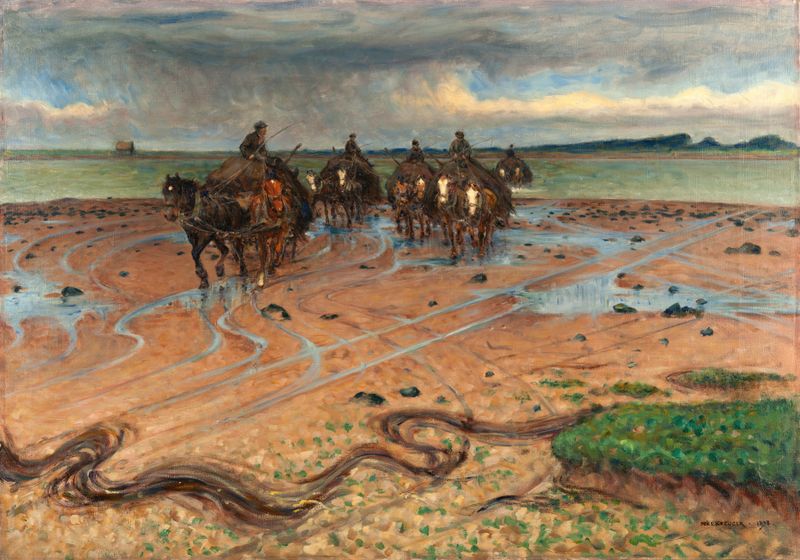
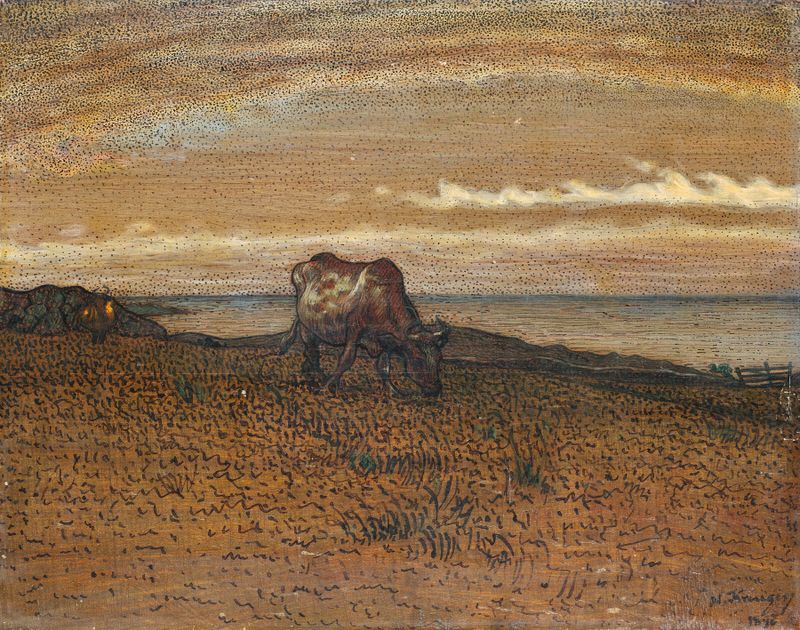
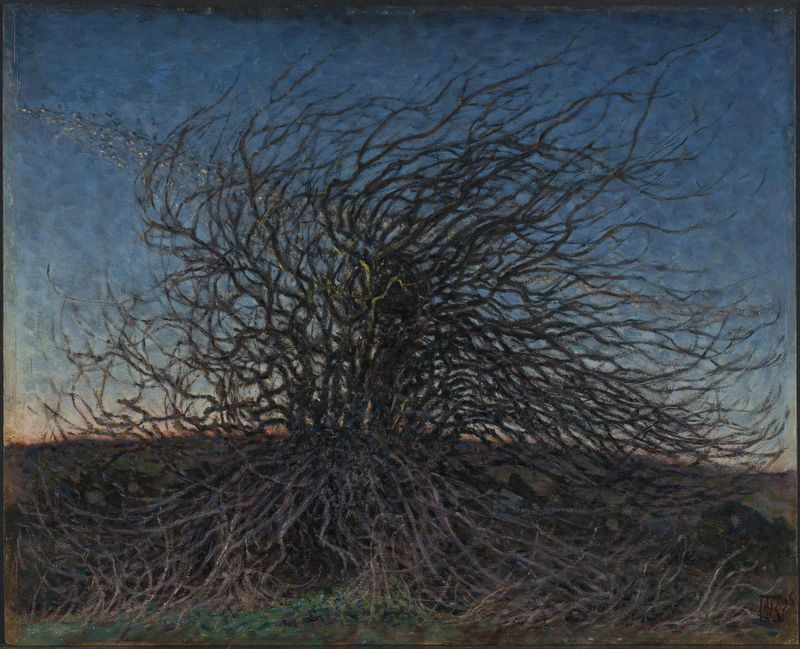
Could beauty survive in a century of chaos? In a world often overshadowed by turmoil, Nils Kreuger’s Autumn, Varberg stands as a testament to nature's enduring grace amidst the storms of life. Look to the left at the golden foliage, each leaf rich with a vibrant glow that dances in the gentle embrace of the autumn sun. The painter's brushwork reveals a lush landscape, filled with subtle gradients of ochre and russet, guiding the viewer's eye across the tranquil canvas. Notice how the sky transitions from a soft, cerulean blue to softer, whispering grays, reflecting a quiet yet profound sense of change.
This chromatic harmony draws you deeper into the scene, inviting you to breathe in the crisp air that seems to linger between the painted strokes. Beneath the serene surface, hidden tensions pulse through the artwork. The juxtaposition of warm colors against cooler tones evokes a sense of fleeting beauty, a reminder that even the most picturesque moments are often ephemeral. There is an invitation to reflect on the cycle of life—the leaves may fall, but their rich hues linger in memory, echoing the chaos that surrounds the human experience.
This duality between tranquility and impending loss resonates within us, reminding us of our own journeys through turmoil and beauty. Nils Kreuger created this piece during the late 19th century, a time marked by the rise of Impressionism in Sweden. Working primarily in Varberg, he sought to capture the essence of the landscape around him, merging personal emotion with the shifting light of nature. The world was abuzz with artistic innovation, and Kreuger, influenced by his contemporaries, aimed to capture fleeting moments of beauty, perhaps as a counterpoint to the societal upheavals of his time.