Outlying Land — History & Facts
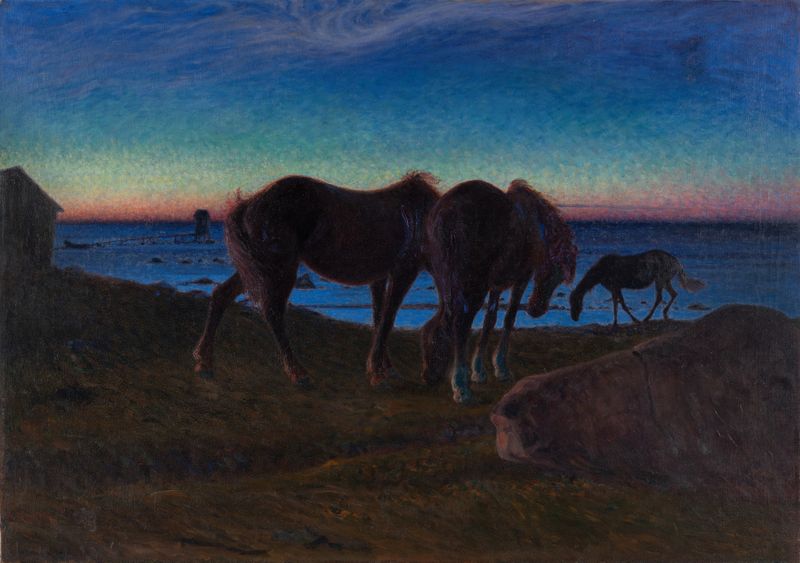
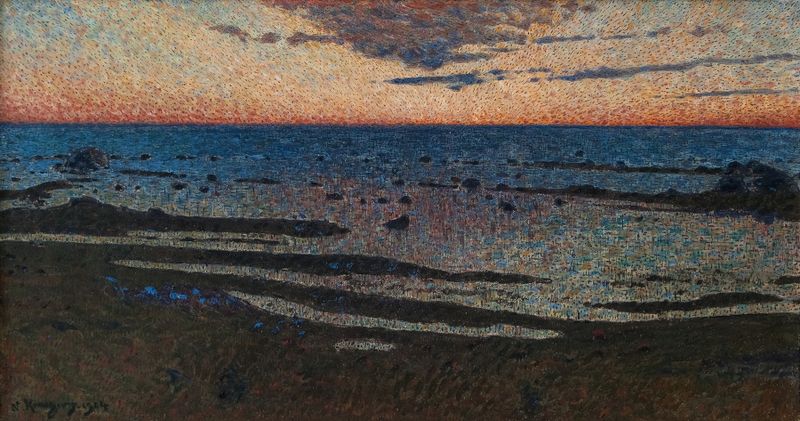
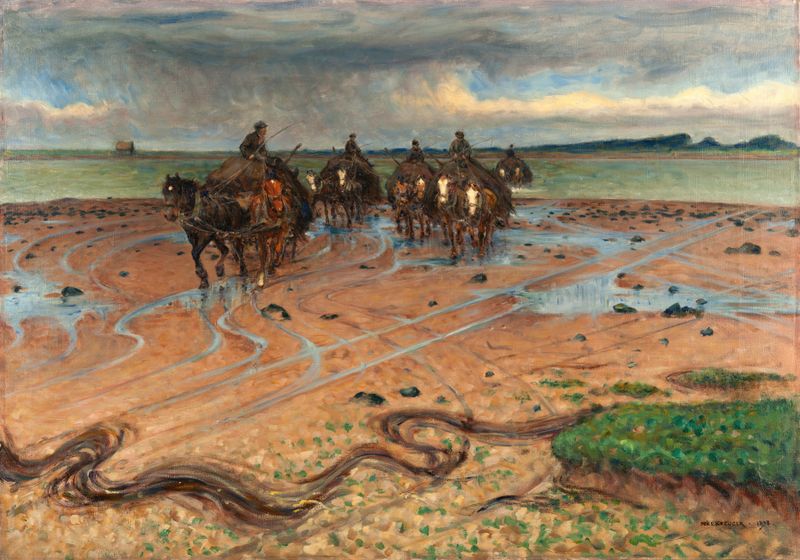
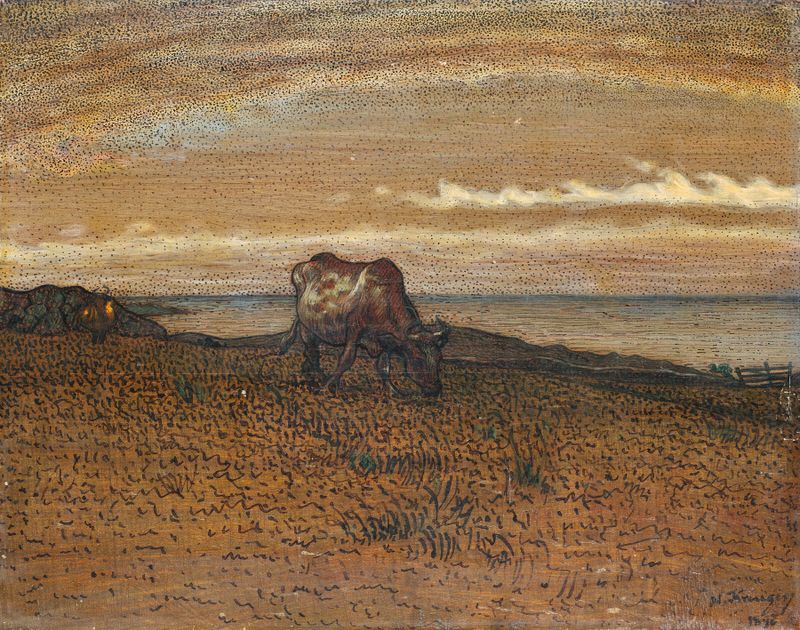
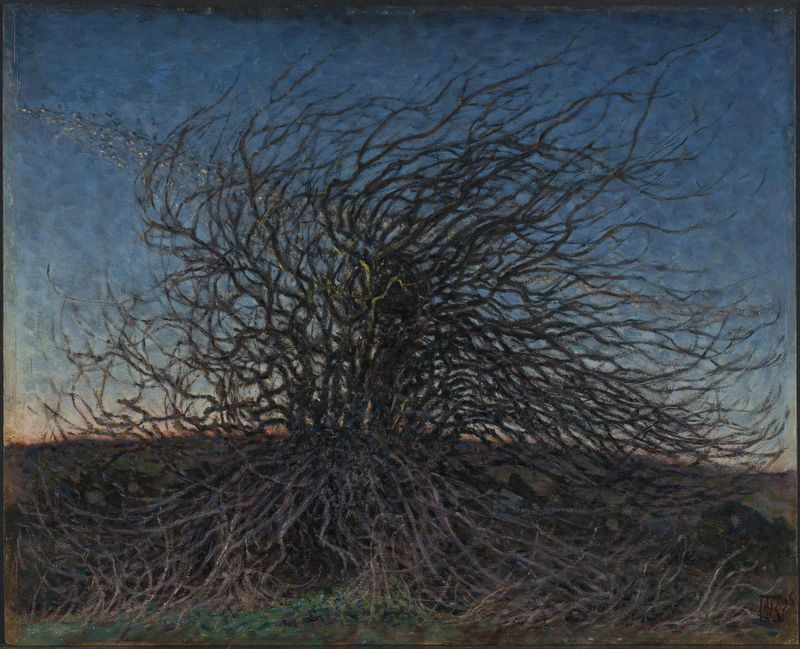
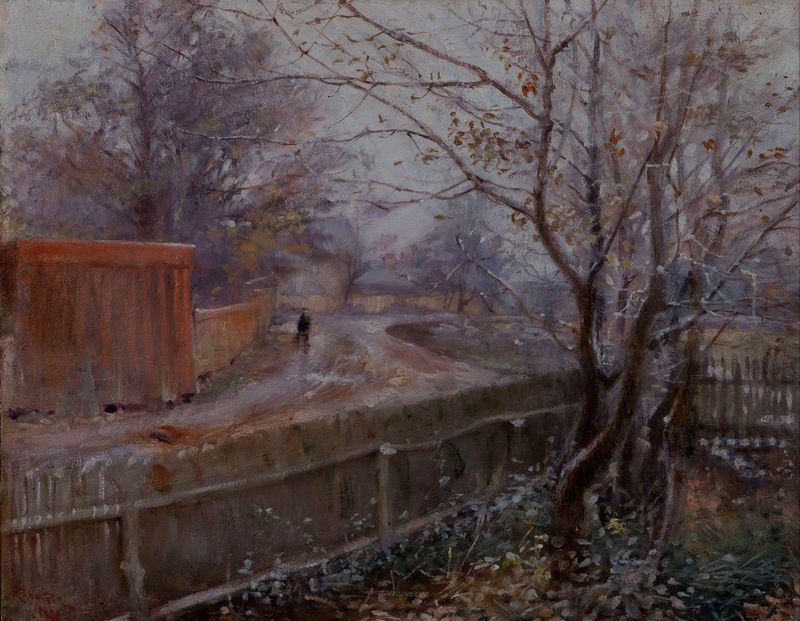
Is this a mirror — or a memory? The haunting landscape before us speaks of a distant longing, a place where dreams and reality entwine, pulling us into its embrace with an almost obsessive allure. Focus on the horizon, where pale clouds merge effortlessly with muted greens and browns, creating a seamless transition between earth and sky. The painter's brushstrokes render a soft, almost ethereal quality, inviting your gaze to wander slowly across the canvas. Notice how the light falls upon the serene water, reflecting not just the environment but a deeper sense of tranquility and yearning.
Each element feels harmonized, yet there's an underlying tension that hints at what lies beyond this picturesque facade. As you explore further, the contrasts emerge vividly; the calmness of the water is juxtaposed with the dense, dark foliage, suggesting an internal struggle. The quiet landscape harbors a sense of isolation, a place untouched by time yet cloaked in nostalgia. It invites contemplation, provoking questions about the boundaries of obsession—are we merely observing a scene, or are we drawn into an intimate memory that belongs to someone else? In 1901, the artist painted this piece during a period when he was deeply inspired by the natural beauty of Sweden, seeking solace from the busy art circles of Europe.
Kreuger was exploring the themes of solitude and connection to nature, reflecting both his personal sentiments and the broader artistic movements of the time, which emphasized the emotional resonance of landscapes. This moment encapsulated his quest for tranquility amid the chaos, a narrative woven seamlessly into Outlying Land.