March Evening — History & Facts
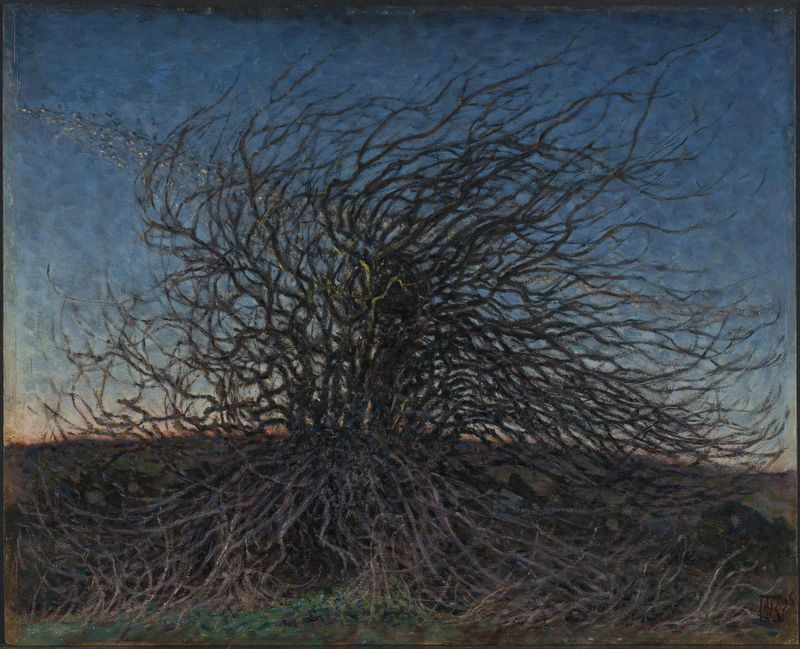
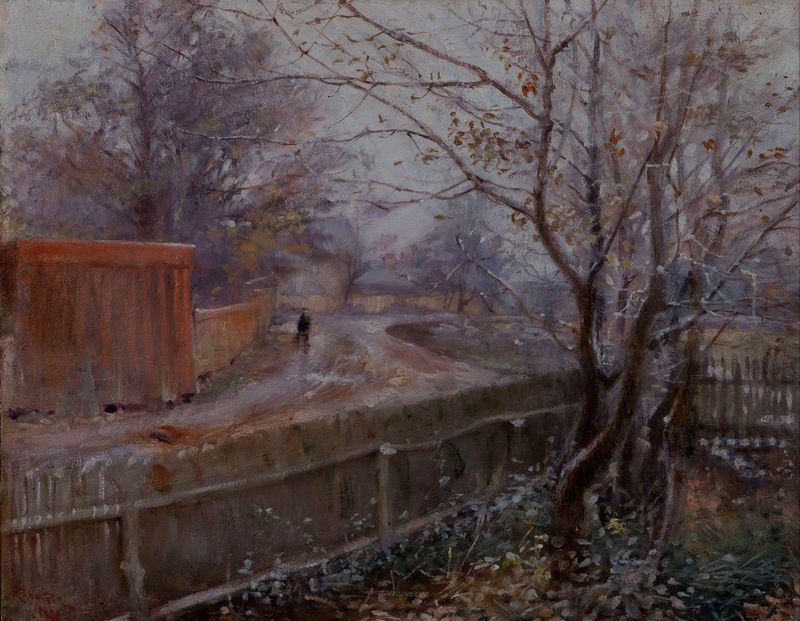
What if beauty was never meant to be finished? In the delicate dance of light and shadow, March Evening captures a moment that feels both transient and eternal. Look to the soft, muted tones that blanket the canvas, where a palette of gentle blues and fading golds draws you in. Notice how the horizon line meets the sky, inviting your eyes to traverse the expanse that appears almost fluid. The brushwork is loose yet purposeful, creating a sense of movement as evening descends—each stroke embodies the gentle caress of a spring breeze, whispering secrets of the departing day. Within the serene landscape lies a tension between the vibrancy of day and the quiet encroachment of night.
The trees, rendered with flourish, seem to sway and beckon, evoking the idea of time in flux. This painting hints at the transient nature of beauty, suggesting that the end of daylight signals not just closure, but also the promise of renewal, as each evening invites a new dawn. The interplay of light and dark reveals a cycle that mirrors our own lives, where moments of stillness are far from stagnant. In 1900, Kreuger painted this work during a transformative period in Sweden, where the influence of Impressionism was blooming.
The artist, known for his ability to translate the Scandinavian landscape into lyrical compositions, was immersed in a world grappling with modernity and change. This piece reflects not only his personal evolution as an artist but also the broader artistic movement that sought to capture the fleeting essence of life and atmosphere.