Landscape — History & Facts
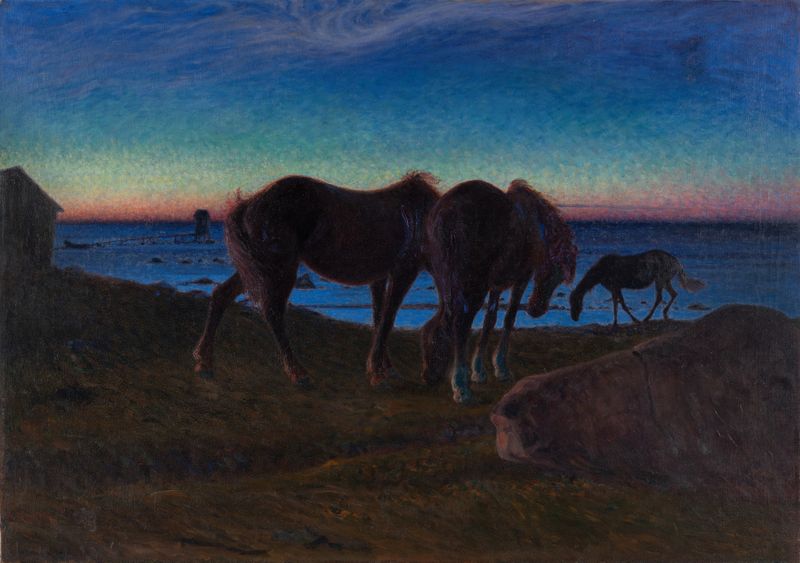
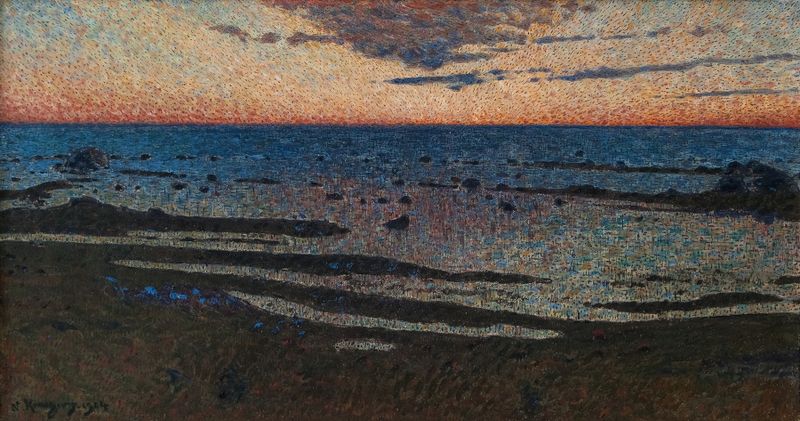
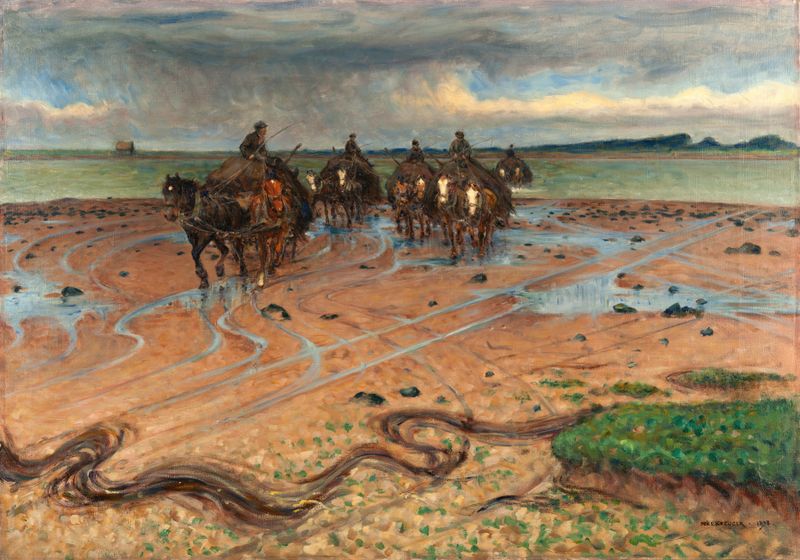
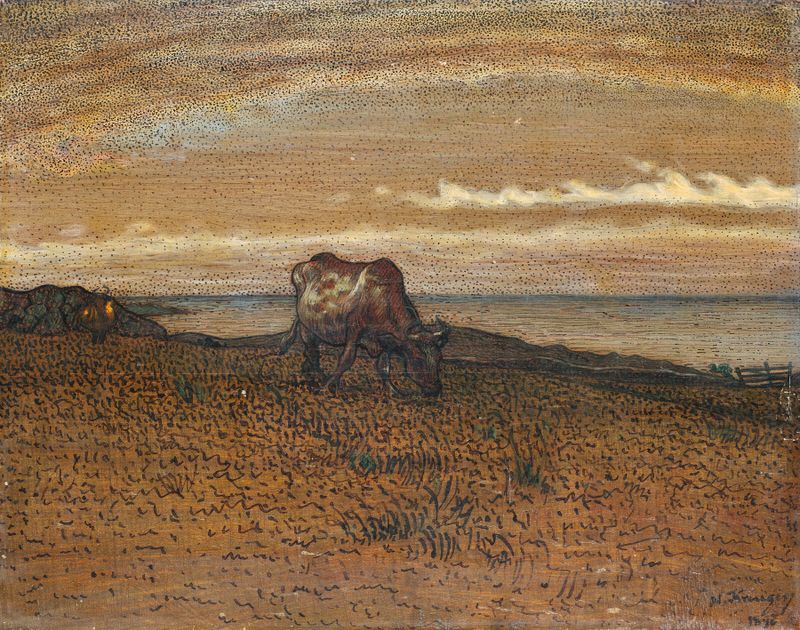
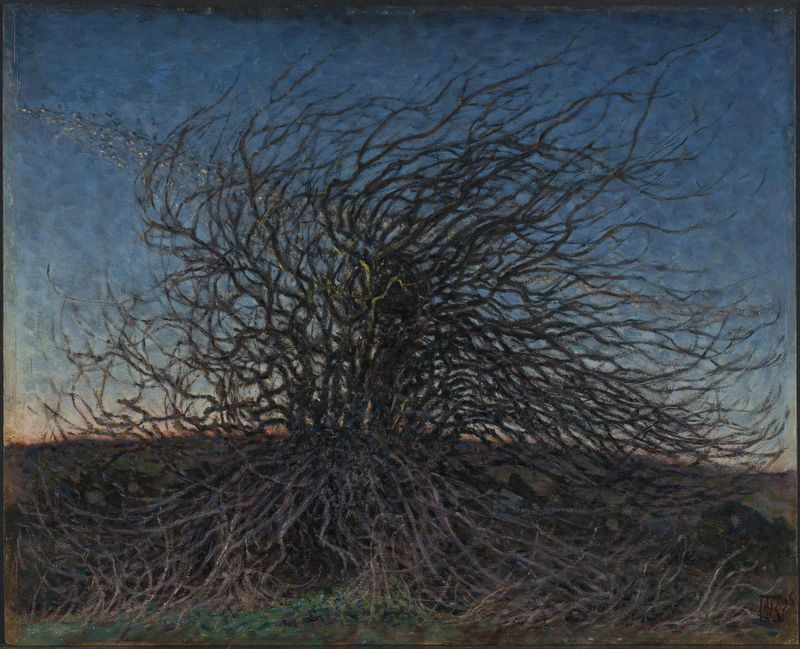
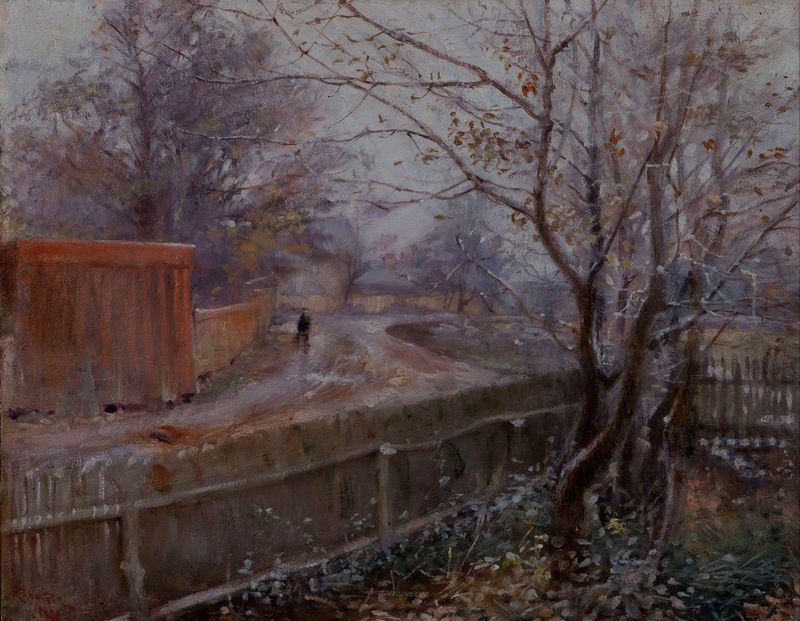
In the chaos of existence, a canvas stands as a sanctuary—a still witness to nature's tumultuous beauty. Look to the horizon in Landscape, where Kreuger masterfully captures the tumultuous interplay of color and form. The brushstrokes blend soft blues with vibrant greens, guiding the viewer's gaze toward a tranquil meadow that contrasts sharply with the chaotic skies above. Notice how the wispy clouds swirl dramatically, painted with an urgency that suggests an impending storm, while the lush ground below seems to whisper of serenity, inviting peace amid disorder. At first glance, the juxtaposition of calmness and chaos reveals the artist's deeper intent.
The contrasting elements evoke a sense of tension, as if nature itself is on the brink of transformation. The delicate details of the flora, swaying gently in the wind, contrast with the forceful energy of the sky. This duality not only highlights the beauty inherent in the landscape but also reflects the inner turmoil often experienced in life, suggesting that harmony and discord can coexist. In 1897, while Kreuger painted this piece, he was deeply immersed in the Swedish countryside, grappling with his burgeoning identity within the art world.
The late 19th century was marked by a shift toward naturalism, yet Kreuger sought to capture not just the physical world but its emotional resonance. This era was one of exploration and experimentation, and through Landscape, he embraced the complexities of both nature and human sentiment.