Autumn. White Plains — History & Facts
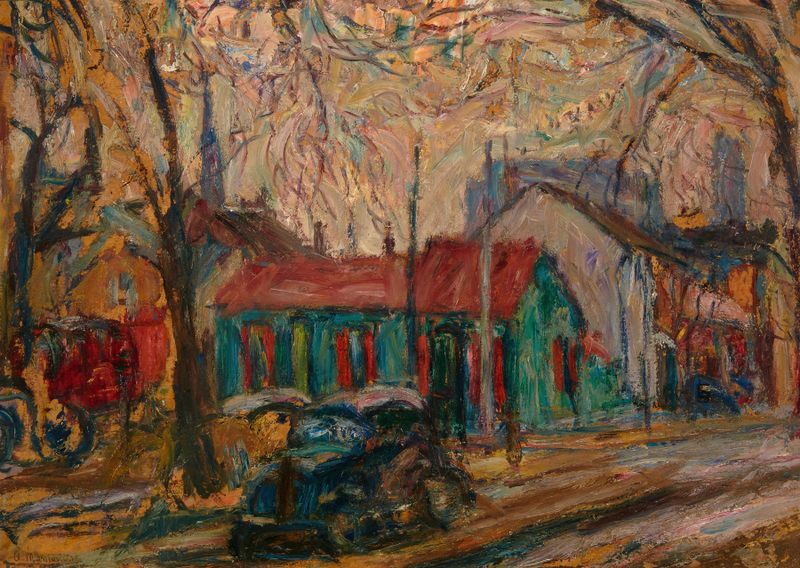
In the vivid chaos of autumn foliage, we find a striking reminder of nature's ecstatic beauty. Each stroke of paint beckons a deeper inquiry into the relationship between color, form, and emotion. Look to the left, where bold strokes of crimson and gold dance alongside deep indigos and earthy browns. The colors intertwine, creating a tapestry that feels both chaotic and harmonious.
Notice how the gentle swirls and sharp angles suggest movement, as if the wind itself is caught mid-whisper. The composition draws the eye across the canvas, inviting a sense of exploration and wonder at the season's transformative power. Delve deeper into the subtleties — the interplay of light and shadow forms a dialogue between vibrancy and desolation. The bright patches of color embody the fleeting joy of autumn, while the darker hues hint at the inevitability of winter.
This duality evokes a bittersweet tension, encapsulating the essence of change and the passage of time. Each element feels intentional, reminding us that ecstasy and melancholy can coexist beautifully. In 1941, Autumn. White Plains emerged from the hands of Abraham Manievich during a period of tumultuous change.
As a Jewish artist in America, he was navigating the complex realities of World War II while seeking solace and inspiration from the natural world. This painting reflects not only his personal journey but also a broader artistic exploration of color and emotion during an era defined by upheaval.