Winter Scene With Church — History & Facts
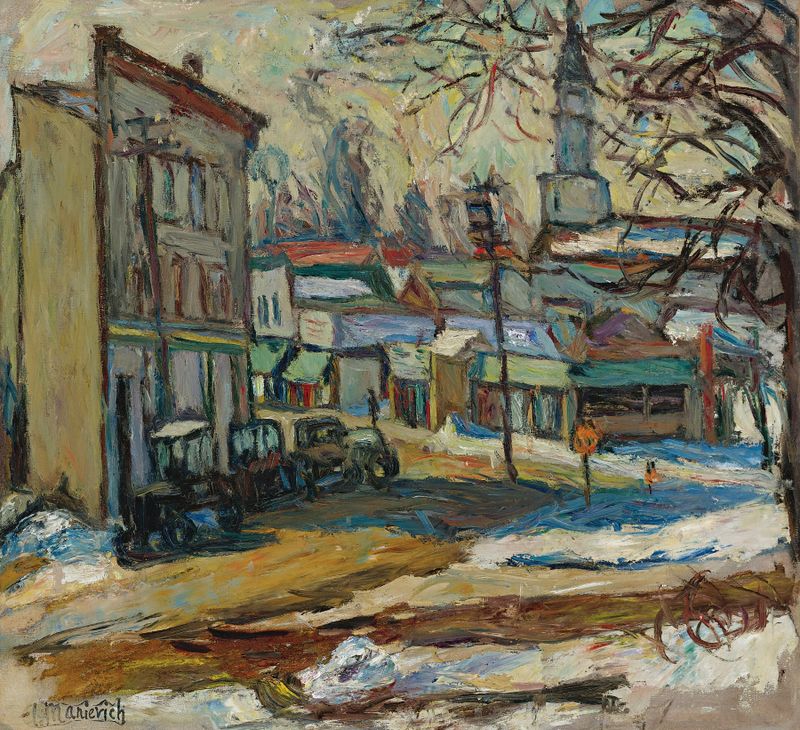
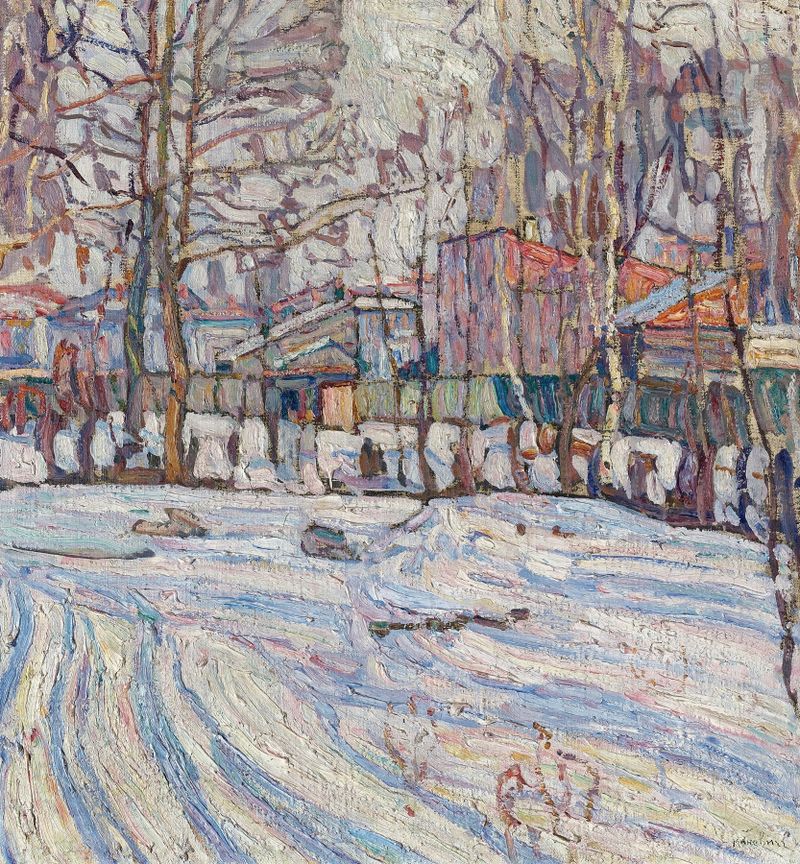
Is this a mirror — or a memory? The ethereal beauty of winter captures both innocence and nostalgia, where the chill of the season invites reflection and repose. Look to the center of the canvas, where the church stands resolute against the blanket of snow. Notice how the soft blues and whites blend seamlessly, creating a serene atmosphere that envelops the scene. The strokes are delicate yet deliberate, whispering the stillness of a snow-covered landscape while the architectural details of the church beckon the eye.
The light dances gently across the icy surface, illuminating not just the structure, but the warmth of a community nestled beneath its steeple. Beneath this tranquil surface lies a poignant contrast between the softness of the snow and the rigid lines of the church. This juxtaposition evokes the innocence of childhood memories, where laughter and play meld with the solemnity of faith and tradition. The absence of figures amplifies a sense of solitude and introspection, suggesting a longing for simpler times when life was defined by innocence rather than complexity.
Each brushstroke seems to echo a quiet prayer, a yearning for peace amidst the bustle of an evolving world. Abraham Manievich painted this work in 1911, during a period of transformation in both his life and the wider art community. Living in Russia, he was deeply influenced by the Symbolist movement, which sought to evoke emotions through suggestive imagery rather than direct representation. This painting reflects his exploration of memory and sentiment, capturing not just the physical world but the emotional landscapes that define human experience.