
Quiet street — History & Facts
What if silence could speak through light? In Quiet Street, a hush envelops the scene, echoing the unvoiced stories of its solitary paths. Each shade and hue whispers the untold, inviting the viewer to wander through a realm where color becomes the sole narrator. Look to the left at the gentle sweep of the street, where muted tones of blue and gray dominate the canvas, instilling a sense of calm. Notice how the light filters through the trees, casting a dappled glow onto the cobblestones, each brushstroke meticulously crafted to convey texture and depth.
The subtle play of light and shadow creates a vibrant contrast, inviting you to explore the tranquility that resides in the simplicity of this everyday setting. Beneath this serene facade lies an emotional tension between solitude and community. The absence of figures suggests a moment frozen in time, evoking a sense of longing and introspection. The warm light touching the street hints at life just beyond the frame, while the cool colors convey an underlying stillness—an unfulfilled connection that resonates with the viewer's own experiences of isolation and belonging. Abraham Manievich created Quiet Street during a period of artistic exploration that sought to capture the interplay of light and color.
Working in the early 20th century, he was influenced by the broader movements of Impressionism and Post-Impressionism, which emphasized emotional expression over realism. This artwork reflects his deep engagement with the effects of light on everyday scenes, a pursuit that marked a significant evolution in his artistic journey.
More Artworks by Abraham Manievich
Browse all →
Summer landscape
Abraham Manievich

Early Spring
Abraham Manievich

City Scene
Abraham Manievich
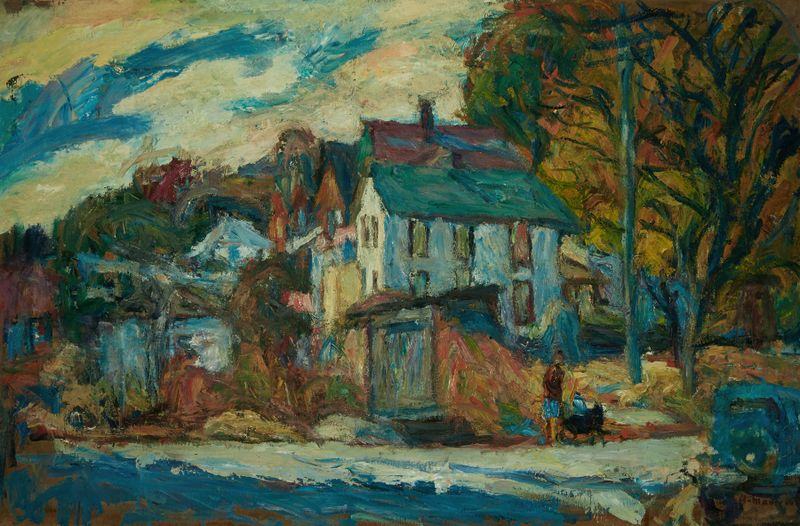
Autumn. White Plains
Abraham Manievich
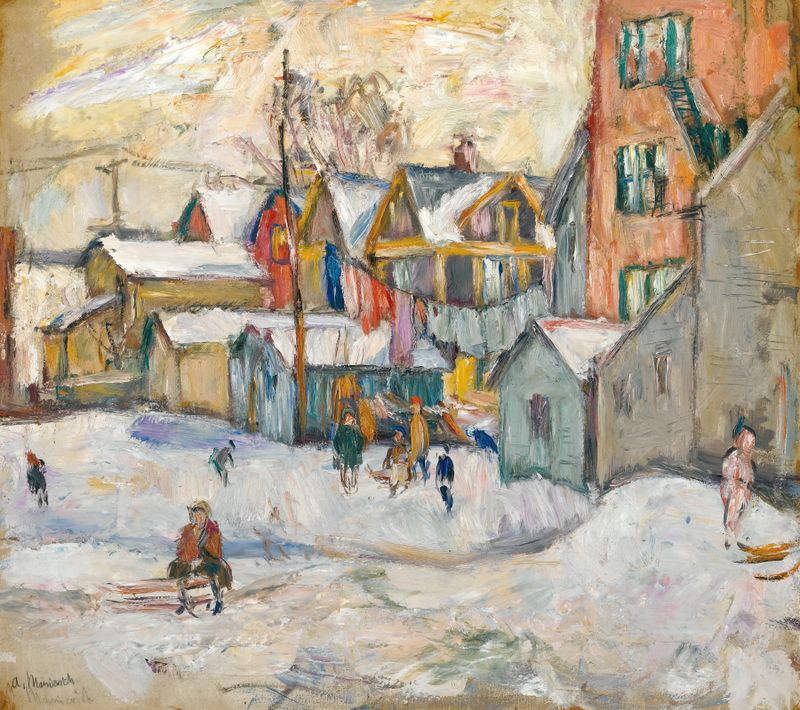
The Bronx
Abraham Manievich

Winter Scene With Church
Abraham Manievich
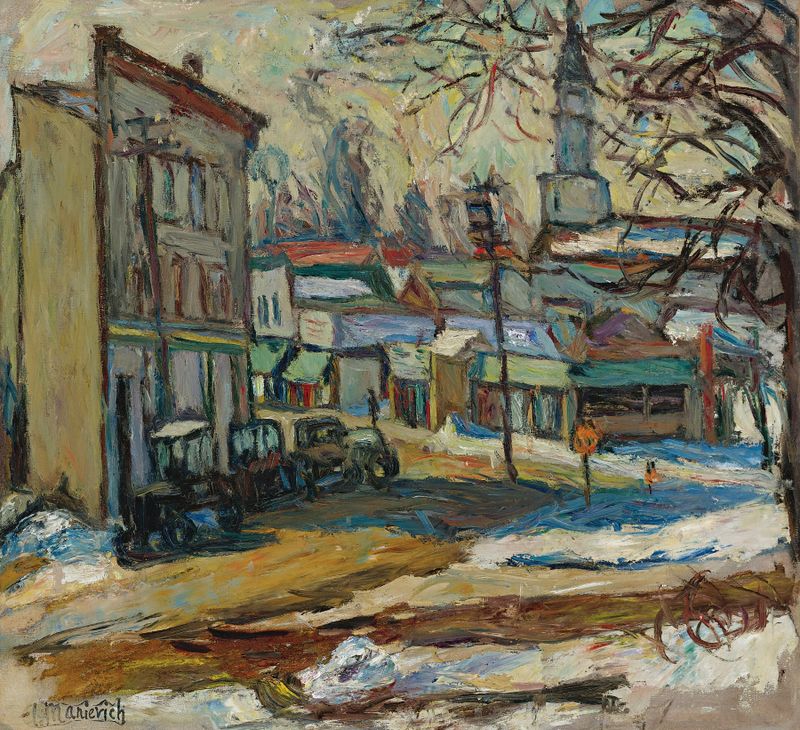
Bridgeport
Abraham Manievich

Street in the Bronx
Abraham Manievich
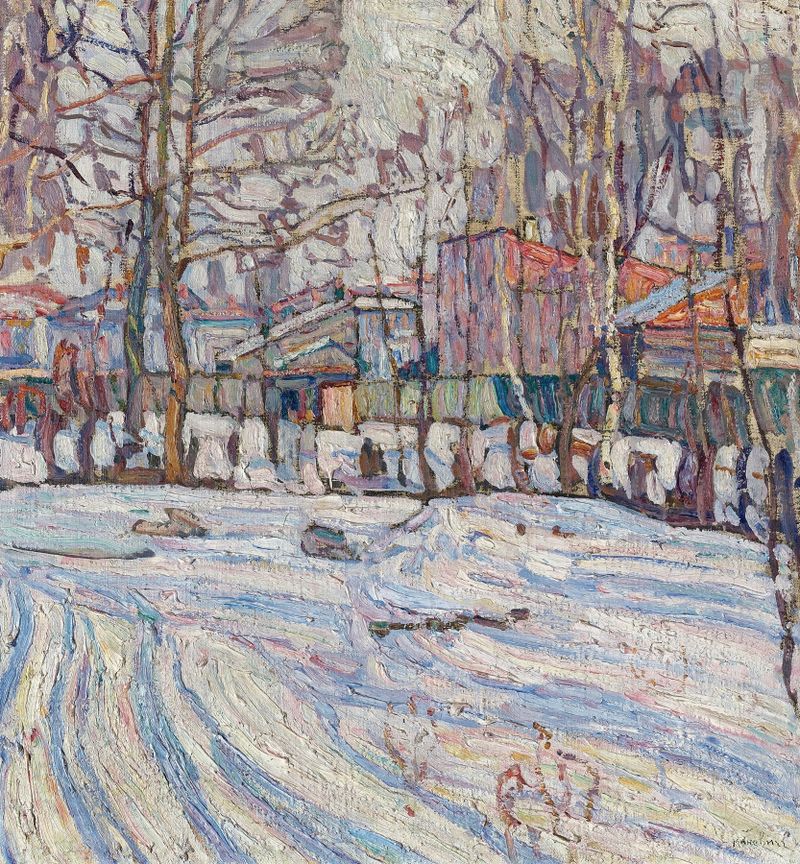
Winter
Abraham Manievich

Birch Trees
Abraham Manievich





