Banks of the Loing — History & Facts
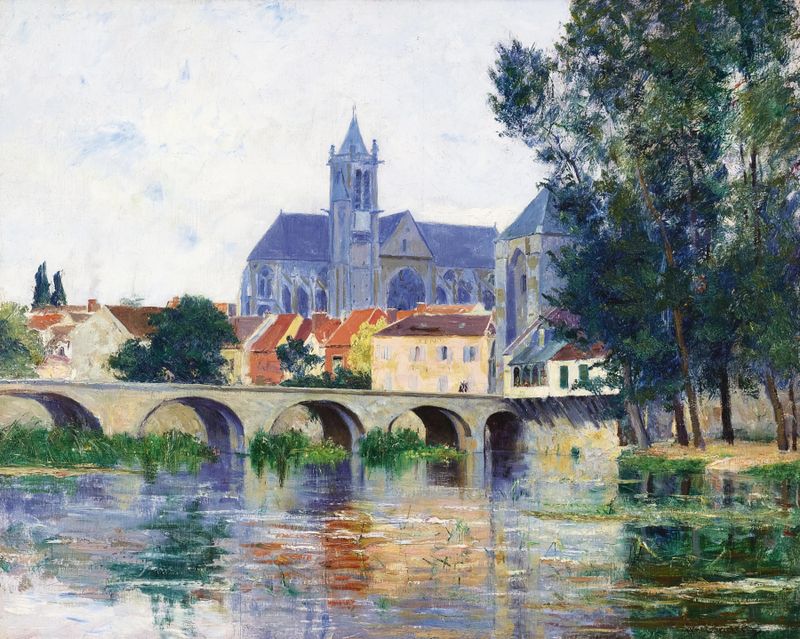
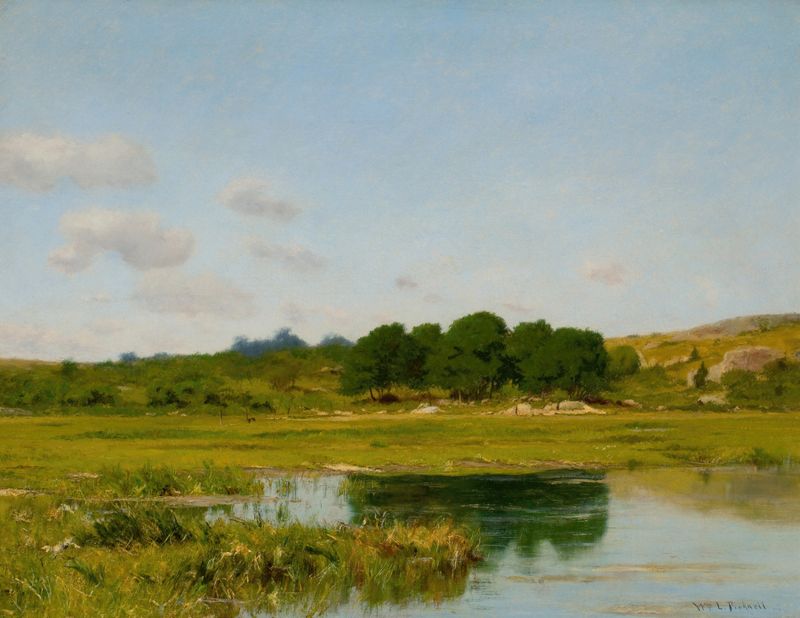
What if beauty was never meant to be finished? There lies a moment of serene stillness, captured in time yet inviting endless contemplation. Look to the lower right, where the gentle flow of the Loing River glimmers under a soft, diffused light. Notice how the muted colors of green and brown interlace seamlessly, creating a harmonious blend that feels alive and breathing. The brushstrokes dance across the canvas, imbuing the scene with a tactile quality, while wisps of clouds linger lazily in the azure sky, casting a warm glow over the landscape.
This tranquil composition beckons the viewer to breathe deeply and absorb the peaceful essence of nature. Hidden beneath the surface of this idyllic representation lies a narrative of transience. The interplay of light and shadow evokes an ephemeral quality, suggesting that beauty is fleeting, even in its most perfect moments. The stillness of the water reflects not just the surrounding greenery, but also an introspective depth — a mirror to the soul.
Each element in the painting contributes to a sense of calm, yet hints at an underlying longing for connection with nature, revealing the complex emotions that resonate within us all. During the years 1894 to 1897, Picknell painted Banks of the Loing while living in France, a period that saw him immersed in the Impressionist movement. His focus on capturing the serenity of the landscape was influenced by his desire to convey the essence of beauty untouched by time. This work reflects his artistic evolution, aligning with the broader trends of the late 19th century, where nature and its tranquil moments were increasingly celebrated in the art world.