
Bas Meudon no. 2 — History & Facts
In the quiet embrace of Bas Meudon no. 2, an ethereal world unfolds where the ephemeral nature of life and the eternal beauty of the landscape intertwine, inviting us to ponder the essence of existence. Begin your exploration by looking at the gentle strokes that define the rolling hills in the background. Notice how the soft greens and muted yellows merge harmoniously, while dappled light dances across the canvas, imbuing the scene with warmth.
The foreground, a vibrant explosion of wildflowers, draws the eye, their colors pulsating with life amidst the tranquility. The composition, meticulously balanced, creates a sense of depth, as if whispering secrets about the vastness of nature. Delve deeper into the painting’s emotional layers; the juxtaposition of vibrant blooms against the calm hills speaks to the fleeting moments of joy amid the stillness of life. Each flower appears to bloom defiantly, capturing the transitory beauty of existence, while the serene backdrop hints at the stability of time.
This tension invites the viewer to reflect on how moments of happiness are often brief yet profoundly impactful, urging a sense of transcendence as we navigate through the complexities of life. Created in 1889 in France, Weir was immersed in an artistic climate that valued naturalism and light effects. At this time, he was embracing Impressionistic techniques while exploring personal themes of memory and nostalgia. The interplay of light and shadow in *Bas Meudon no.
2* reflects his quest to capture fleeting moments, a pursuit that resonated throughout the art world as artists sought to convey their emotional responses to the world around them.
More Artworks by Julian Alden Weir
Browse all →
My Back Yard no. 1
Julian Alden Weir
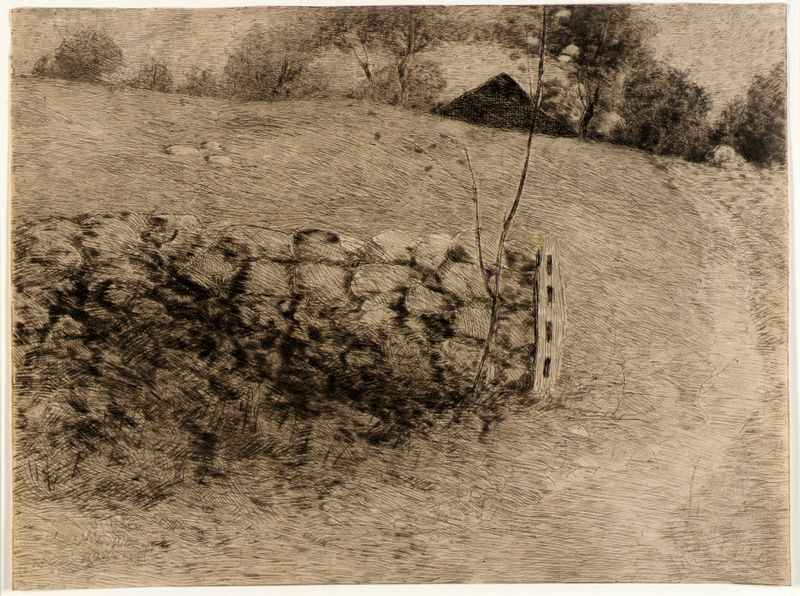
The Barn Lot
Julian Alden Weir

The Webb Farm
Julian Alden Weir
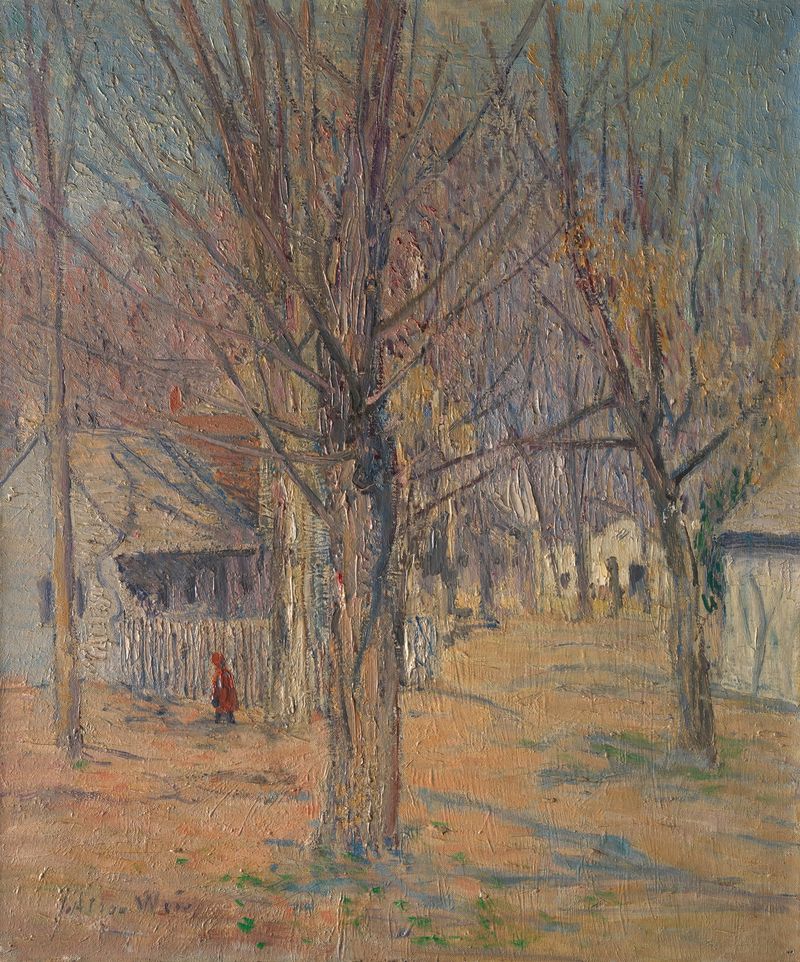
Connecticut Village (Going to School)
Julian Alden Weir

The Stone Bridge
Julian Alden Weir

The Webb Farm 2
Julian Alden Weir
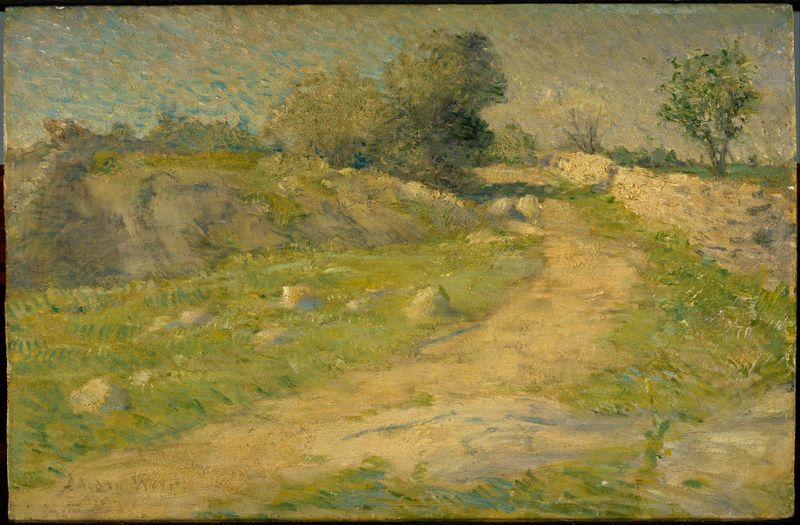
The Lane
Julian Alden Weir
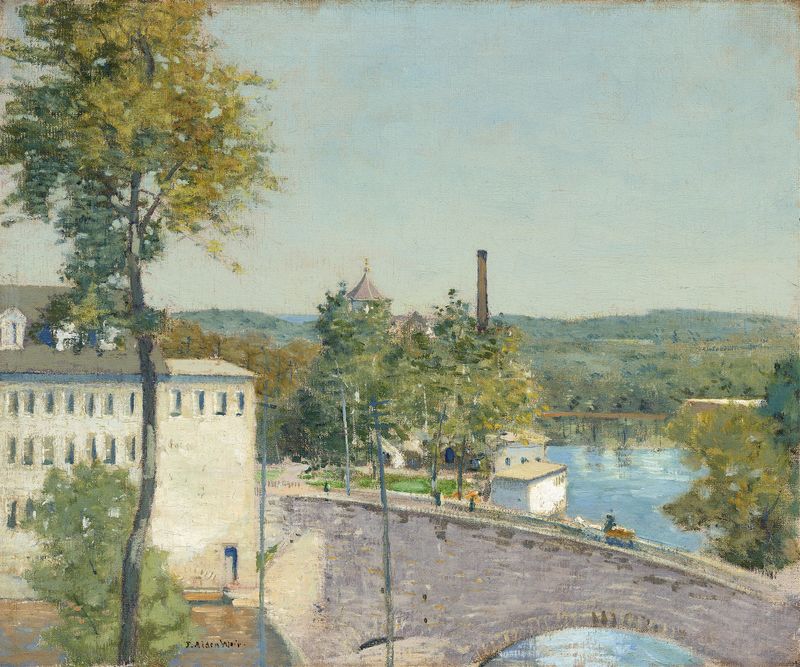
U.S. Thread Company Mills,Willimantic,Connecticut
Julian Alden Weir

Neighboring Farm
Julian Alden Weir

Coon Alley
Julian Alden Weir





