
Bataille navale — History & Facts
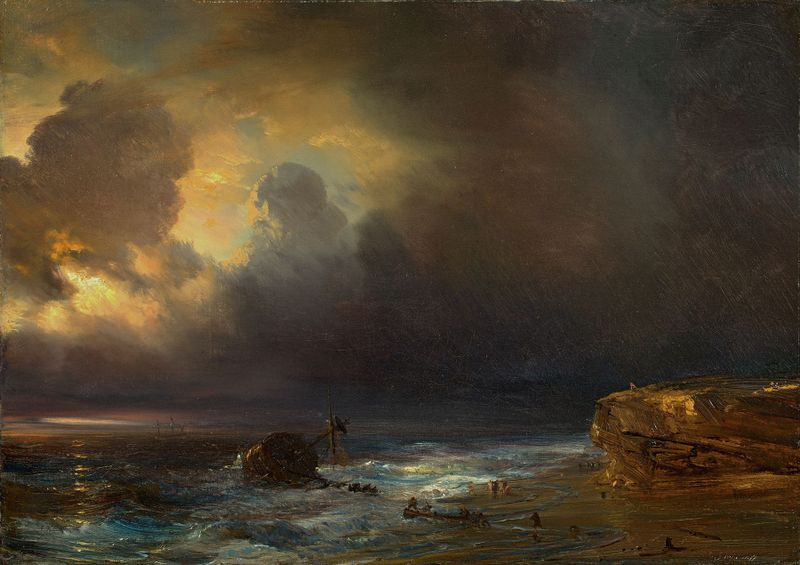
What secret hides in the quiet of the canvas? In Bataille navale, the tumult of battle contrasts with the haunting stillness of mortality, inviting a deeper contemplation of fate and humanity. Focus on the swirling waves in the foreground, where shades of deep blue and green depict a violent sea, alive with movement. Notice how the ships, caught in conflict, dominate the midsection, their sails taut against the wind. The play of light dances across the water's surface, illuminating the chaos while the horizon fades into a muted, foggy grey.
This juxtaposition of vibrant color and subdued tones captures the tension between life and death, revealing the fragility of existence amidst the fierce battle. Amidst the turmoil, small details emerge that whisper of fragility — a sailor desperately clinging to the ship’s rail, his face etched with fear, or the tattered flags that flutter like the last breaths of those long gone. The contrast between the impassioned struggle of the men aboard and the indifferent, tumultuous sea suggests a poignant commentary on mortality. Here, survival hangs by a thread, and the viewer feels the weight of what is at stake, as lives and dreams are swallowed by the swirling depths. In 1830, while living in France, the artist created this piece against a backdrop of shifting artistic movements and political unrest.
The Romanticism era was flourishing, bringing with it a fascination with nature's sublime power, and a questioning of human endeavor in the face of overwhelming forces. Gudin's work, rooted in maritime themes, reflects not only his experiences as a naval painter but also captures the uncertainty of human existence amid the fury of nature.
More Artworks by Théodore Gudin
Browse all →
Sormy Seas by a Chalk Coast
Théodore Gudin

The Gulf of Naples with View of Mount Vesuvius
Théodore Gudin
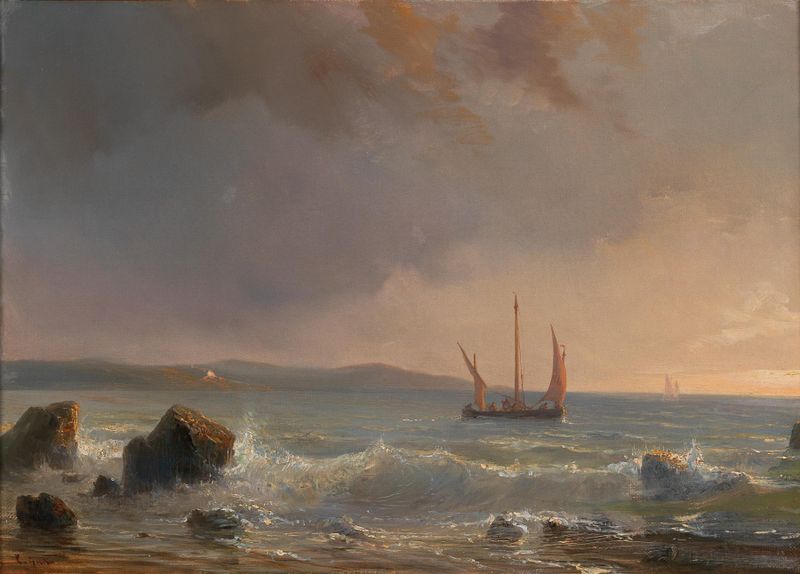
Abendstimmung über einer Meereslandschaft mit Segelbooten
Théodore Gudin
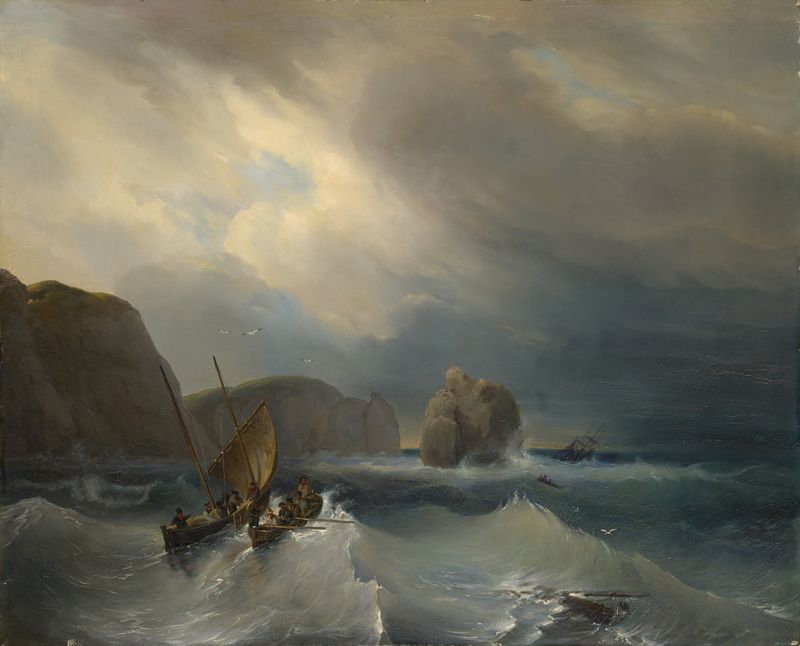
Rough Sea with Ships
Théodore Gudin

Fishermen at the harbour wall, low tide
Théodore Gudin
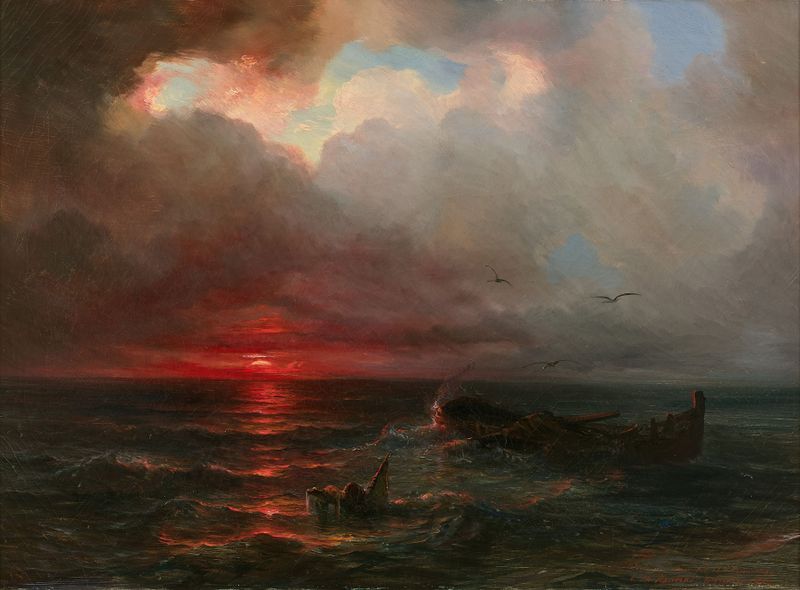
Coucher de soleil sur un littoral
Théodore Gudin
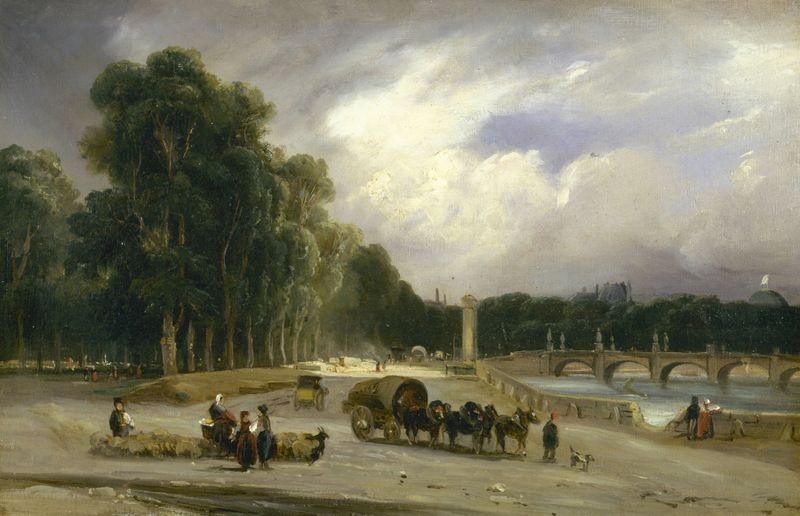
Le Cours-la-Reine
Théodore Gudin
Coastal scene by moonlight
Théodore Gudin
View Of Constantinople
Théodore Gudin

Shipwreck at Castello sul Mare in Rapallo
Théodore Gudin





