Bateaux en Rade — History & Facts
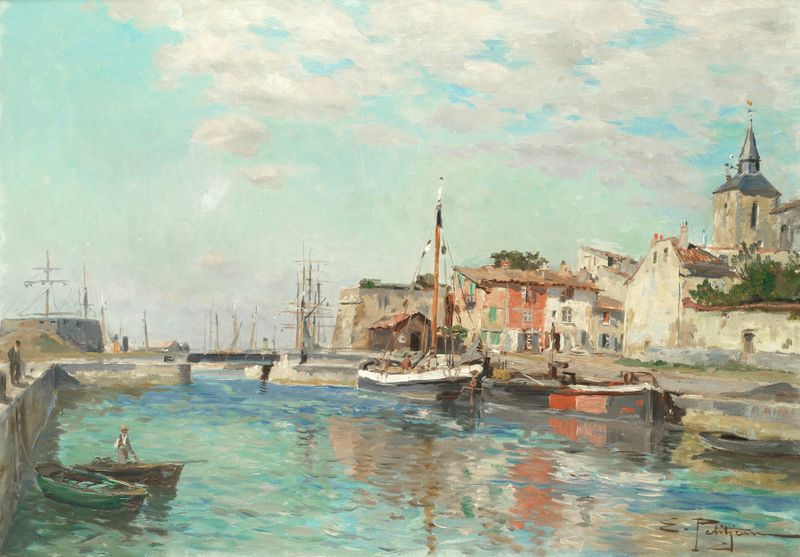
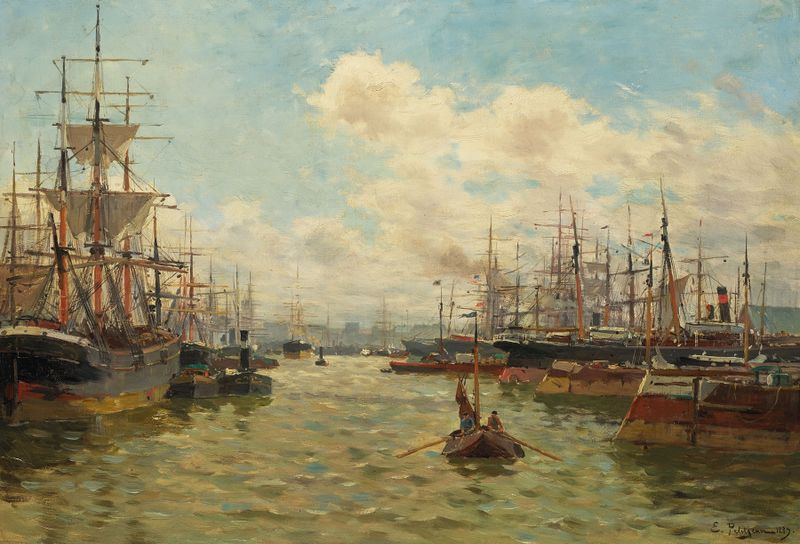
What secret hides in the quiet of the canvas? In the stillness of Bateaux en Rade, there lies a revelation waiting to unfold, inviting the viewer to ponder the tranquility of life on the water. Look to the serene waters where boats rest gently, their reflections captured with delicate brushstrokes. The muted palette of blues and grays evokes a sense of calm, while the soft light casts gentle shadows on the hulls, creating a harmonious composition. Notice how the artist’s technique allows for an almost tactile experience; the strokes seem to ripple with the water, blurring the lines between reality and the dreamlike essence of the scene. Yet, beneath this surface calm is a tension—the boats, though anchored, imply a longing for movement.
The sporadic bursts of sunlight filtering through a veil of clouds suggest an impending change, a moment poised at the brink of revelation. The interplay of light and shadow also evokes the quiet struggle between stillness and chaos, a reminder of life's ebb and flow that transcends the visual. Painted during a time when Petitjean was immersed in the Impressionist movement, Bateaux en Rade emerges from a period when artists sought to capture fleeting moments. The late 19th century was marked by industrial change and a burgeoning interest in the natural world.
Petitjean’s focus on the serene beauty of harbors and landscapes reflects both a personal exploration and a broader artistic dialogue, embracing the delicate balance between nature and human presence.