Le Port de la Rochelle — History & Facts
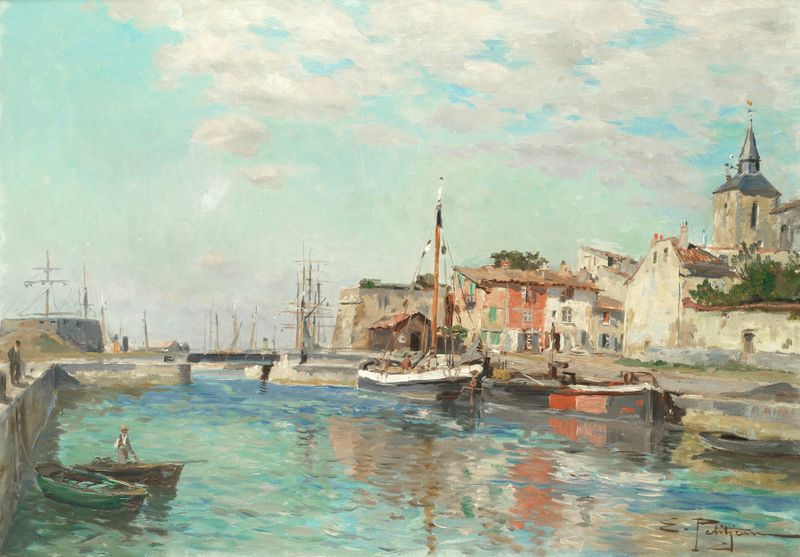
In a moment suspended between reality and reverie, Petitjean's work invites us to explore the ecstatic interplay of light and water, allowing our spirits to soar amidst the tranquil chaos of life. Look to the left at the gently rippling harbor, where the water reflects a dazzling array of colors, reminiscent of a fleeting sunset. The artist's brushwork creates a sense of movement, with delicate strokes capturing the shimmering surface and the soft, undulating waves. Notice how the sailboats, bathed in golden light, seem to dance in the embrace of the sea, while the cool azure sky stretches expansively above, hinting at the vast emotional landscape that lies beyond. Delve deeper and you'll find that the layers of paint convey a duality between serenity and movement, mirroring the ebb and flow of human experience.
The juxtaposition of the anchored boats against the sky suggests stability amid the transient nature of life. Each vessel, distinct yet united in their purpose, echoes the themes of community and solitude, while the palette evokes a sense of nostalgia, inviting contemplation on the ephemeral beauty of existence. Throughout his career, Petitjean embraced the Impressionist ethos, capturing fleeting moments in nature. He painted Le Port de la Rochelle during a time when the movement was gaining traction, likely in the late 19th century, as he sought to convey the emotional resonance of landscapes amidst a rapidly changing world.
With each brushstroke, he not only rendered a scene but also expressed an intimate connection to the human condition, echoing a desire to reveal the ecstasy hidden in everyday life.