Bathing women — History & Facts
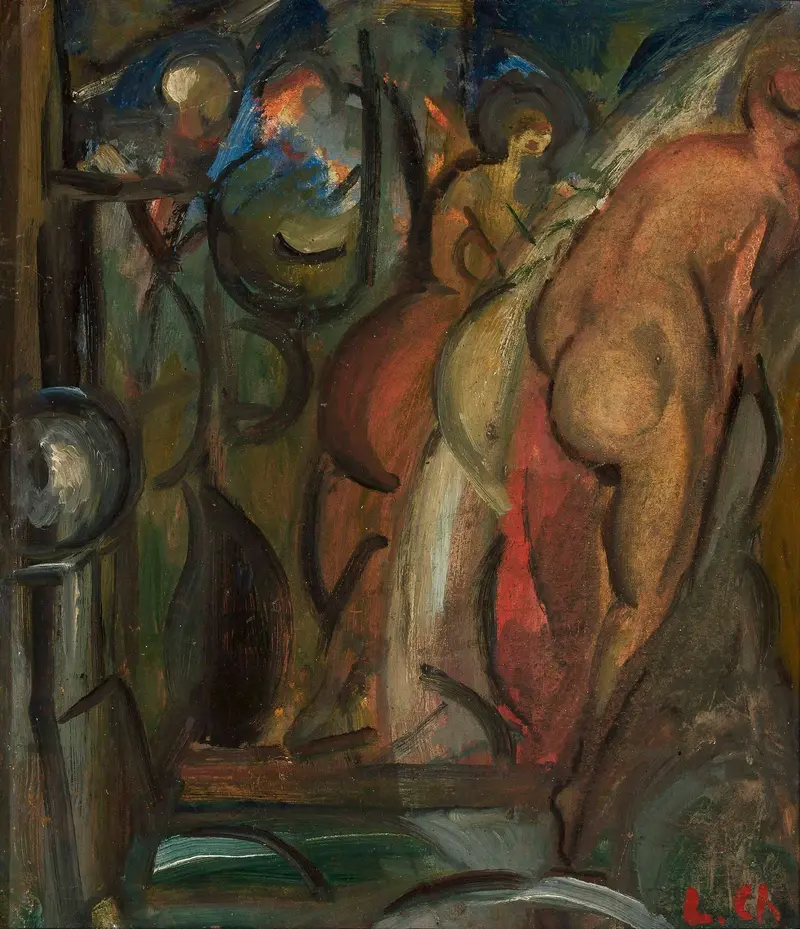
Color and motion seem to surge through Bathing women, drawing the viewer into a world where bodies and water swirl together in a single, restless current. The figure’s limbs stretch and curve in harmony with the arcs and ribbons of blue and green that sweep across the canvas, making it almost impossible to tell where the bather ends and her surroundings begin. The bold, angular outlines and bursts of red suggest both energy and intimacy—this is not a quiet, hidden moment, but one alive with the sense of movement and the play of light.
The palette, dominated by cool tones with flashes of heat, heightens the feeling of a scene glimpsed in motion, as if the water and the figure are caught mid-transformation. Painted in 1920, this work belongs to a world in flux—Poland’s newly regained independence, the aftermath of war, and the heady experimentation of early modernism. Artists like Leon Chwistek were reimagining tradition, blending the human form with abstraction and searching for new ways to express sensation and psychological depth. While little is recorded about the specific journey of this painting, its presence in the National Museum in Warsaw today speaks to the enduring fascination with this period’s bold rethinking of the figure.
The image invites us to linger, to trace the lines and colors, and to imagine the world of possibility that was opening up for art in the years after 1920.