Bauernhof in Schlesien — History & Facts
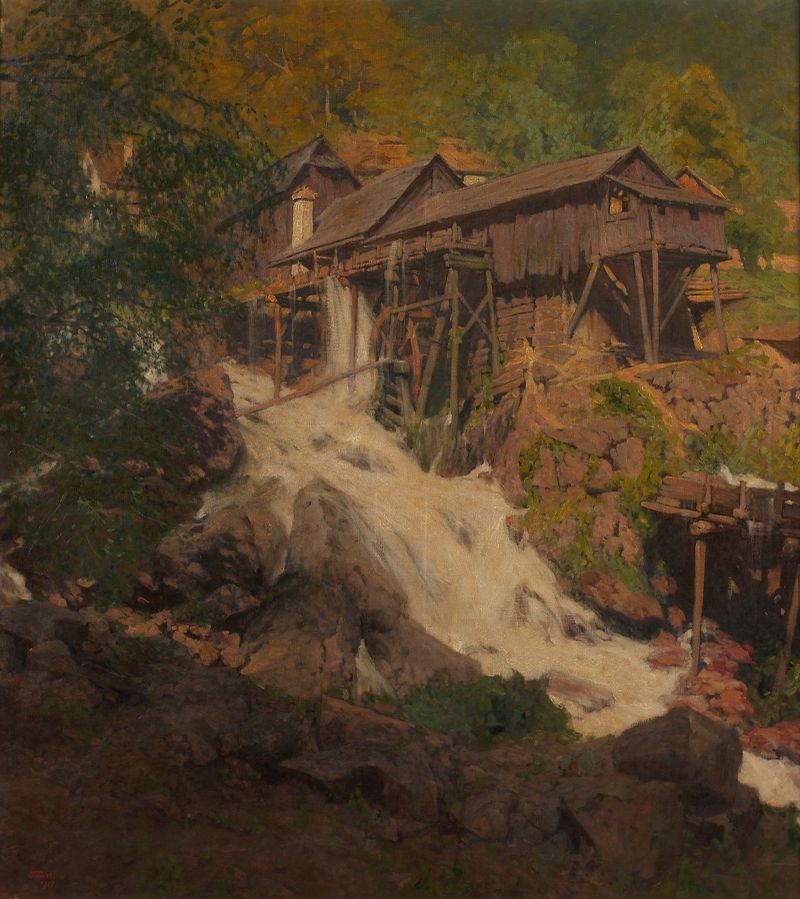
In Bauernhof in Schlesien, the tension between the vibrant hues and the tranquil landscape invites a revelation of the hidden narratives within rural life. Look to the foreground where a patchwork of earthy tones creates a mosaic of fields that stretches out beneath a vast, cloud-strewn sky. The sunlight gently casts a golden glow over the thatched farmhouse, bringing forth the textures of the wooden beams and the warmth of the earth, while shadows linger in the recesses, hinting at stories waiting to unfold. The arrangement of elements—farmhouse, fields, and distant trees—creates a harmonious balance, encouraging the viewer's gaze to dance through the landscape. Beyond its picturesque facade, the painting reveals underlying tensions: the juxtaposition of the delicate yet sturdy farmhouse against the expansive, uncertain sky hints at humanity's struggle against nature.
The color palette, rich with ochres and greens, conveys both the fertility of the land and the weight of tradition, suggesting a deeper connection to the past. Each brushstroke captures not just the scene but the essence of life itself, where moments of labor and leisure intertwine in a delicate rhythm. Jindřich Tomec painted Bauernhof in Schlesien in 1913 while living in Bohemia, a time marked by burgeoning nationalism and the shifting dynamics of rural life. This work reflects the artist's keen awareness of the transformations underway in Central Europe, as traditional values confronted the encroachment of modernity, a theme that resonated throughout his oeuvre.