Beach at sunset — History & Facts
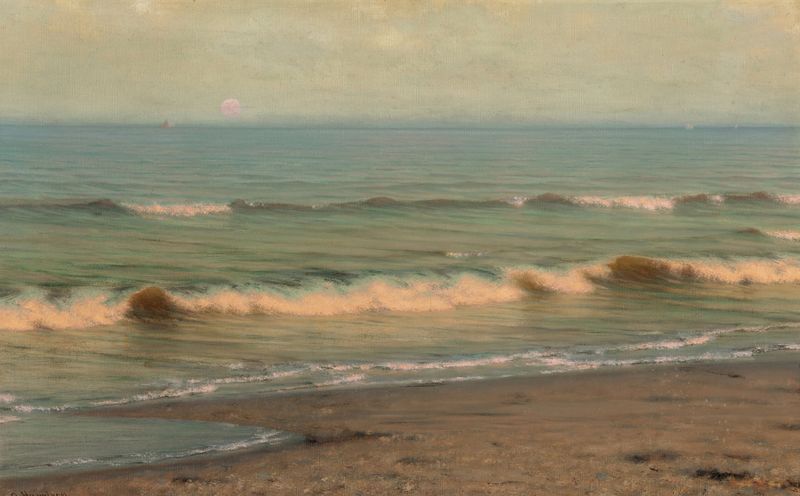
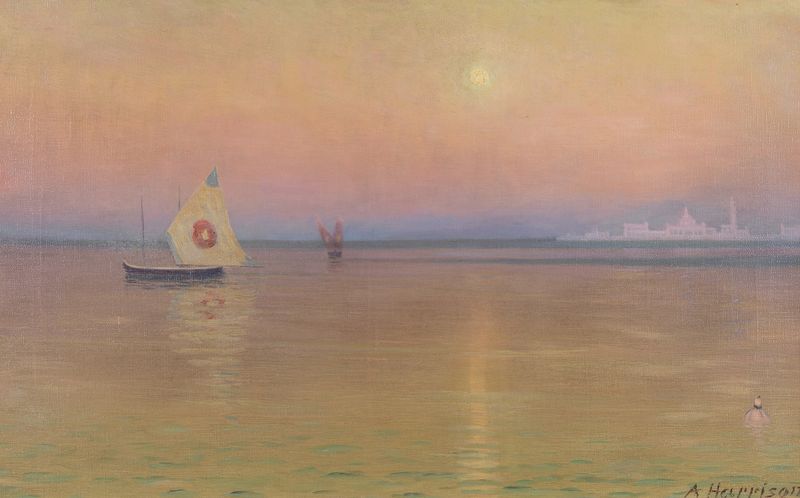
Could a single brushstroke hold eternity? In Beach at Sunset, silence envelops the shoreline, where the sun dips low on the horizon, casting a warm, amber glow that washes over the waves. This moment, suspended in time, invites contemplation as it captures the fleeting beauty of the day’s end. Look to the left at the gentle curve of the sand, where delicate strokes of gold and rose blend seamlessly, guiding the viewer's gaze toward the horizon. Notice how the light reflects off the water, creating a shimmering path that seems to beckon the onlooker into the scene.
The artist’s choice of soft pastels and fluid lines evokes a sense of tranquility, while the sweeping sky hints at the profound stillness that accompanies twilight. Yet, beneath the tranquil surface lies a tension between the ephemeral and the eternal. The juxtaposition of the gentle waves against the vast, open sky evokes feelings of both solitude and freedom. The silence portrayed here resonates deeply, echoing the unspoken thoughts of those who linger at the edge of the water, lost in the beauty of nature's fleeting moments. During the period when this work was created, Thomas Alexander Harrison was exploring the interplay of light and color in landscape scenes, a departure from the more rigid compositions of his earlier works.
While the exact date of this painting remains unknown, it reflects his ongoing engagement with Impressionism, capturing a serene, contemplative moment amidst a world that was rapidly changing in the late 19th century.