Moonrise — History & Facts
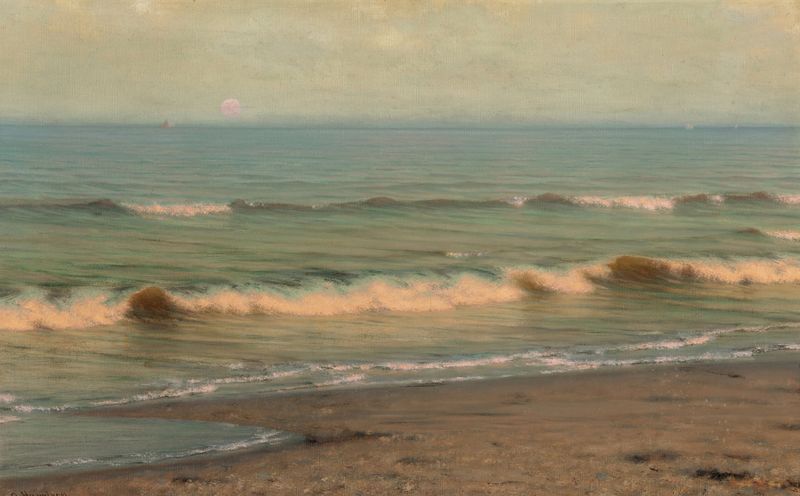
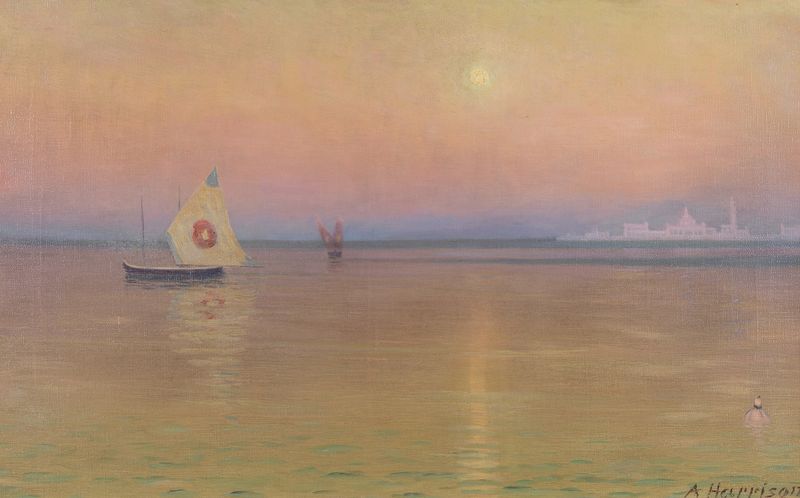
Who listens when art speaks of silence? In Moonrise, the delicate interplay of light and shadow becomes a haunting dialogue, inviting viewers into a world where chaos and tranquility coexist. Focus on the luminous moon hanging low in the night sky, its ethereal glow spilling across the canvas. Notice how the soft blues and silvery whites contrast against the deep indigo background, creating a palpable sense of calm. The foreground is a riot of tangled trees, their dark silhouettes almost clawing at the tranquility above, embodying nature's tumultuous spirit.
The horizon line is subtle yet definitive, offering a glimpse of distant hills that appear almost dreamlike, shrouded in misty ambiguity. Delve deeper into the emotional tensions at play. The moon, a symbol of serenity and guidance, casts a benevolent light over the chaotic forms below. This juxtaposition reveals the artist's contemplation of inner peace amidst external turmoil.
The swirling branches and disordered foliage suggest a world in agitation, yet the serene moon’s presence seems to whisper of hope and stability, urging the viewer to find solace despite life's chaos. In 1910, Harrison sought refuge in the beauty of the natural world during a period marked by artistic exploration and change. Living in the shadow of advancing modernity, he painted Moonrise as a reflection of both personal and societal upheaval, striving to encapsulate the ephemeral beauty that can flourish in the midst of chaos.