
Behangsel met Amaryllis die het blindemanspel speelt DM 017 1238.4 Dordrechts Museum — History & Facts
A sudden burst of laughter seems to ripple through this painted clearing, where a group of elegant figures are caught in the midst of a lively game. The eye is drawn first to the central figure, blindfolded and reaching out, his body tense with anticipation as he gropes for his elusive companions. The sweep of his white drapery, tinged with a flash of rose, echoes the movement of the others—one woman in vivid red has stumbled to her knees, her friend in blue gleefully tugging her away from the seeker’s grasp.
Goats and sheep graze indifferently at the edge, a reminder that this playful scene unfolds in a landscape that is both Arcadian and gently comic. The palette is light, the air clear, the mood one of gentle amusement, as if the painter invites us to linger and watch the drama of the blind man’s game unfold. Painted in 1742 by Aert Schouman, this work belongs to a tradition of decorative wall hangings that flourished in the Netherlands during the eighteenth century. Such scenes, often commissioned for grand homes, brought the spirit of the outdoors into salons and dining rooms, blending myth, pastoral fantasy, and the pleasures of polite society.
History has kept few traces of the individual stories behind these commissions, but the Dordrechts Museum preserves this example as a window onto a world where art was woven into daily life. The theatrical gestures, classical costumes, and careful staging speak to a period when painting was as much about delight as instruction—an invitation to step into an idealized past, if only for the space of a game.
More Artworks by Aert Schouman

Gezicht op Dordrecht met de Rietdijkspoort en windmolens
Aert Schouman
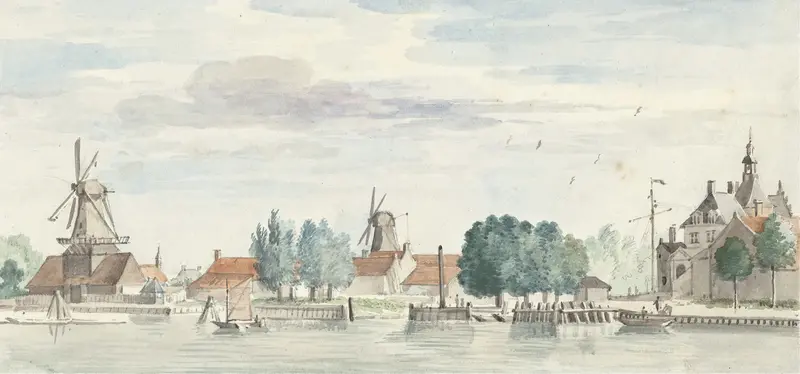
Gezicht op Dordrecht met de Rietdijkspoort en windmolens
Aert Schouman
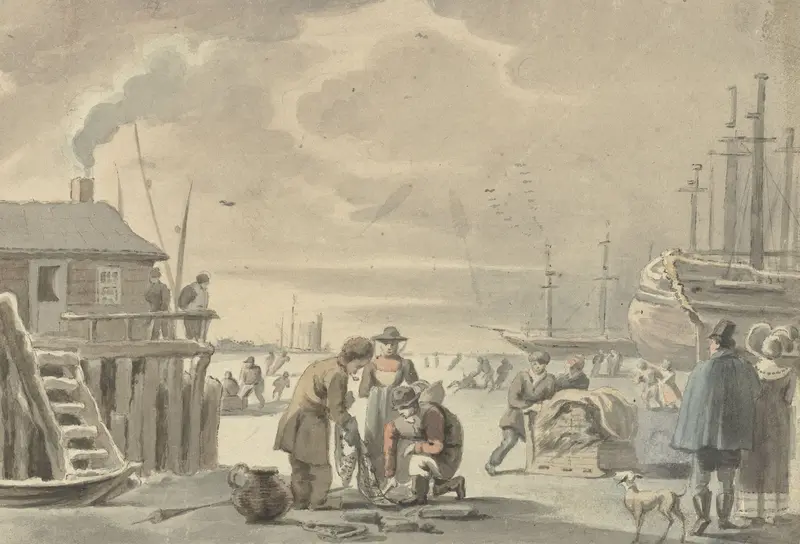
Gezicht op de bevroren Merwede bij Moerdijk
Aert Schouman
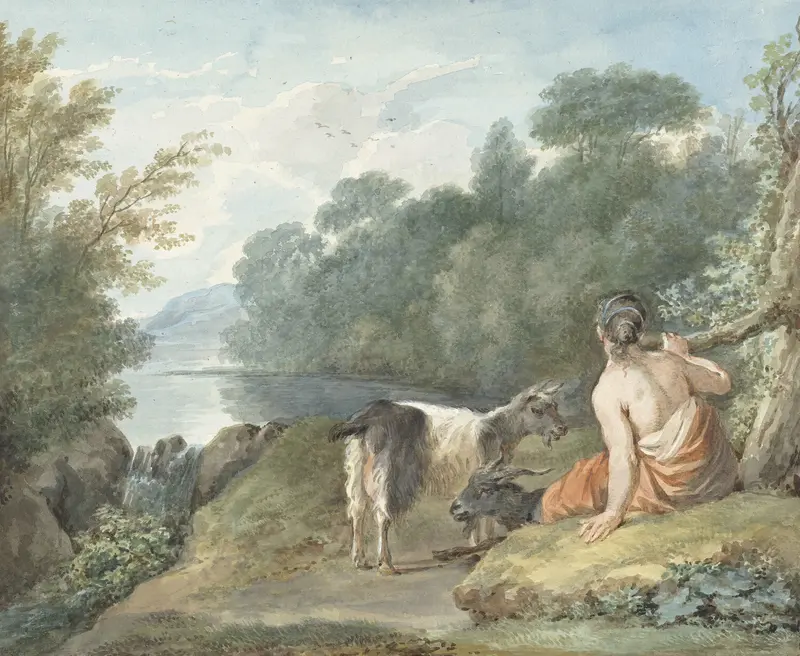
Herderin met geiten in een landschap met een meer
Aert Schouman
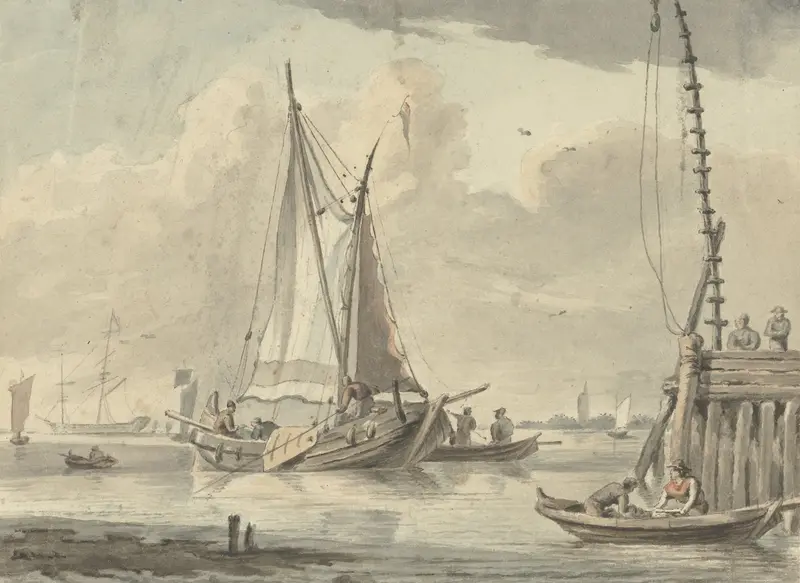
Zeilschepen op de rivier bij Dordrecht
Aert Schouman

Zeilend schip op de Beneden Merwede bij de Papendrechtse dijk
Aert Schouman
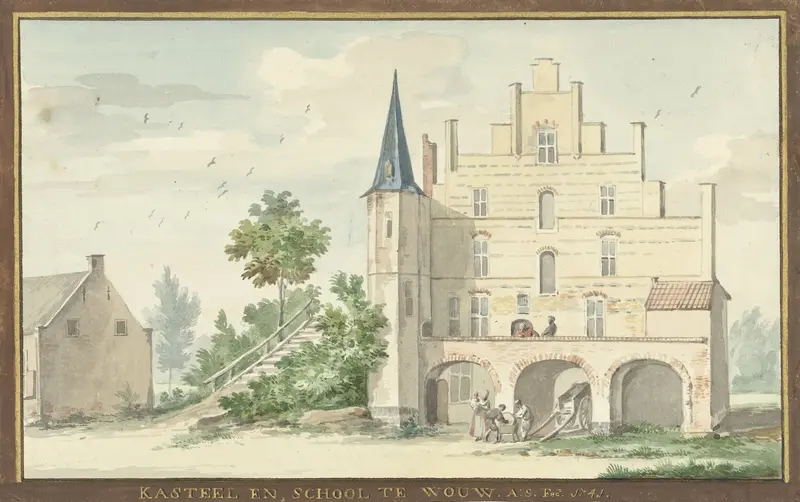
Het kasteel en school te Wouw
Aert Schouman
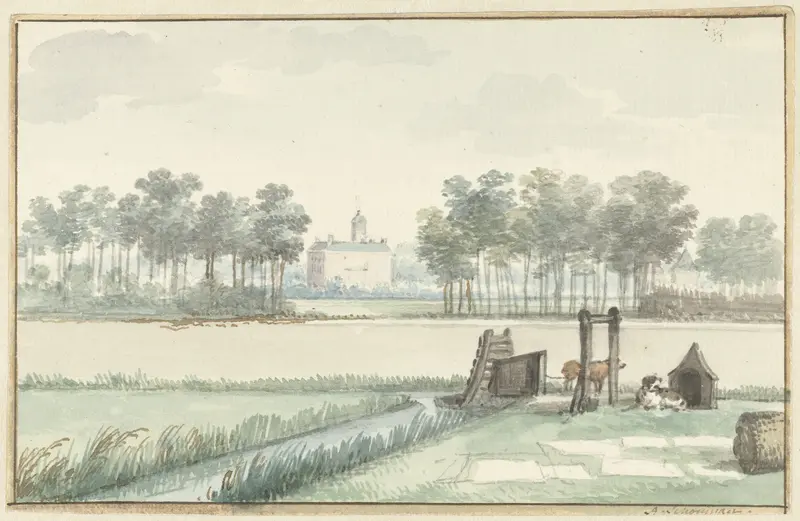
Het kasteel Ter Hooge op Walcheren
Aert Schouman
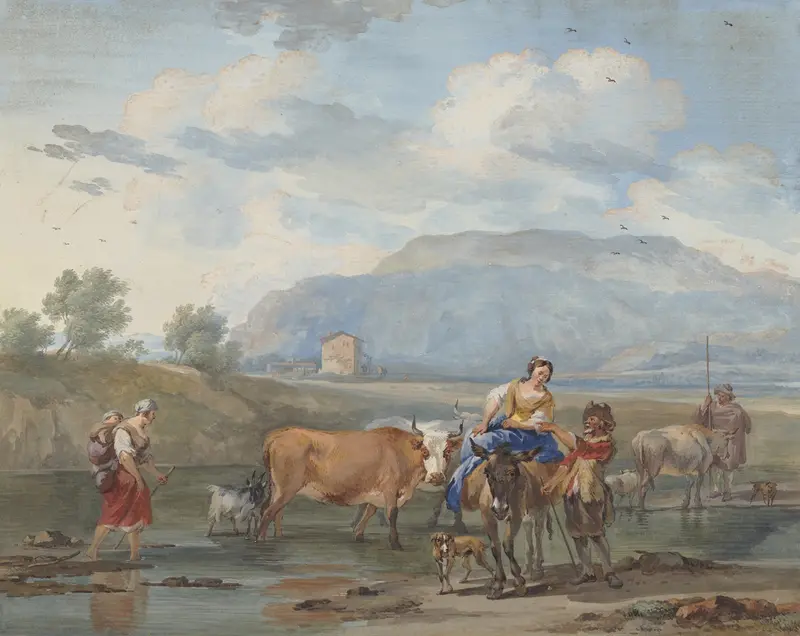
Hirten treiben Kühe durch ein Wasser, links trägt eine Frau ihr Kind auf dem Rücken, rechs reitet eine andere auf einem Esel
Aert Schouman
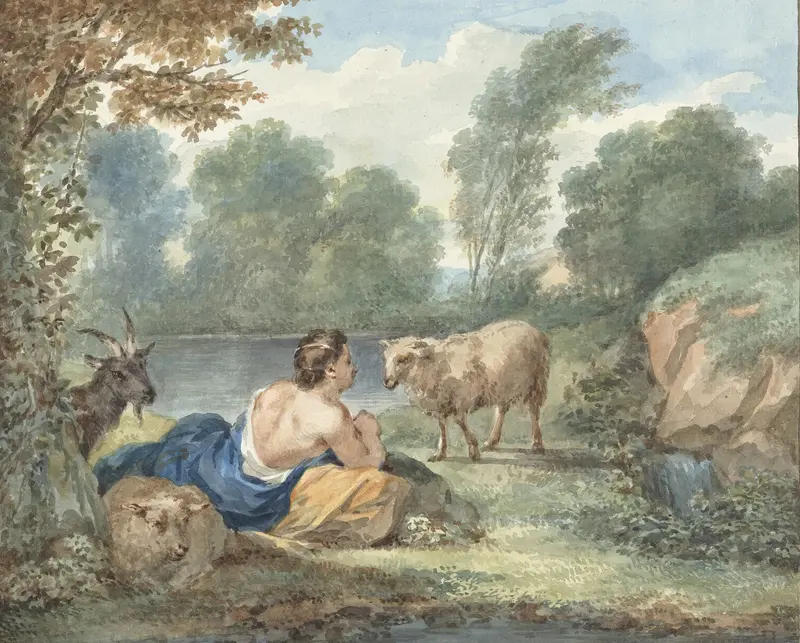
Herderin met schapen in een landschap met een meertje
Aert Schouman
More Genre Scene Art

Banquet of the Officers of the St George Civic Guard
Frans Hals

Rembrandt and Saskia in the Scene of the Prodigal Son
Rembrandt van Rijn

Bal du moulin de la Galette
Pierre-Auguste Renoir

Quadrille at the Moulin Rouge
Henri de Toulouse-Lautrec

A Burial at Ornans
Gustave Courbet

When Will You Marry?
Paul Gauguin