
Berglandschaft mit Häusern — History & Facts
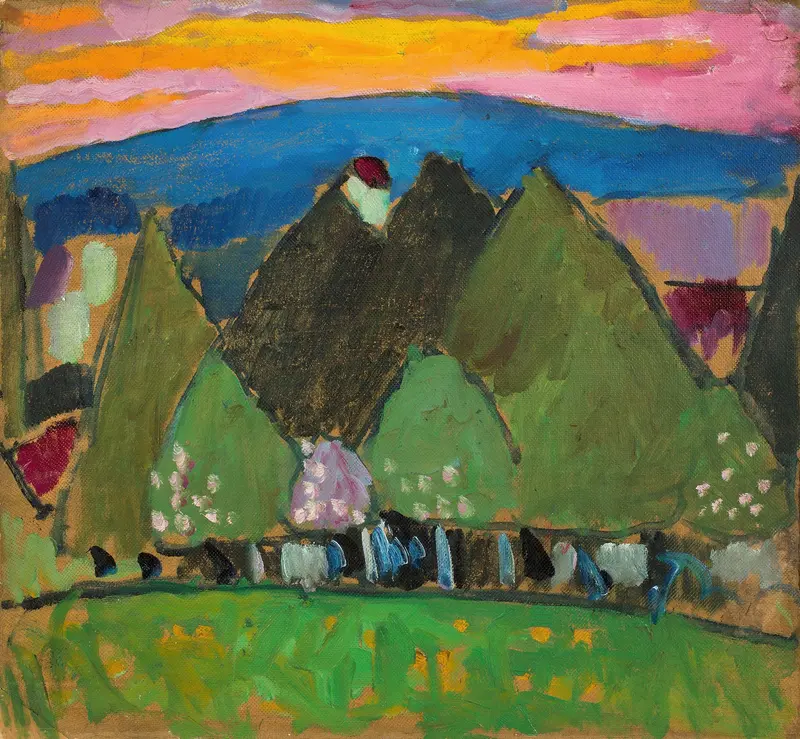
What first grips the viewer in Berglandschaft mit Häusern is the way the mountains seem to press down, their blue-green slopes looming protectively—or perhaps ominously—over a cluster of houses huddled together in the foreground. The buildings, rendered in thick, angular strokes of ochre and rust, tilt and lean as if shaped by the same restless energy that carves the hills behind them. Windows are mere dark voids, giving the houses a sense of mystery and inwardness, while a single telegraph pole stands like a solitary witness to the scene.
The sky, heavy with deep reds and dusky blues, sweeps the eye upward and back, making the mountains feel both near and immense. Every brushstroke seems to pulse with the tension between shelter and exposure, between the human urge to settle and the wildness of the landscape. Painted around 1912, this work belongs to a moment when artists across Europe were breaking away from naturalistic representation, searching instead for a more direct, emotional language of color and form. Alexej von Jawlensky, a central figure in the Expressionist movement, often drew on the landscapes of his adopted Germany to explore these new possibilities.
While little is recorded about the precise journey of this particular painting—now documented in a Christie's collection—its bold simplification and charged palette are hallmarks of a time when painters sought not to mirror the world, but to distill its inner rhythms. The houses and hills here are not just scenery: they are actors in a drama of color and shape, inviting the viewer to linger and feel the pulse of a changing age.
More Artworks by Alexej von Jawlensky

Murnau
Alexej von Jawlensky
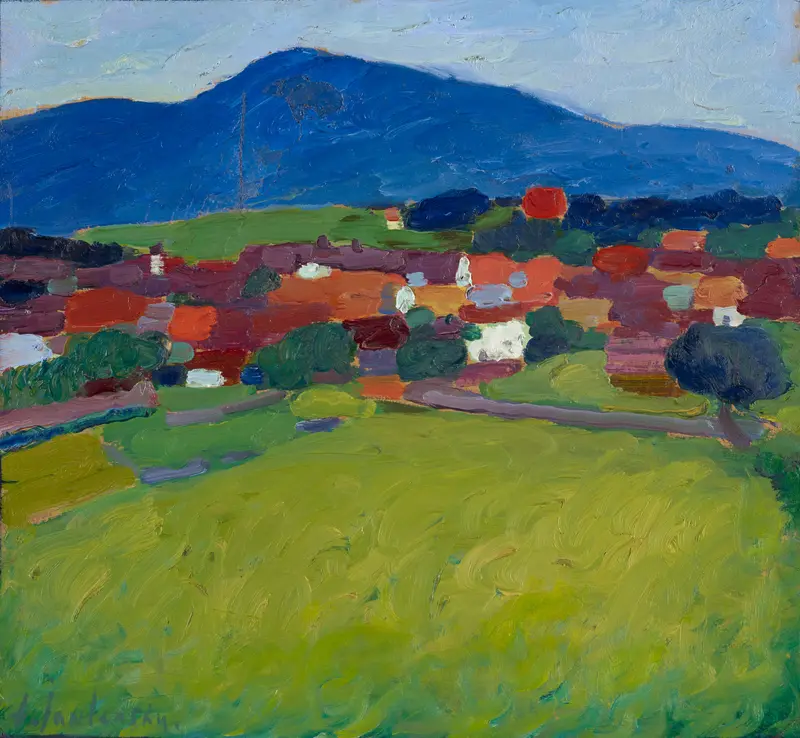
The Village Of Murnau
Alexej von Jawlensky
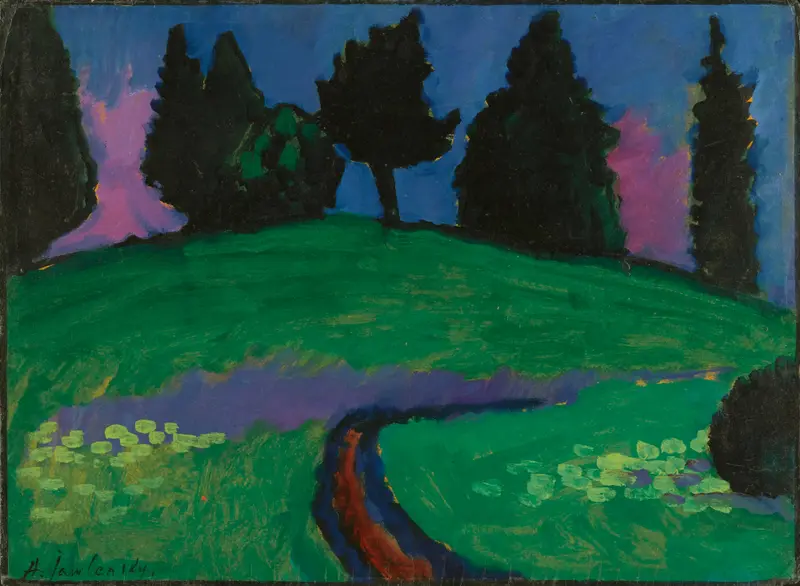
Dunkle Bäume über Grünem Hang (Dark Trees Over Green Slope)
Alexej von Jawlensky
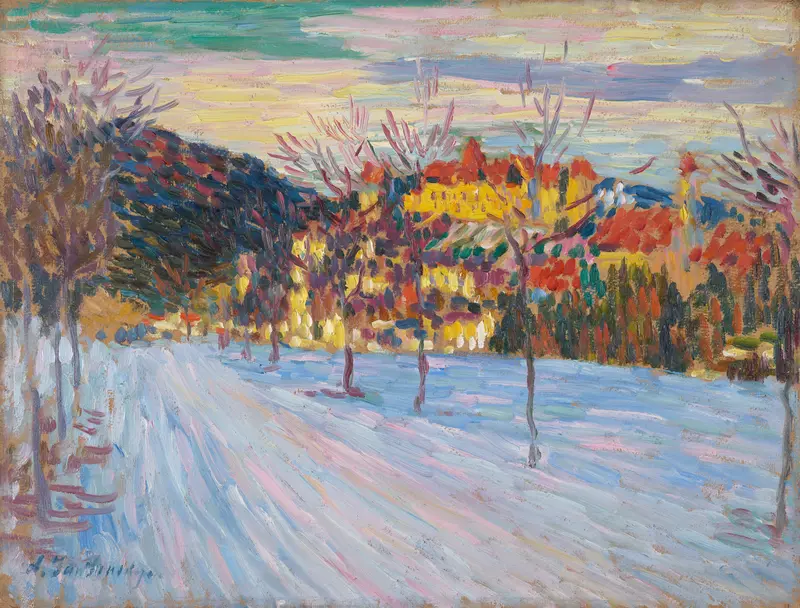
Füssen
Alexej von Jawlensky
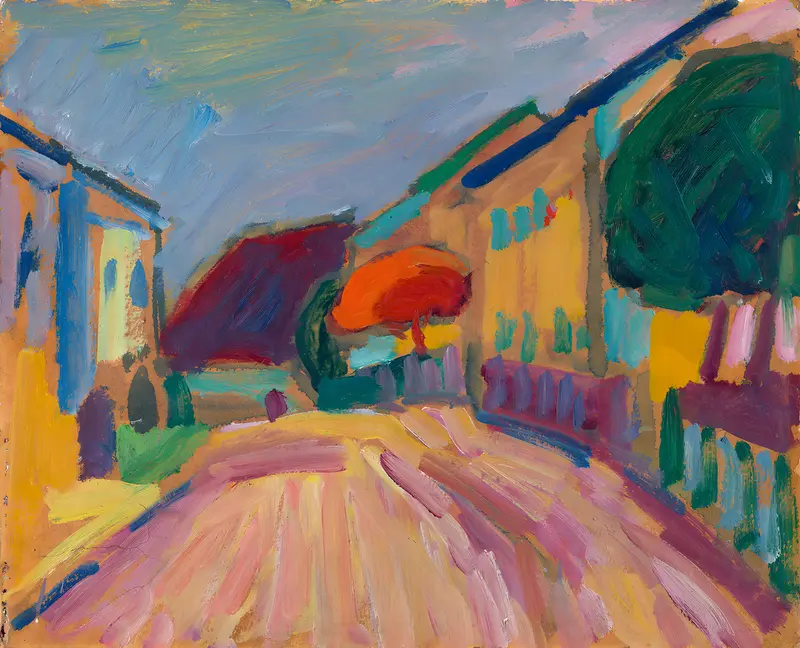
Sketch from Murnau
Alexej von Jawlensky
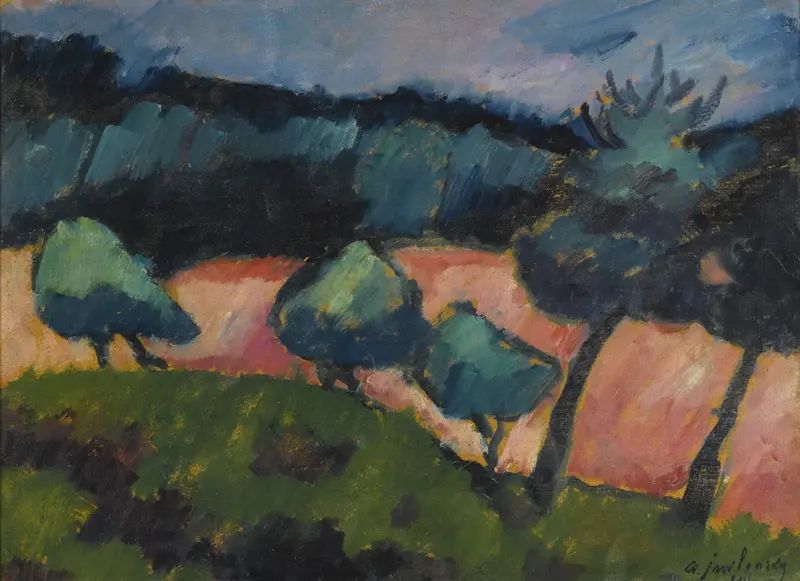
Bäume und Dünen in Prerow (Trees and dunes in Prerow)
Alexej von Jawlensky
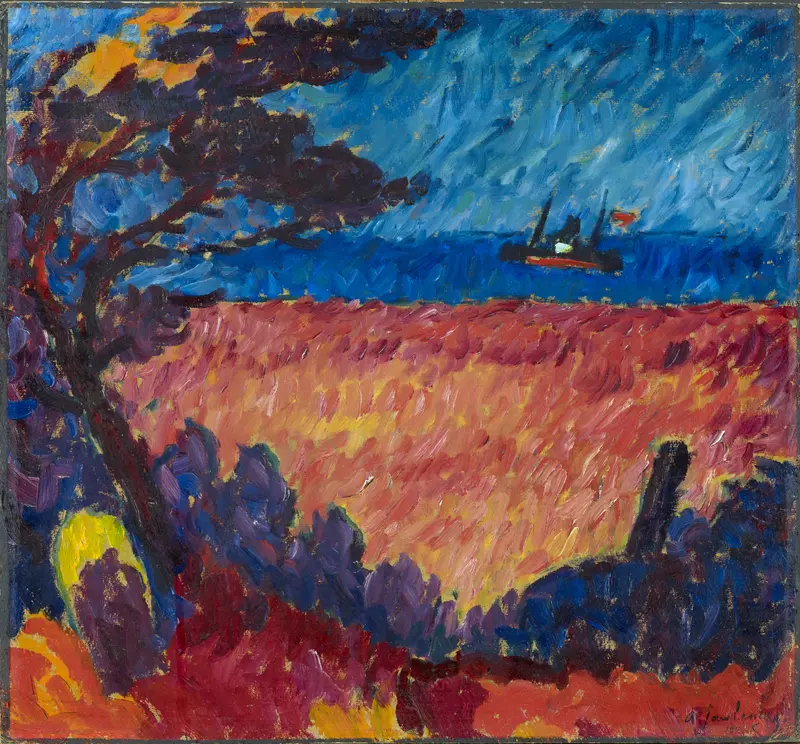
At The Baltic Sea
Alexej von Jawlensky
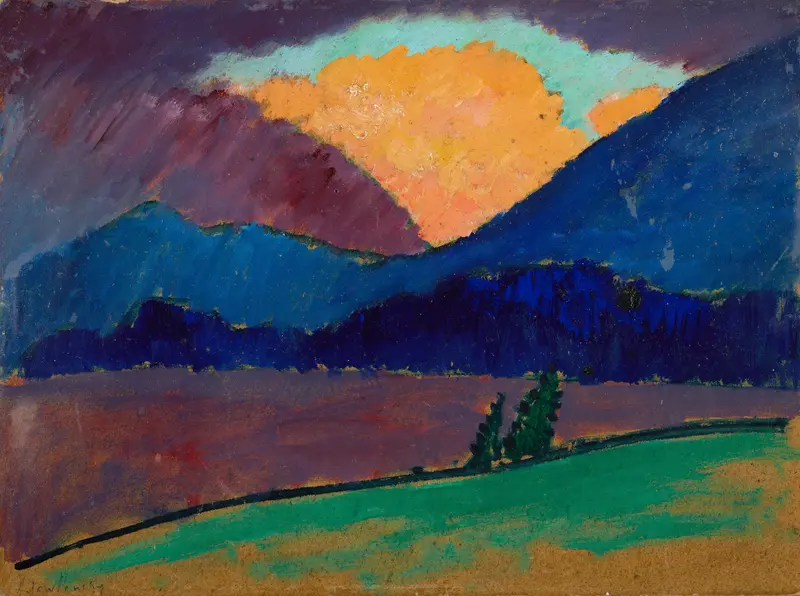
Summer evening in Murnau
Alexej von Jawlensky
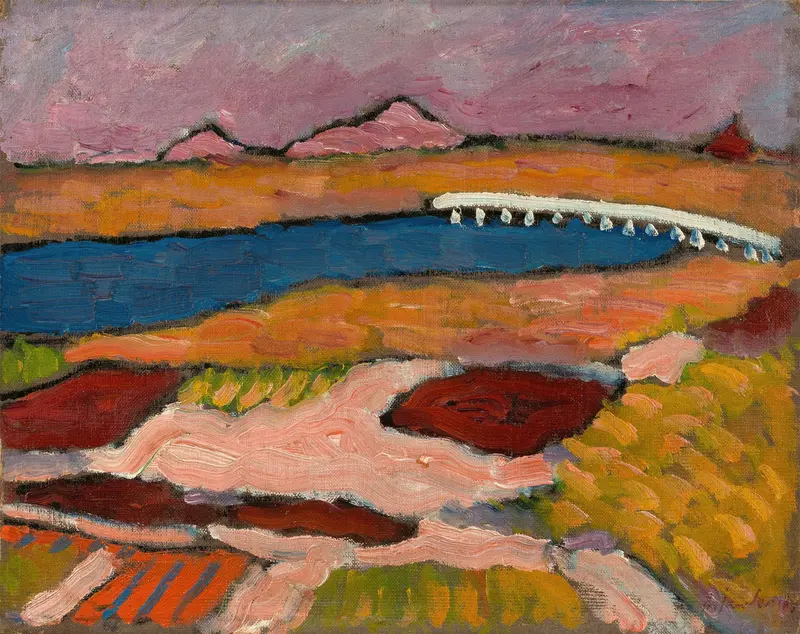
Prerow (Darß), Pommern
Alexej von Jawlensky
Landschaft mit Bäumen
Alexej von Jawlensky
More Landscape Art

The Starry Night
Vincent van Gogh

View of Delft
Johannes Vermeer

Water Lilies
Claude Monet

The Grand Canal, Venice, looking north-west from the Ca' Corner to the Ca' Contarini degli Scrigni, with the campanile of Santa Maria della Carità
Canaletto

Windsor Castle
Canaletto

The Grand Canal looking North-East from the Palazzo Dolfin-Manin to the Rialto Bridge
Canaletto