Berglandschap met een rivier — History & Facts
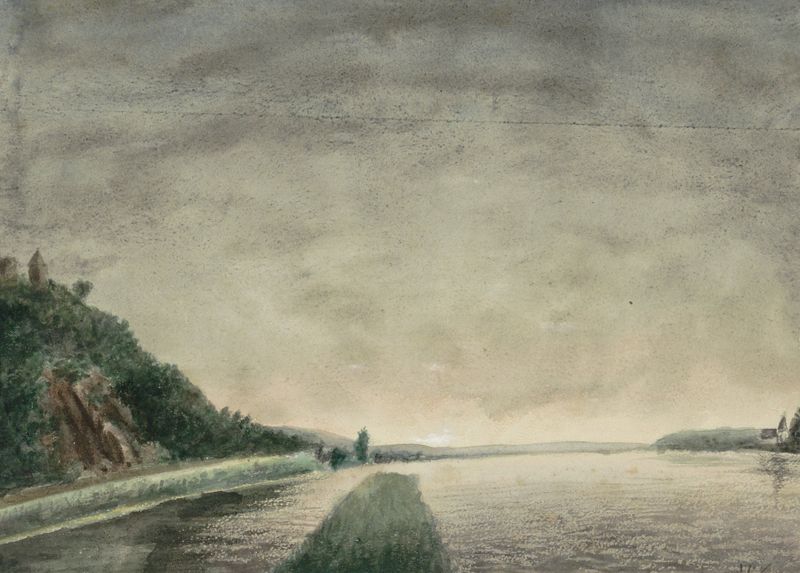
In the quietude of nature, the landscape carries an unspoken weight, an invitation to delve into the void of existence and reflect on what lies beyond the visible. Focus first on the gentle flow of the river, a shimmering ribbon cutting through the heart of the canvas. The soft greens and blues coalesce in a harmonious dance, rhythmically guiding the eye. Notice how the light, dappled through the trees, casts intricate shadows that blur the line between land and water, evoking a serene yet enigmatic atmosphere.
The juxtaposition of the vibrant foliage against the tranquil river speaks to the balance of life and stillness. This painting subtly encapsulates the tension between nature's beauty and its inherent void, a dialogue between the flourishing landscape and the absence of human presence. The undulating hills, while lush, suggest a solitude that resonates deeply. Each brushstroke seems to whisper of timelessness, provoking contemplation on the transience of life and the permanence of nature’s essence.
The silence of the scene beckons viewers to confront their own existential musings. In 1878, Jan Veth painted this work amid a burgeoning interest in naturalism, as artists sought to depict the world with authenticity and emotional depth. During this period, he was navigating his own artistic evolution, shifting from historical themes to the intimacy of landscapes, reflecting a broader shift in the art world that prioritized personal expression and observation. As the world around him transformed, he turned his gaze inward, immortalizing the dialogue between human sentiment and the vastness of nature.