River Landscape — History & Facts
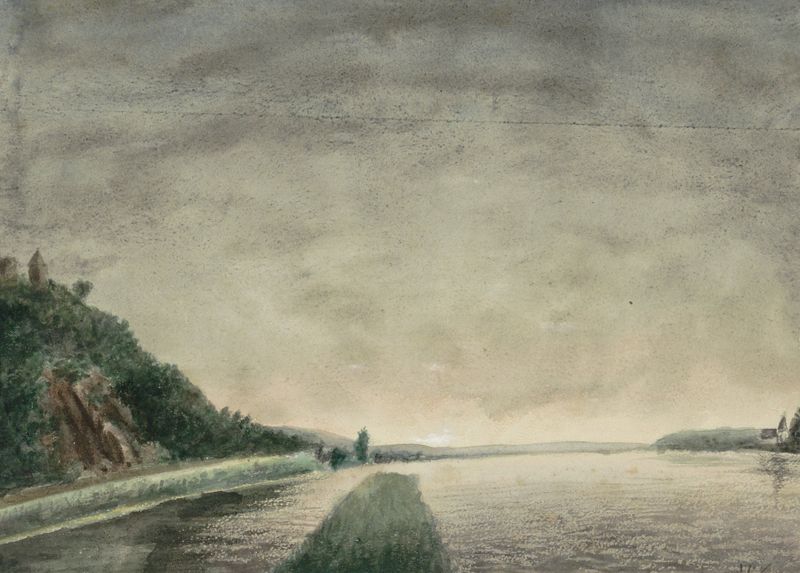
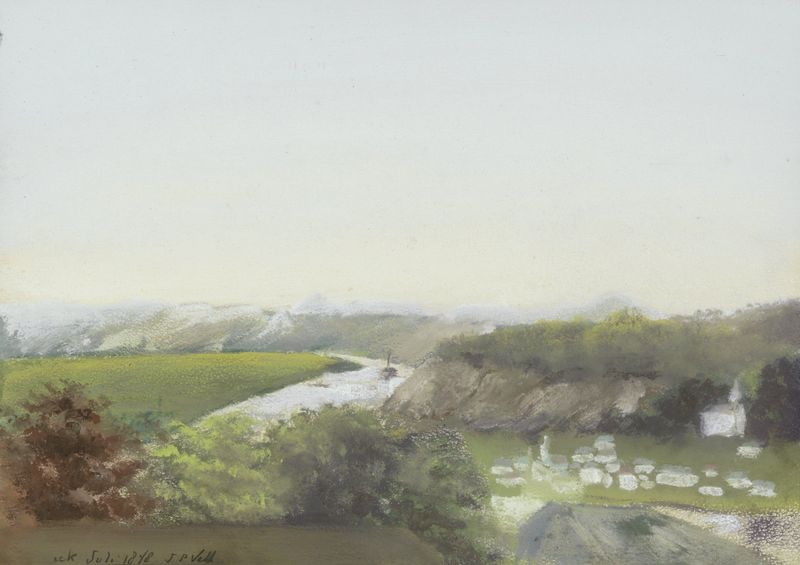
In the stillness of a river landscape, one can almost hear the whispers of solitude that linger in the air, echoing the profound depths of human experience. Look to the left at the gentle curve of the river, where the water glistens under a soft light, inviting the eye to glide along its surface. Notice how the trees, painted with a tender touch, frame the scene, their delicate branches reaching outward like a longing embrace. The muted palette of greens and browns casts a somber yet serene mood, allowing the viewer to delve into the layers of emotion concealed within the landscape. The contrast between the flowing river and the rigid, towering trees evokes a sense of tension – a meditation on the balance of movement and stillness.
The solitary figure, dwarfed by nature’s grandeur, speaks volumes of the loneliness that pervades the canvas. Each brushstroke captures the weight of introspection and the quiet yearning for connection, reflecting not just a physical landscape but the emotional terrain of the human spirit. Painted in 1878 during a time when the artist was deeply engaged with the Dutch landscape tradition, this work emerged as Veth explored personal themes of isolation amidst societal change. Living and creating in the Netherlands, he was influenced by naturalism's rise, yet his unique perspective set him apart.
This piece is a poignant reminder of the delicate interplay between nature and human emotion, marking a significant moment in his artistic journey.