Berglandschap aan een meer — History & Facts
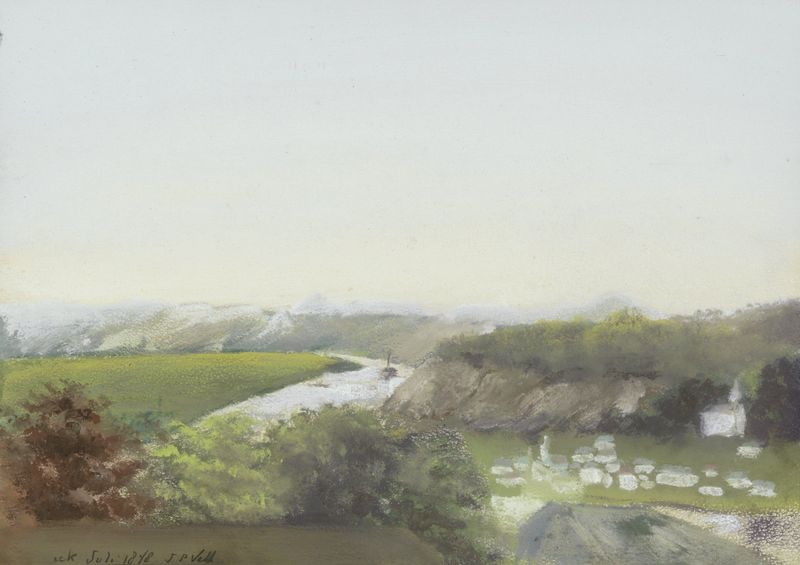
In the delicate embrace of a landscape, memories weave into the fabric of solitude. Jan Veth captures the essence of loneliness, rendering the silent landscape a poignant testimony to the human experience. Look to the left at the gentle undulations of the hills, where the soft hues of green meet the tranquil surface of the lake. Notice how the sunlight glimmers on the water, creating a shimmering path that seems to invite the viewer deeper into the scene.
The colors are muted yet vibrant, a blend of earthy tones that evoke a sense of both serenity and melancholic introspection. The composition draws the eye toward the horizon, where the sky, a canvas of pastel clouds, hints at the fleeting nature of beauty and time. The artist imbues this landscape with contrasts that resonate deeply. The stillness of the water juxtaposes the rolling hills, suggesting an inner conflict between tranquility and yearning.
Tiny details, like a solitary tree standing watch on the shore, symbolize the isolation that often accompanies reflection. Veth’s deft brushstrokes reveal the emotional weight of the scene, reminding us that nature, while beautiful, can mirror our most profound solitude. In 1878, Veth created this work amid the Dutch art movement's shift toward realism, aiming to capture life as it truly is. This period marked a growing interest in landscapes and everyday scenes, reflecting a broader societal fascination with nature.
As Veth navigated his own artistic journey, Berglandschap aan een meer emerged as both a personal exploration of isolation and a testament to the evolving landscape of 19th-century art.