Bernina Gewitter — History & Facts
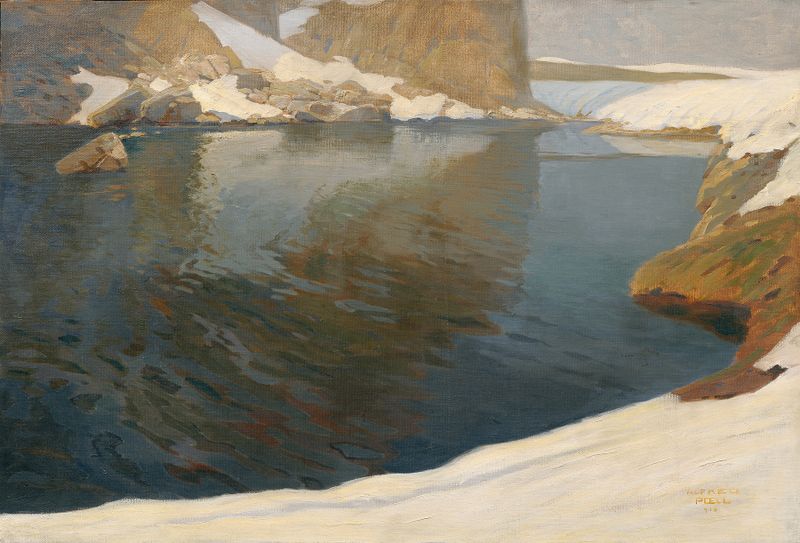
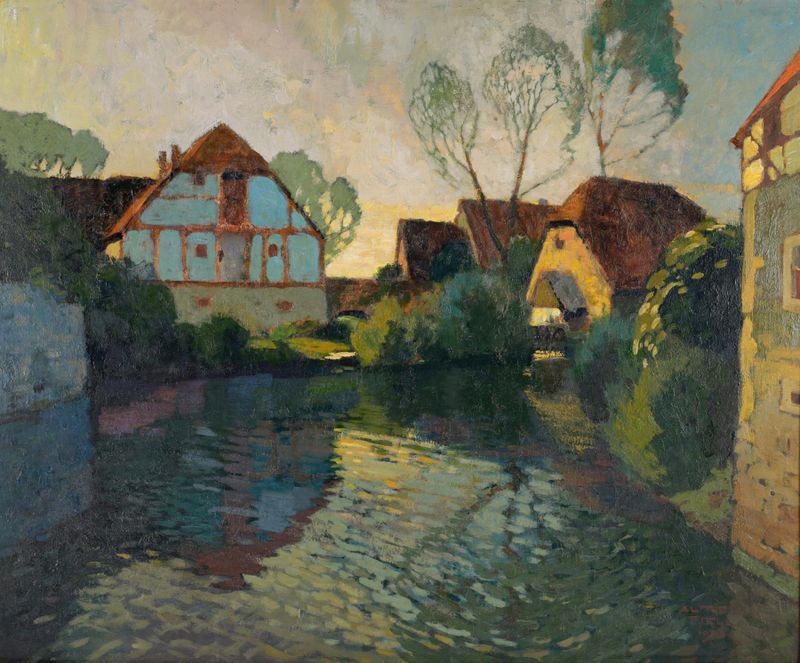
Who listens when art speaks of silence? In a world overshadowed by tumult, longing drips like rain on a parched earth, echoing the unsaid. Look to the foreground of Bernina Gewitter, where hues of deep gray intermingle with soft touches of violet. The turbulent sky looms large, each brushstroke a whisper of storm clouds gathering, saturating the canvas with a palpable sense of anticipation. Notice how the dark palette contrasts with the faint hints of white in the distant mountains, suggesting both foreboding and hope.
The composition draws the eye upward, creating an upward spiral of energy that feels both overwhelming and inevitable. Yet, beneath the weight of the storm lies a complex emotional landscape. The stark lines of the mountain range suggest isolation, while the swirling clouds imply a longing for connection—perhaps a yearning to break free from solitude. The tension between the rugged peaks and the volatile sky encapsulates the duality of nature: fierce yet beautiful, threatening yet awe-inspiring.
This juxtaposition resonates deeply, inviting the viewer to reflect on their own experiences of longing and anticipation. In 1918, Alfred Poell created this piece while navigating the aftermath of war in Europe, a time when the world felt fragmented and despairing. Living in Switzerland, he was influenced by the serene yet dramatic landscapes of the Alps, which became a symbol for both refuge and turmoil. The painting mirrors the emotional climate of its time, capturing an existential tension that still echoes in the modern psyche.