Dämmerung in einem Dorf — History & Facts
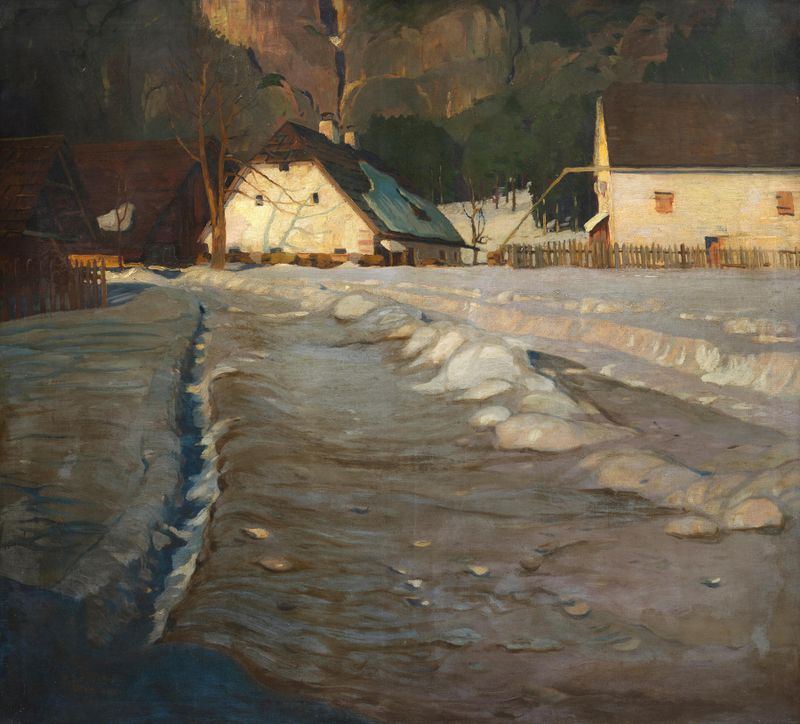
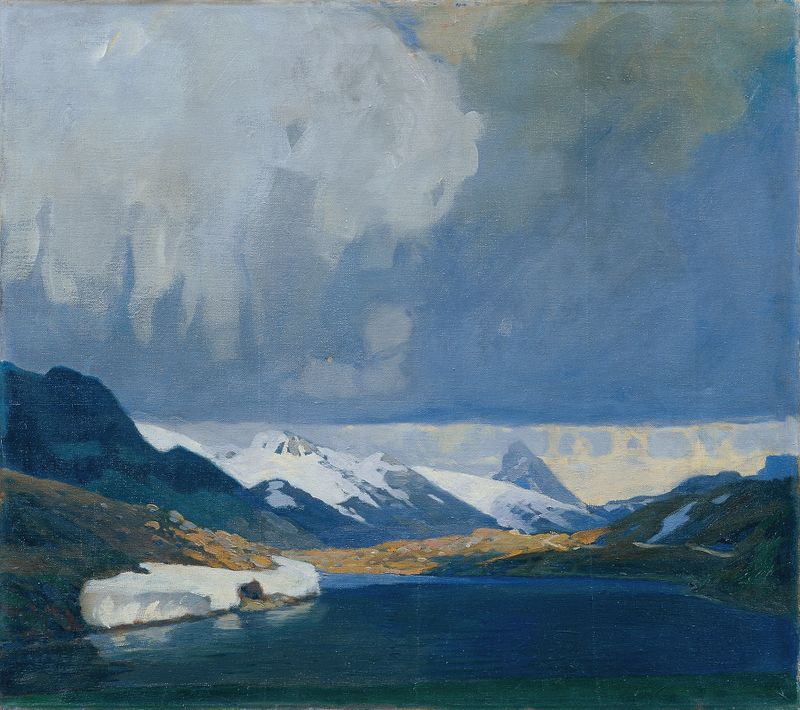
In the stillness of dusk, when shadows deepen and the vibrancy of day gives way to night, the boundary between life and the inevitable fades. It is in this fragile twilight that the essence of mortality emerges, woven into the fabric of existence. Look to the horizon where the last light of the day lingers, casting a gentle glow over the village nestled within the gentle hills. The muted palette of soft blues and warm oranges captures the transition, while the silhouettes of rooftops stand stark against the fading sky.
Notice the delicate brushwork that evokes a sense of calm, encouraging the viewer to dwell on the subtleties of the scene—the wisps of smoke curling from chimneys, the solitary figure meandering down a dirt path, each element grounding the moment in a poignant reality. Within this tranquil tableau lies a profound contrast between the serene beauty of the landscape and the underlying sense of impermanence. The encroaching night serves as a reminder of the fleeting nature of life, while the village exudes a quiet resilience. Each detail, from the fading light to the textures of the earth, reflects a poignant stillness, urging contemplation on human existence and our inevitable return to the silence of the dark. In 1923, Alfred Poell painted this scene during a time of great change in Europe, as the shadows of World War I still lingered in collective memory.
Living in Austria, Poell was influenced by the cultural upheaval and the search for meaning in a world reshaped by conflict. This painting reflects not only his artistic journey but also an era grappling with the concepts of mortality and the passage of time.