Winter Sonne — History & Facts
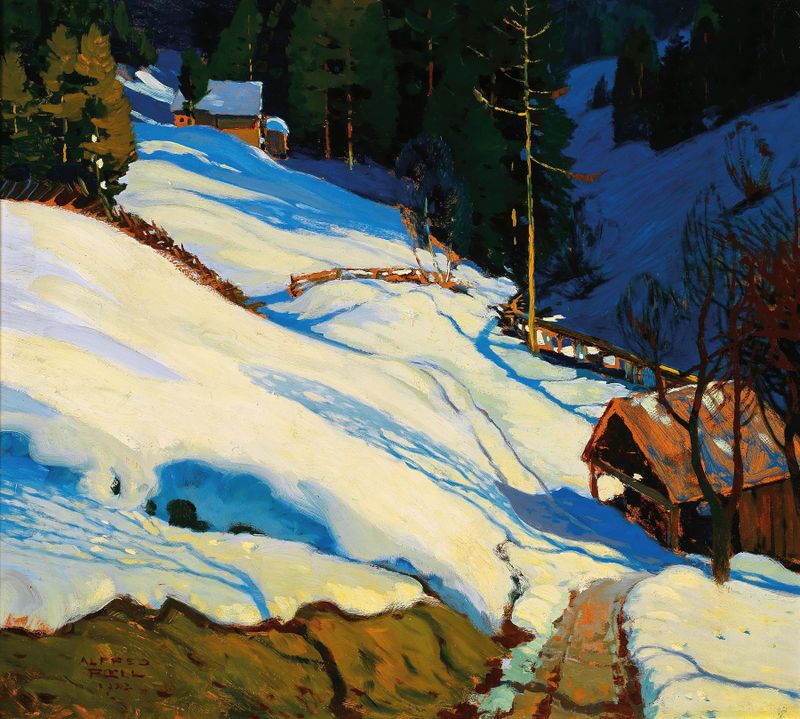
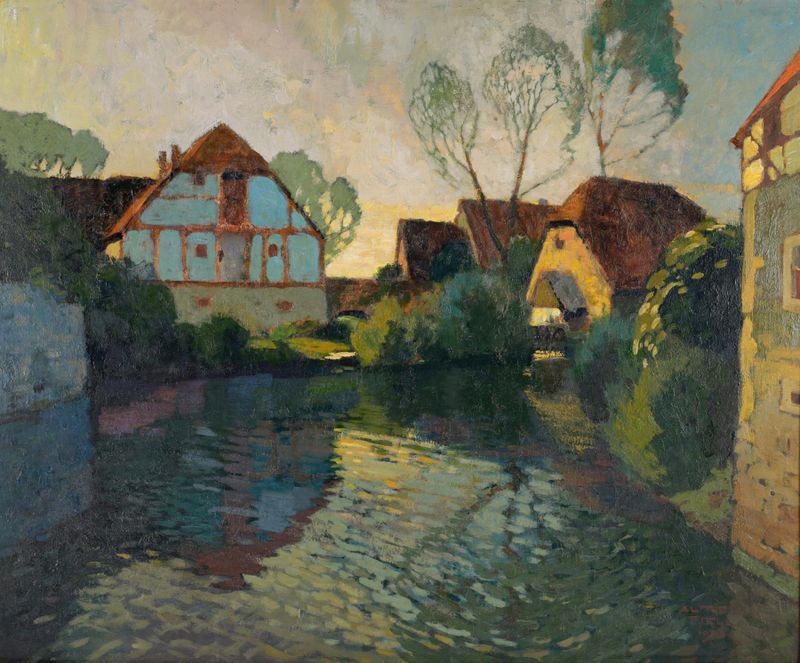
In the delicate interplay of hues and shadows, a quiet transformation unfolds, inviting each viewer to uncover their own truths within its depths. Focus on the gentle gradient that transitions from a soft golden warmth at the center to cooler, muted shades at the edges. Notice how the light appears to drizzle down like honey, subtly embracing the landscape and intertwining with the wispy branches, creating an ethereal atmosphere. The brushwork carries a flickering vitality; each stroke is deliberate yet spontaneous, capturing the essence of winter's beauty while hinting at the promise of change. In this piece, the contrast between warmth and cold embodies the tension of transformation, as the fading light mimics the cycle of seasons.
The vibrant yellows infuse life into the scene, suggesting the resilience of nature, while the encroaching blues symbolize the stillness and introspection of winter. Every detail holds significance; the interplay of light and shadow reflects the duality of existence, inviting contemplation about the transient nature of beauty and life itself. Alfred Poell created Winter Sonne in 1911, during a period when he was deeply influenced by the burgeoning expressionist movement. Living in Vienna, he sought to evoke emotional depth through color and light, pushing boundaries in his artistic practice.
The early 20th century was marked by profound changes in art and society, and Poell’s works captured the essence of this transformative era, lending his voice to a vibrant and evolving artistic landscape.