
Bertha Gugger with daughter — History & Facts
What draws the viewer in first is the quiet intensity of attention: a mother, her head bent in concentration, knits as her daughter sits beside her, hands gently resting on the work. The child’s gaze meets ours directly, her blue eyes wide and unguarded, while the mother’s focus remains on the rhythmic movement of her needles. The green-tiled stove they share as a seat radiates warmth both literal and emotional, its glossy surface anchoring the scene in the heart of a lived-in home.
The basket of yarn, the striped aprons, and the simple, worn wall all speak of daily routine, but the composition elevates this moment into something quietly monumental. Light falls softly from the left, illuminating the child’s face and the mother’s hands, as if to say: here is the center of the world. Painted in 1898, Bertha Gugger with daughter belongs to a tradition of late nineteenth-century genre painting that found dignity in ordinary domestic life. In Switzerland and beyond, artists like Albert Anker became known for their sensitive portrayals of family, work, and rural interiors, often commissioned by a rising middle class eager to see their values reflected on canvas.
While little is recorded about the specific journey of this painting—its source traces it to a Christie’s auction—its subject and date place it firmly within a moment when the everyday was being reimagined as worthy of art. The viewer is left to wonder what stories were spun in such rooms, and what small acts of care have gone unrecorded, save for images like this.
More Artworks by Albert Anker

Portrait Of A Girl
Albert Anker
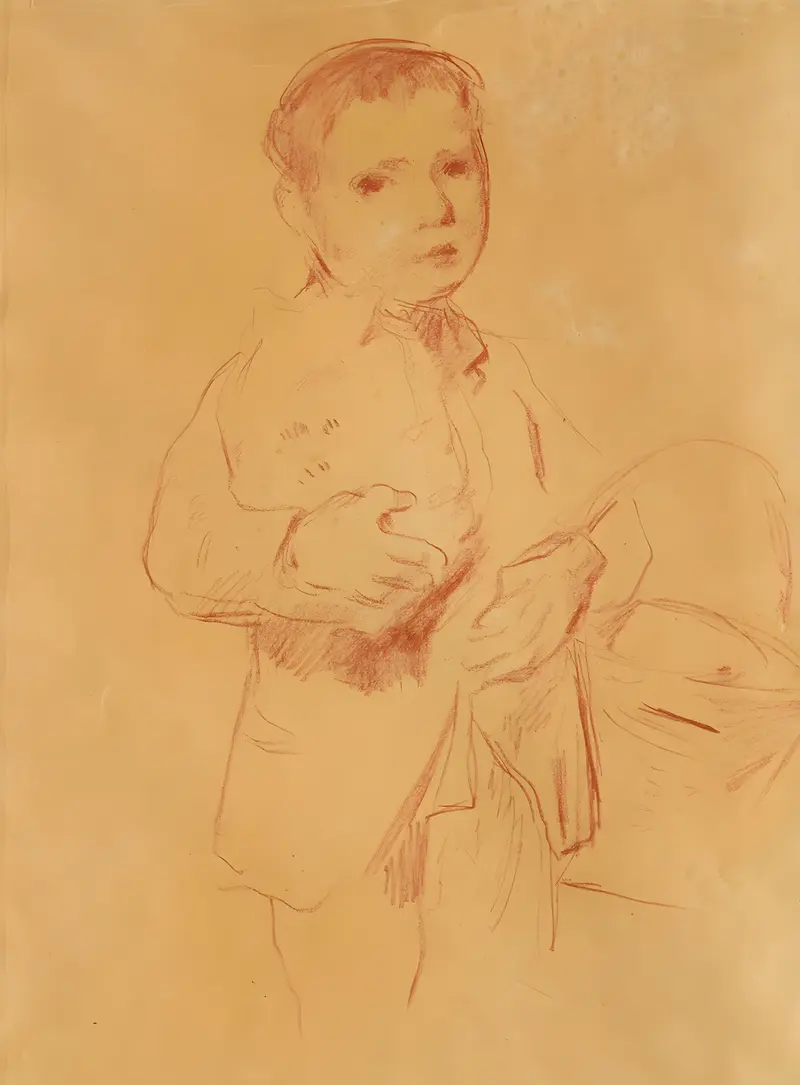
Boy with a basket
Albert Anker
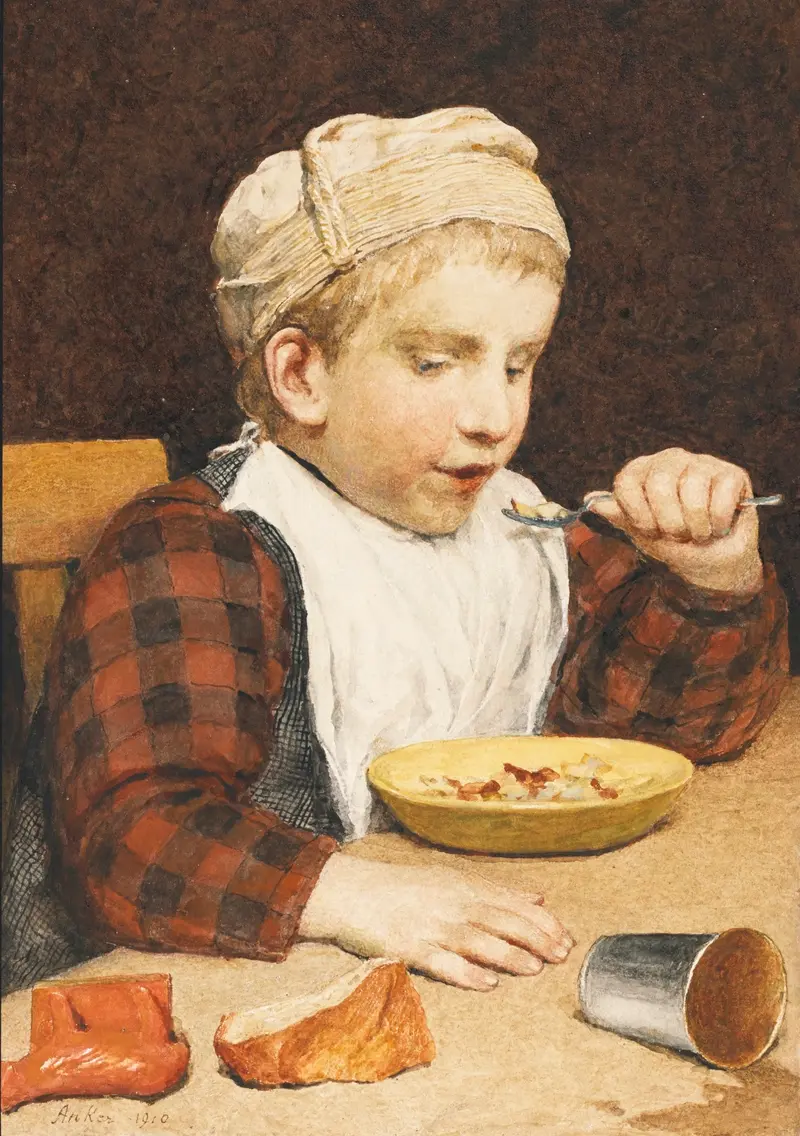
Knabe Mit Mütze Beim Essen
Albert Anker
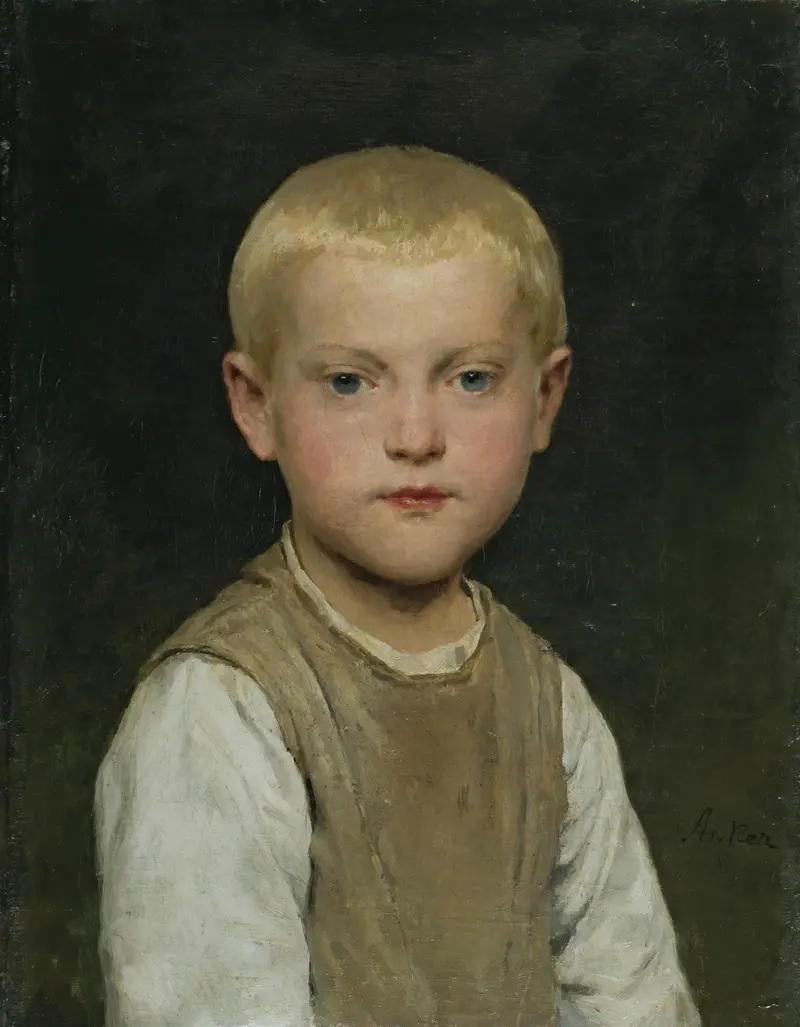
Knabenbildnis (Dr Heiri)
Albert Anker
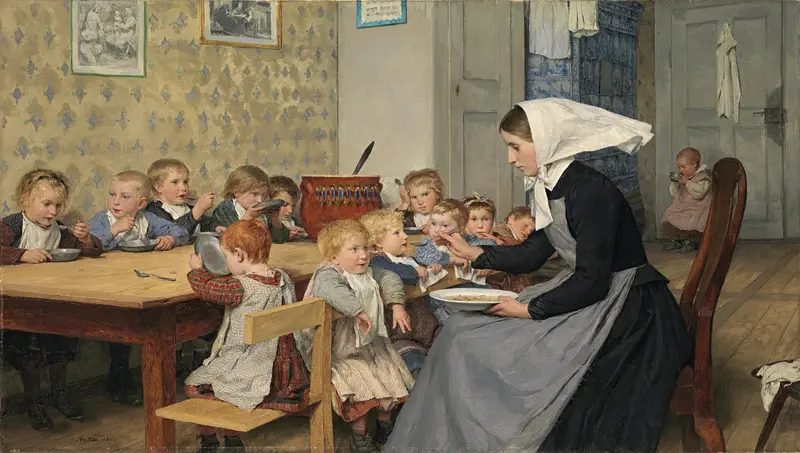
Die Kinderkrippe I
Albert Anker

L’instituteur et le pasteur
Albert Anker
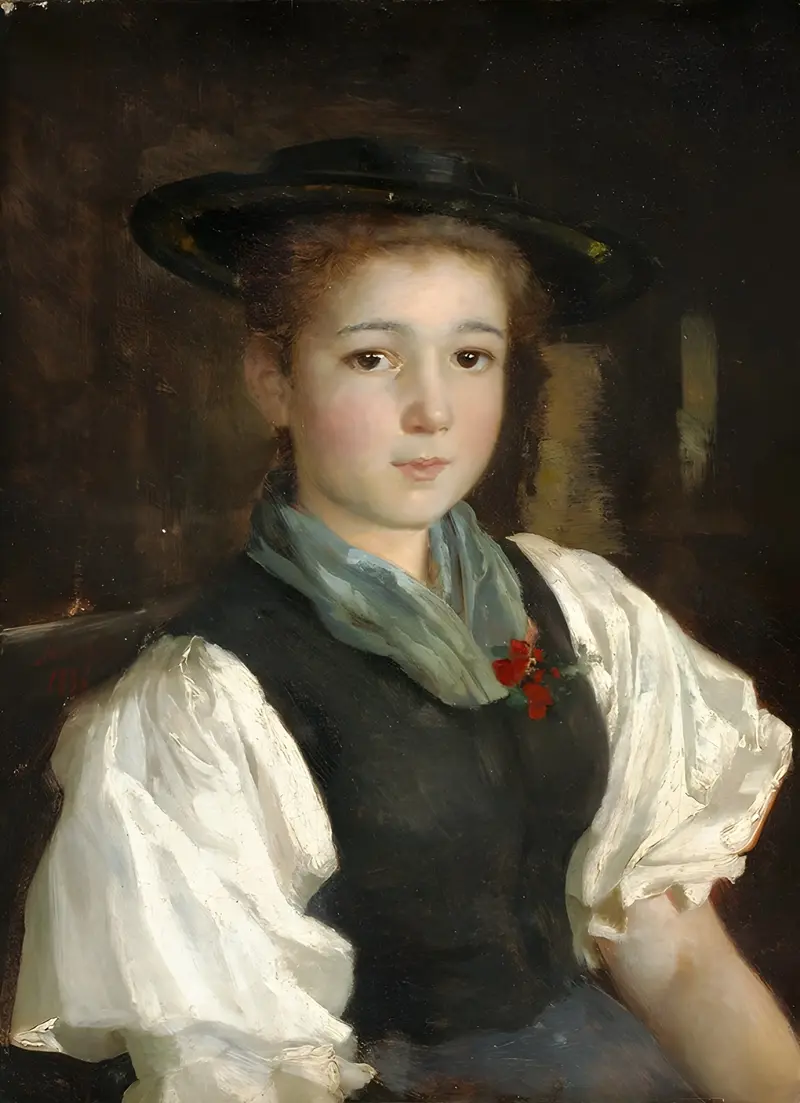
Bauernmädchen (Farm Girl)
Albert Anker
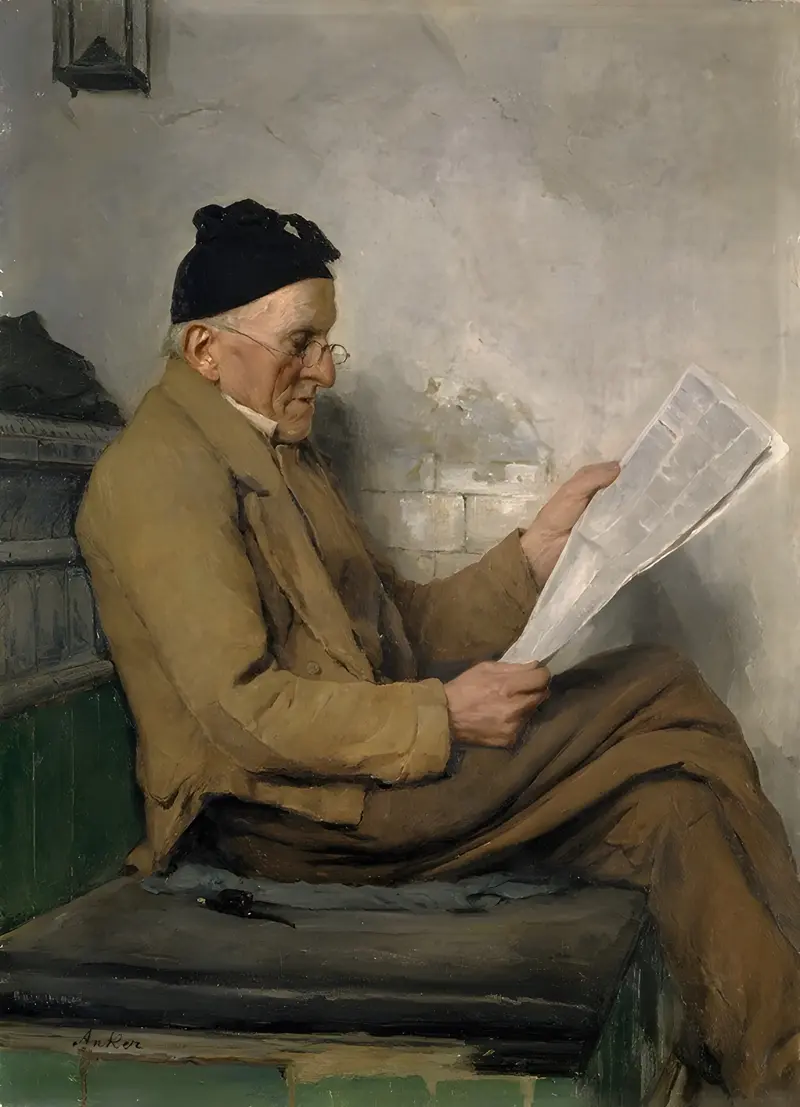
Farmer Reading on the Stove Bench
Albert Anker
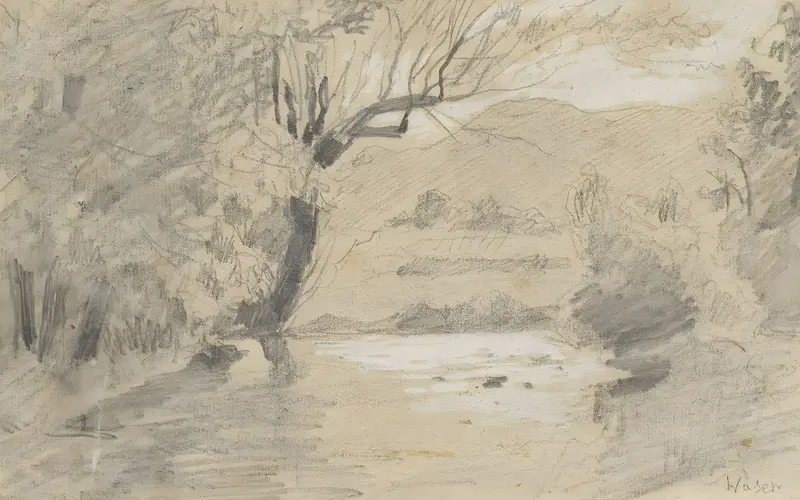
Flusslandschaft in Wasen (Emmental)
Albert Anker
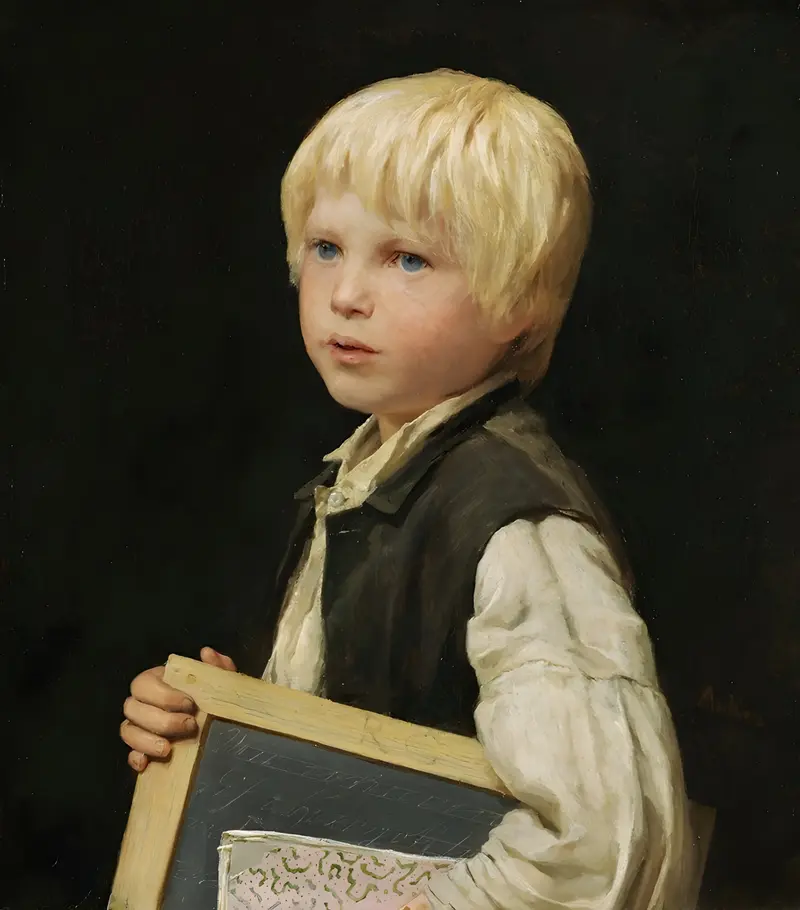
School Boy
Albert Anker
More Genre Scene Art

Banquet of the Officers of the St George Civic Guard
Frans Hals

Rembrandt and Saskia in the Scene of the Prodigal Son
Rembrandt van Rijn

Bal du moulin de la Galette
Pierre-Auguste Renoir

Quadrille at the Moulin Rouge
Henri de Toulouse-Lautrec

A Burial at Ornans
Gustave Courbet

When Will You Marry?
Paul Gauguin