
Big Ben — History & Facts
In the quiet moments of reflection, we find the pulse of rebirth that art can inspire. Childe Hassam’s Big Ben captures this essence, revealing not just a monument, but a spirit waiting to be awakened. Focus first on the towering clock, its clock face positioned centrally, almost commanding attention. The brushwork is loose yet deliberate, evoking a vibrant atmosphere as colors dance across the canvas, juxtaposing the solidity of the stone with the sky’s fleeting hues.
Notice the interplay of light and shadow, where the sun seems to spotlight the iconic structure, hinting at the transient nature of time itself. Each stroke invites the viewer to feel the city's heartbeat, vibrant and alive. As you delve deeper, consider the contrasts present in this work — the old and the new, the architectural permanence of Big Ben against the ephemeral beauty of the surrounding scene. There’s a sense of longing, perhaps a reflection on the passage of time and the cycles of life.
The reds and blues pulse with energy, symbolizing not just the heart of London but the continuous rebirth of ideas and inspirations that flow through its streets. In 1897, during a period of artistic exploration in the United States and Europe, Hassam painted this piece while living in Paris, where impressionism deeply influenced his style. The world was witnessing rapid changes — industrial advancements and cultural shifts — shaping the very fabric of society. It was in this climate of transformation that he sought to capture the spirit of a city heralded for its resilience and dynamism, establishing a narrative of renewal amidst the echoes of history.
More Artworks by Childe Hassam
Browse all →
Beach at Newport
Childe Hassam

Washington Arch, Spring
Childe Hassam

Thaxter’s Garden
Childe Hassam

New England Headlands
Childe Hassam

Rocks At Appledore, Morning
Childe Hassam
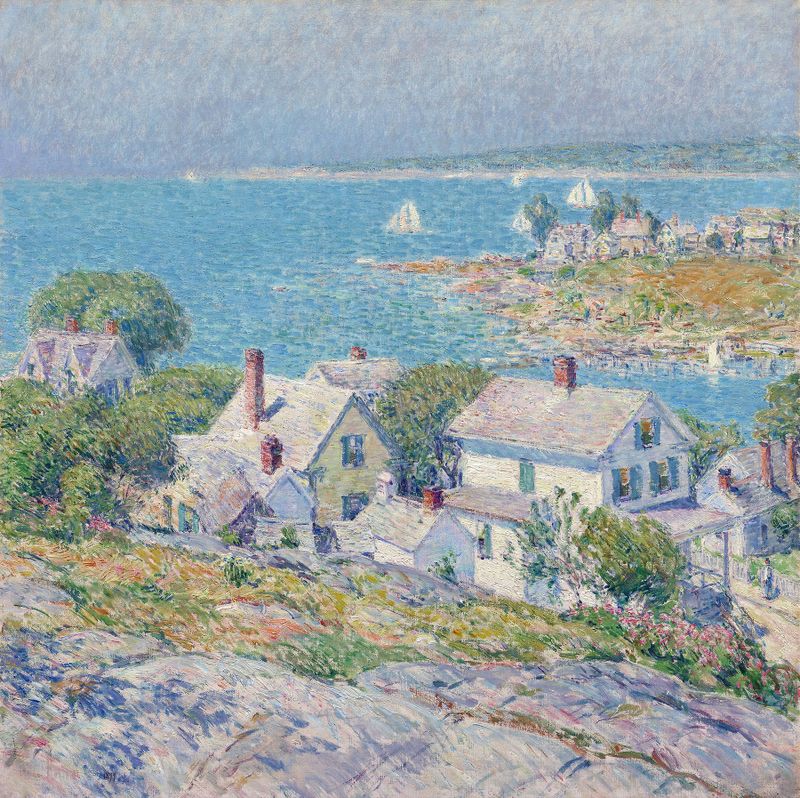
New England Headlands
Childe Hassam
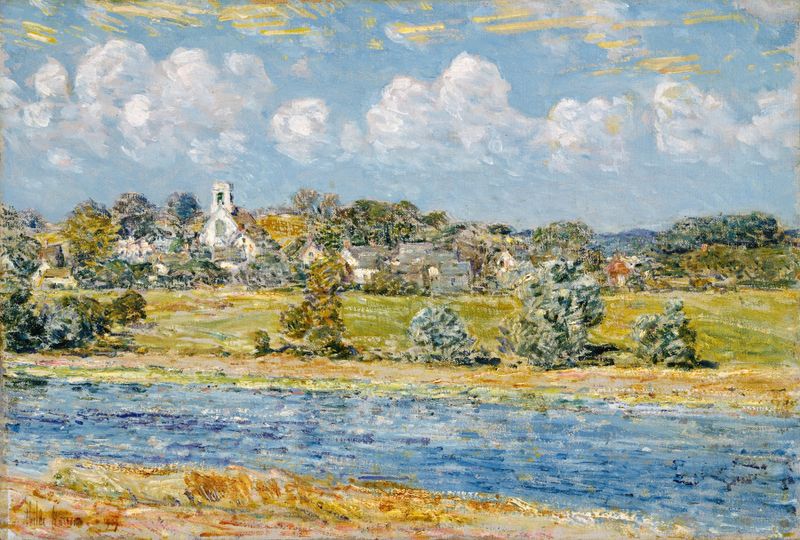
Landscape at Newfields, New Hampshire
Childe Hassam

Piazza di Spagna, Rome
Childe Hassam

The Harbor
Childe Hassam

Late Afternoon, New York, Winter
Childe Hassam
More Architecture Art
Browse all →
The statue of Liberty
Frédéric Auguste Bartholdi

View of Houses in Delft, Known as ‘The Little Street’
Johannes Vermeer

View of Houses in Delft, Known as ‘The Little Street’
Johannes Vermeer

The Cathedral in Rouen. The portal, Grey Weather
Claude Monet

The yellow house
Vincent van Gogh

The Church in Auvers-sur-Oise, View from the Chevet
Vincent van Gogh