Bij de advocaat — History & Facts
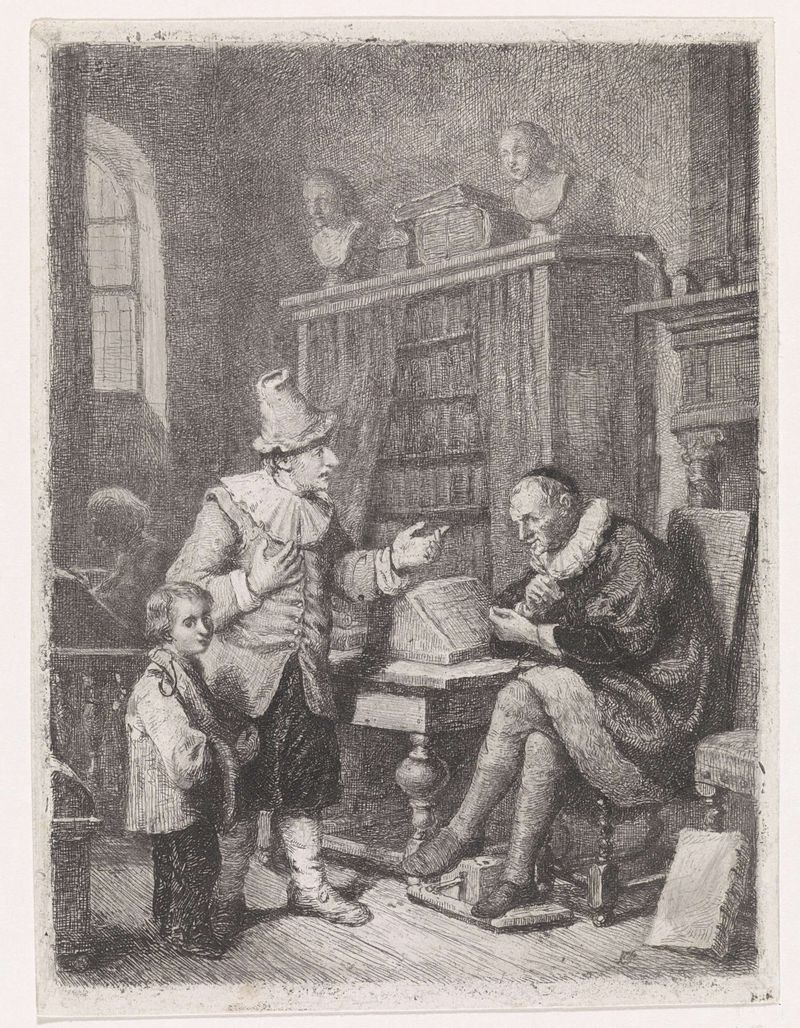
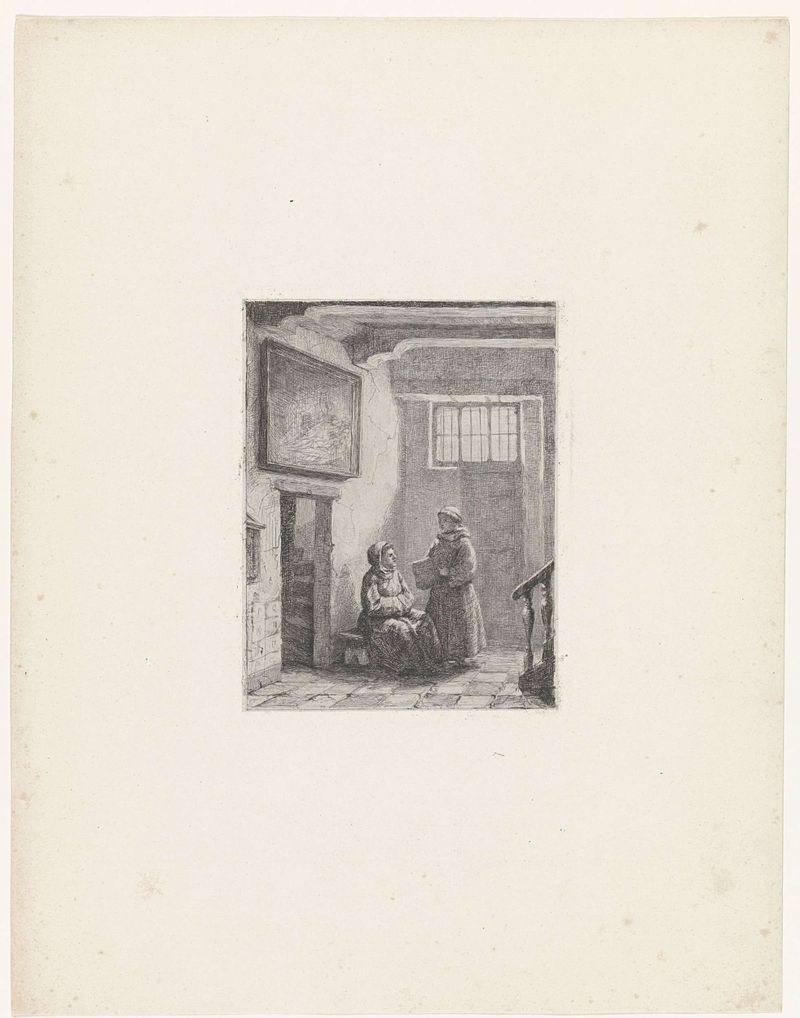
Can beauty exist without sorrow? In Bij de advocaat, a delicate tension weaves through the portrayal of figures caught in a moment of quiet contemplation, grappling with the intricacies of life and justice. Look to the left, where a woman sits, her gaze cast downward, cradling her hands in her lap. The soft fabric of her dress, painted with muted earth tones, suggests the weight of her thoughts, while the warm light illuminating her profile symbolizes an awakening of understanding. Notice how the light gently cascades through the window, creating a serene atmosphere that contrasts with her troubled expression, grounding the viewer in her inner world. The painting embodies a powerful juxtaposition between the serene setting and the underlying tension of the narrative.
The subtle play of light hints at hope, while the woman's posture conveys vulnerability. In the background, the presence of the lawyer, with his attentive stance, emphasizes the gravity of the conversation taking place, suggesting that the pursuit of truth often carries a heavy emotional burden. This dynamic encapsulates the complexity of human relationships rooted in societal structures, where solace and sorrow coexist. Created between 1837 and 1882, this work comes from a period when Van der Kellen was deeply engaged in exploring the psychological depths of his subjects.
Living in the Netherlands, he was influenced by the burgeoning realism movement, which sought to depict everyday life with honesty and emotional resonance. At a time when art was shifting towards the portrayal of common people and their struggles, this painting reflects the artist's commitment to capturing the nuanced interplay of emotion and circumstance in human existence.