
Bildstöckl, Lundenburg — History & Facts
In the stillness of a landscape, nature cradles the remnants of what once was, whispering secrets of rebirth and resilience. Look to the center, where a modest shrine, the Bildstöckl, stands resolute amidst a soft embrace of lush greenery. The artist’s brushstrokes reveal a vibrant palette, accentuating the deep greens and gentle browns that evoke a sense of hope. Notice how the sunlight filters through the branches, casting delicate shadows that dance over the shrine, highlighting its significance as a beacon of tranquility in this serene tableau. The juxtaposition of man-made and natural elements speaks to a deep emotional tension within the piece.
The shrine, a symbol of faith, contrasts starkly with the encroaching wilderness, suggesting a dialogue between humanity and nature. As the landscape flourishes around it, one can sense a powerful undercurrent of rebirth, as if the very earth is reclaiming its space, invigorating the spirit of the shrine with new life. In 1892, when this work was created, Theodor Von Hörmann found himself in an era marked by a quest for authenticity in artistic expression. Living in Vienna, he was influenced by the burgeoning interest in Impressionism, aiming to fuse realism with a romantic representation of his homeland.
This period saw a renewed appreciation for the connections between humanity and nature, a theme that resonates profoundly in this captivating work.
More Artworks by Theodor Von Hörmann
Browse all →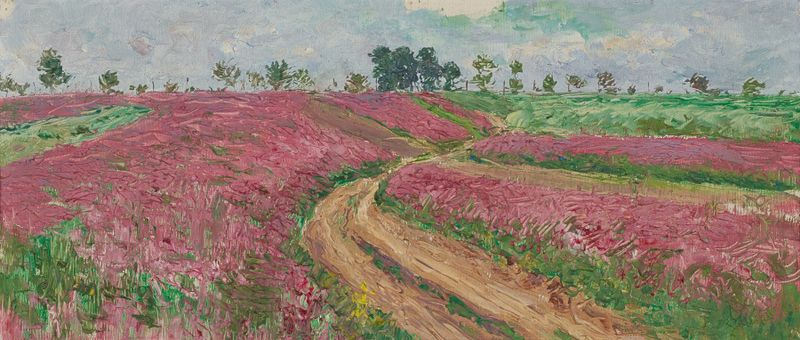
Esparsettenfeld Bei Znaim Ii
Theodor Von Hörmann

Blick Auf Paris
Theodor Von Hörmann

A Watering Place in Kis Bagh
Theodor Von Hörmann

Auf Der Ligethi Puszta
Theodor Von Hörmann
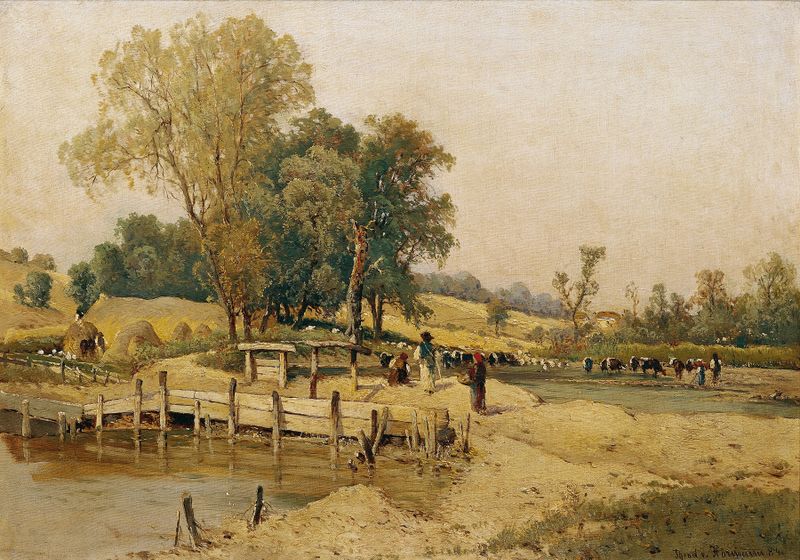
Ungarische Landschaft Mit Viehtränke
Theodor Von Hörmann
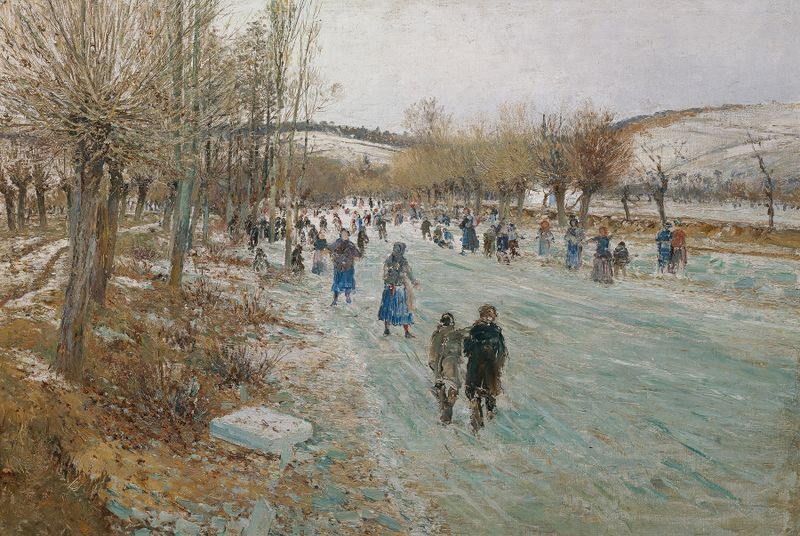
Eisläufer Auf Der Thaya Bei Lundenburg
Theodor Von Hörmann
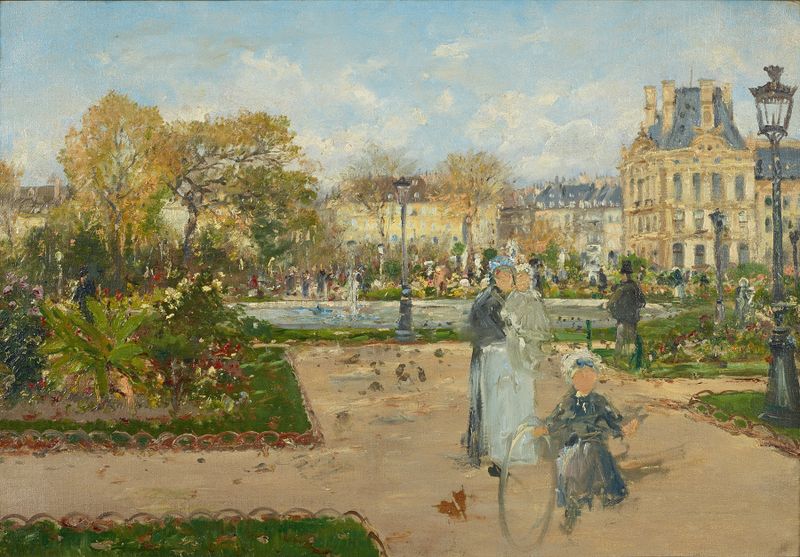
In Den Tuilerien
Theodor Von Hörmann

A Winter Day, Scene near St. Pölten
Theodor Von Hörmann

Znaim Im Schnee Ii
Theodor Von Hörmann
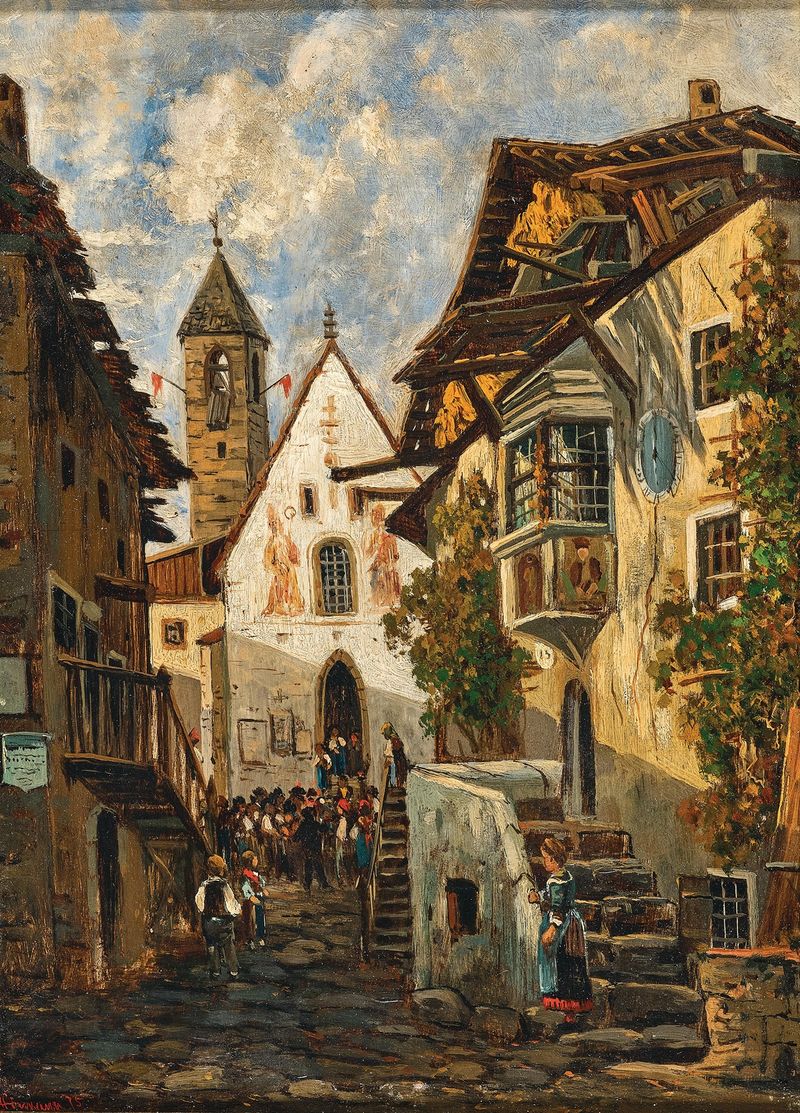
Dorfmotiv von Albeins bei Brixen, Tirol
Theodor Von Hörmann





