
Black Currants — History & Facts
What first catches the eye in Black Currants by Adriaen Coorte is the hush of its simplicity—a single spray of currants, their glossy skins catching the light, poised on the edge of a stone ledge. The fruit’s delicate stems and curling leaves seem to hover between stillness and motion, as if a breeze might send them tumbling. Coorte’s signature and the date, inscribed on the ledge, anchor the composition in time, while the dramatic shadow behind the fruit pulls the viewer’s gaze into the depth of the scene.
Every detail—the veins in the leaves, the subtle gradation of color in the currants—invites a closer look, as if the painter is urging us to linger over the ordinary. Painted in 1698, this work belongs to a tradition of Dutch still life that flourished in the late seventeenth century. Such paintings were prized by collectors for their quiet celebration of nature’s bounty and their technical precision. Unlike the grand banquet pieces of earlier decades, Coorte’s work is intimate, almost meditative, reflecting a shift in taste toward modesty and refinement.
Little is recorded about the journey of this specific painting, now catalogued by the Netherlands Institute for Art History, but its presence today speaks to the enduring appeal of the small, the humble, and the carefully observed. Let your eyes return to the crisp edge of the ledge, the cool darkness behind, and the fragile abundance gathered in a single branch.
More Artworks by Adriaen Coorte
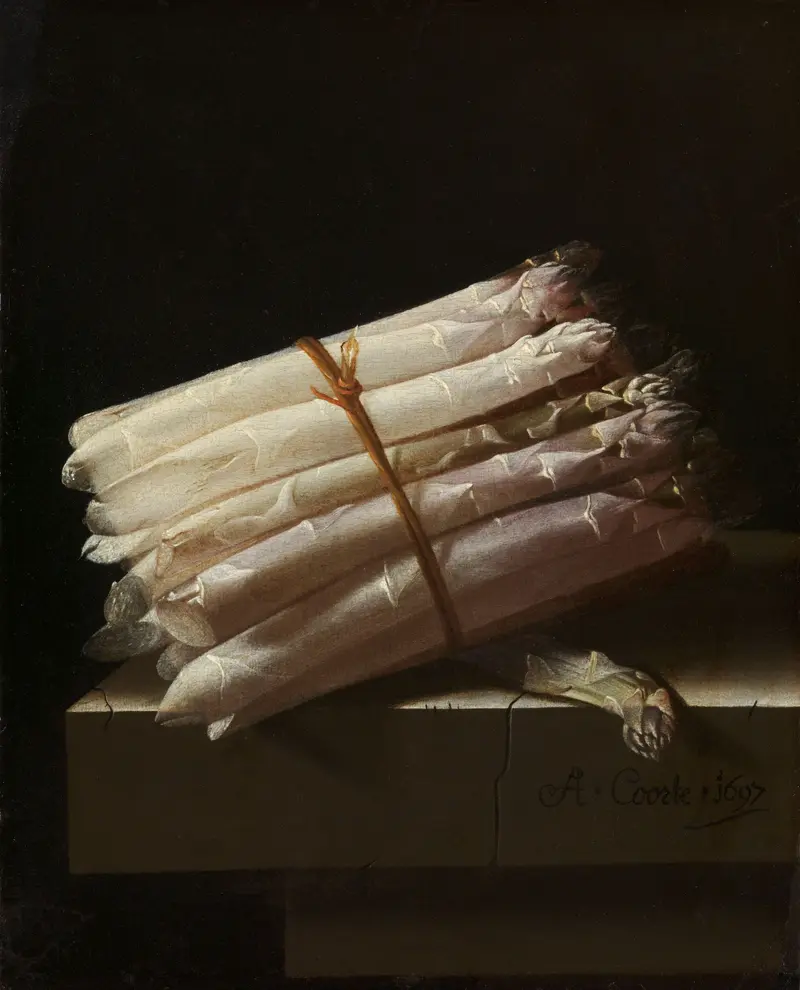
Still Life with Asparagus
Adriaen Coorte
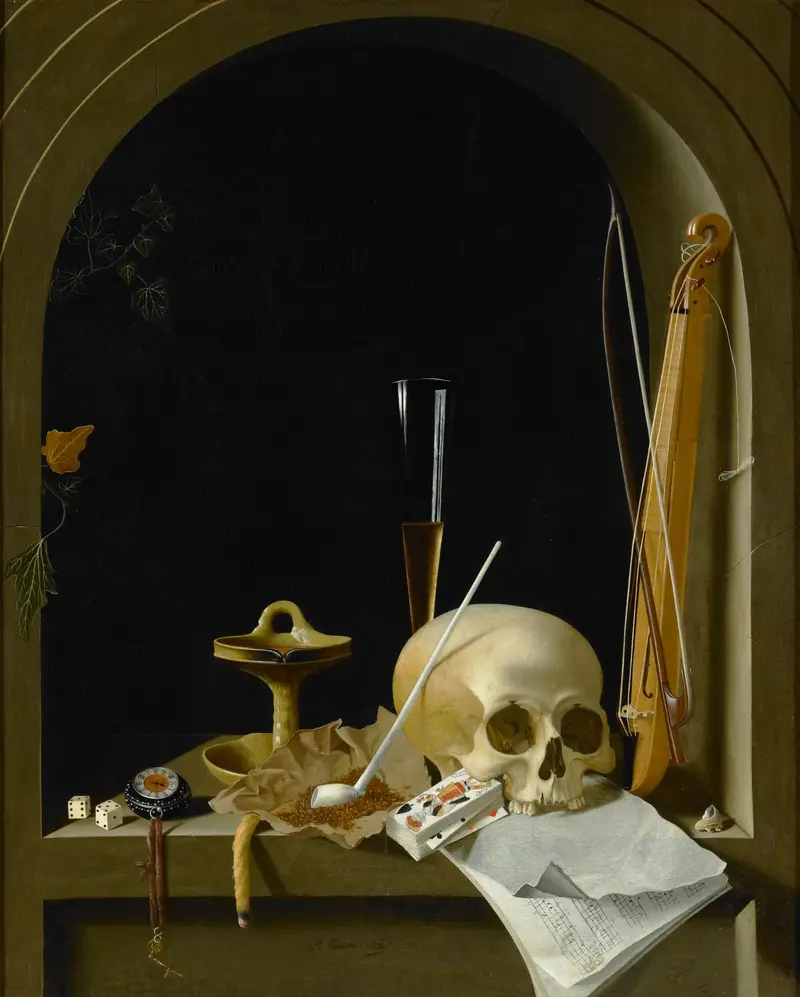
Vanitas still life in a niche
Adriaen Coorte
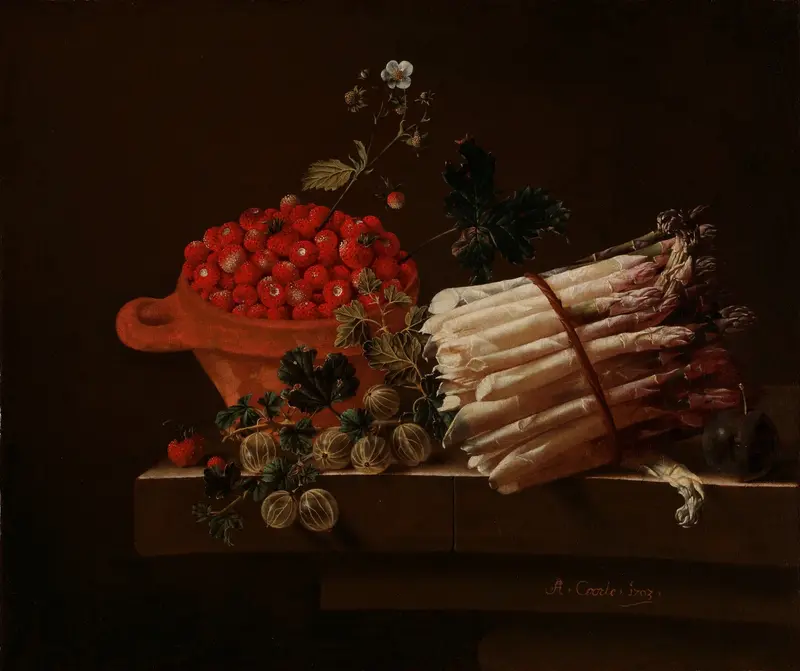
A Pot of Strawberries, Gooseberries, and a Bundle of Asparagus on a Stone Plinth
Adriaen Coorte
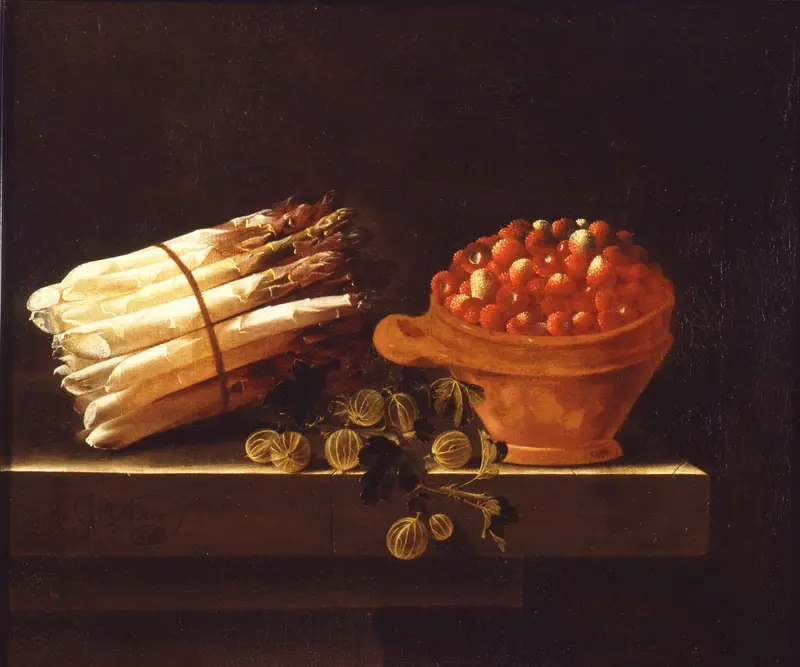
Asparagus, Gooseberries and Strawberries on a Stone Ledge
Adriaen Coorte
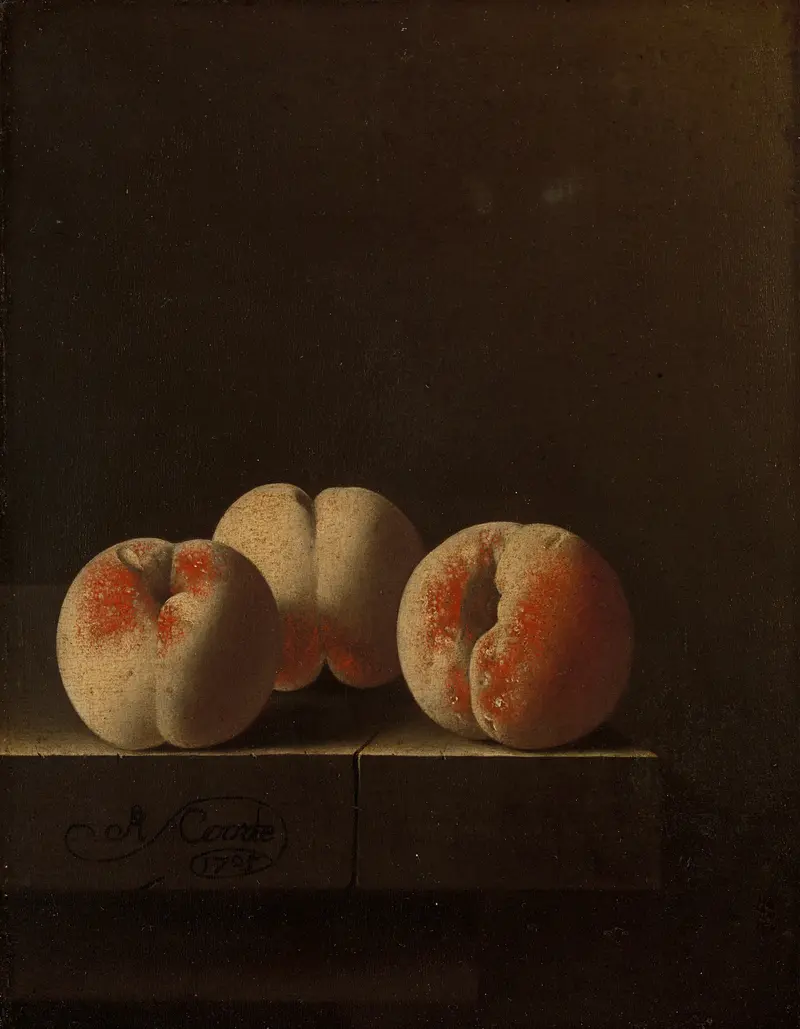
Drie perziken op een stenen plint SK A 5101 Rijksmuseum
Adriaen Coorte
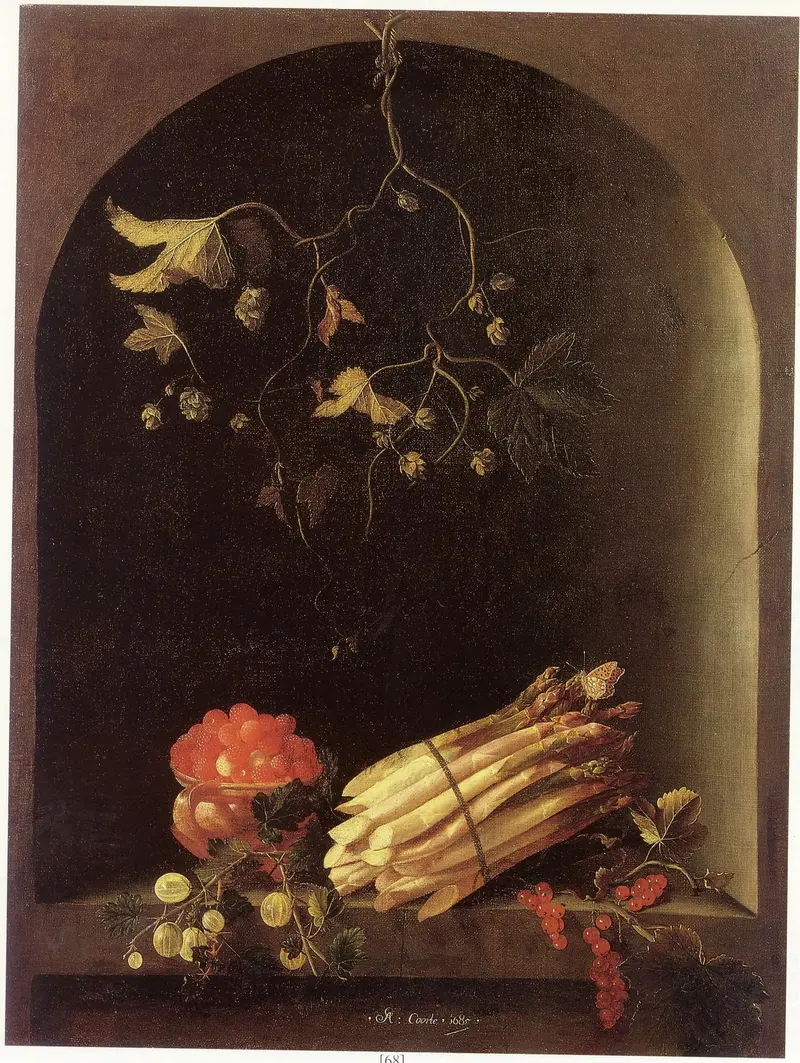
Strawberries, Asparagus, and Gooseberries in a Niche
Adriaen Coorte
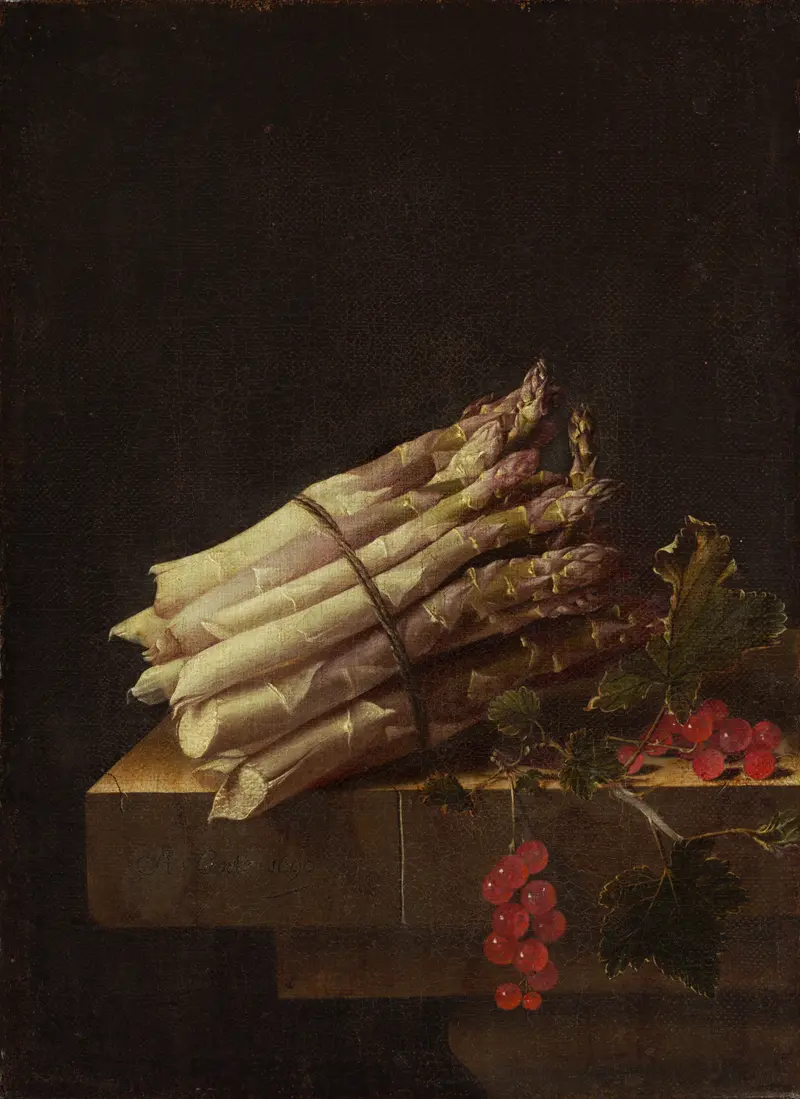
Still Life with Asparagus and Red Currants
Adriaen Coorte
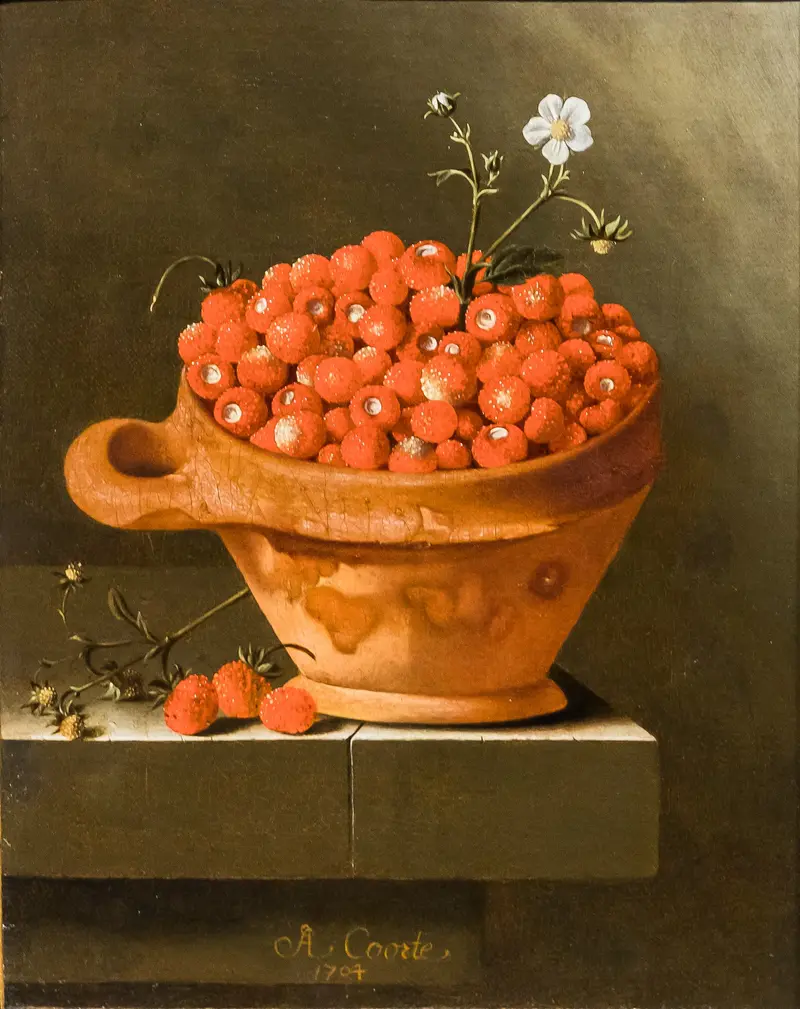
Still life with strawberries in a terracotta pot
Adriaen Coorte
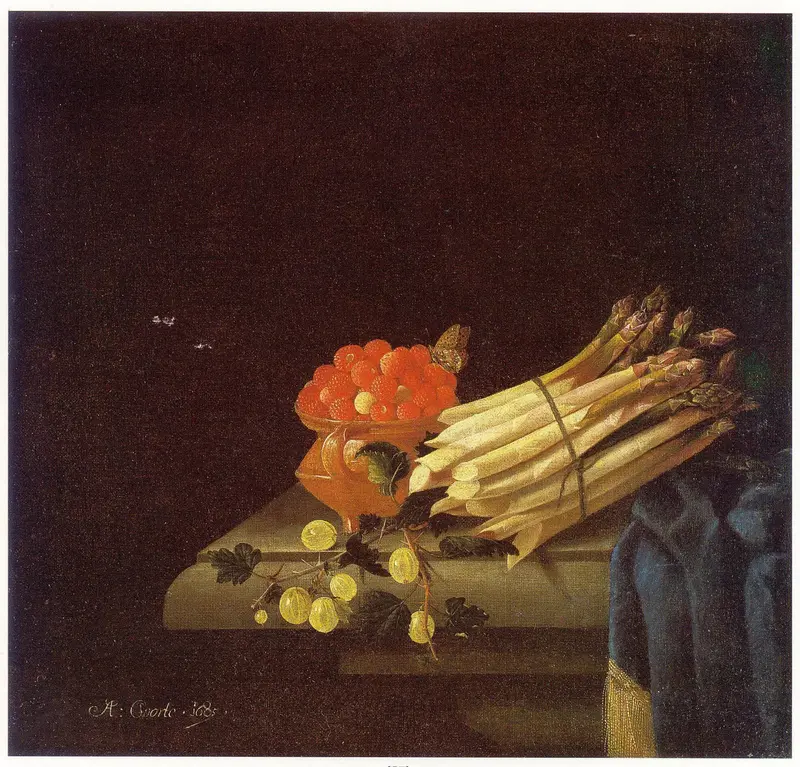
Strawberries, Asparagus, and Gooseberries with a Tablecloth
Adriaen Coorte
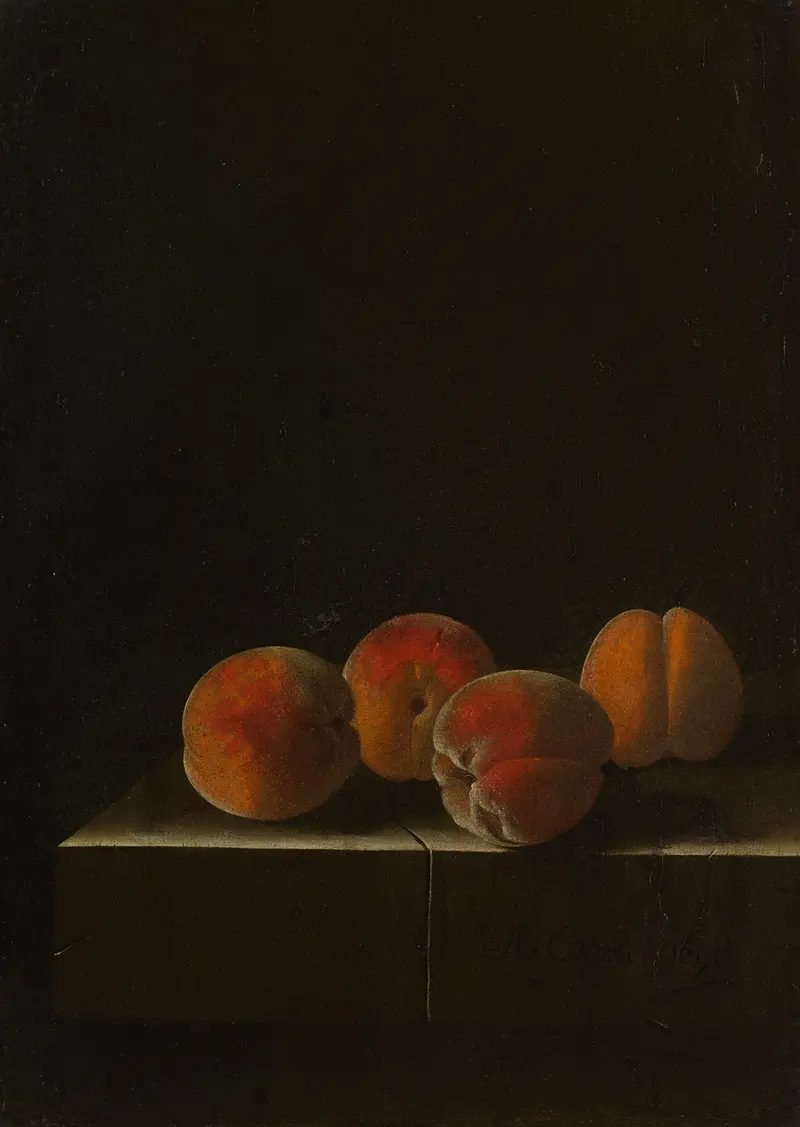
Four Apricots on a Stone Plinth
Adriaen Coorte





