
Blaue Vase mit Orangen — History & Facts
A cobalt blue vase stands at the heart of the picture, its bold silhouette anchoring a riot of color that seems almost to hum with energy. The eye is drawn first to this vessel, but quickly the surrounding world asserts itself: oranges, round and sunlit, cluster at its base, their skins glowing against a tablecloth of jostling red and green checks. The background is a field of pure, flat pink, so saturated it nearly vibrates, while a band of deep green at the top holds the composition in place.
Every element is outlined with a sure, dark stroke, as if the artist wanted to make each shape sing out distinctly, yet all are bound together by the shared intensity of their colors. Painted around 1908, this work belongs to a moment when artists like Alexej von Jawlensky—inspired by the wild experiments of the Fauves in France—were pushing the boundaries of what color could do. Still lifes like this were not just exercises in arrangement, but declarations of a new artistic freedom: the world remade in the studio, familiar objects transformed by the force of vision. The painting’s origins are documented only by its appearance in a 2010 sale at Christie’s in London, a reminder that history has kept few traces of its early journey.
What remains is the shock of color, the sense that the everyday can be made electric—an invitation to look again, and see the world as if for the first time.
More Artworks by Alexej von Jawlensky

Murnau
Alexej von Jawlensky
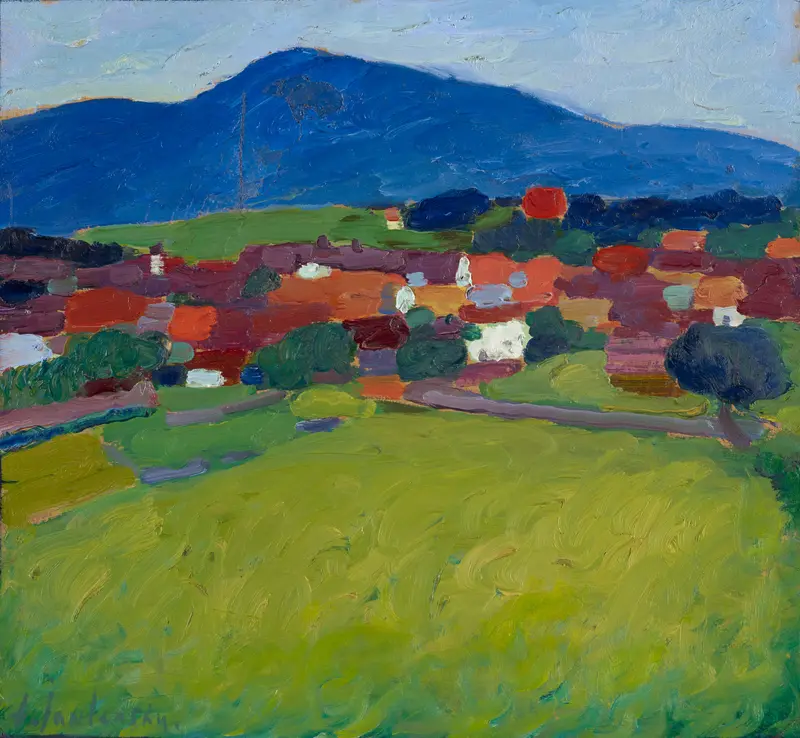
The Village Of Murnau
Alexej von Jawlensky
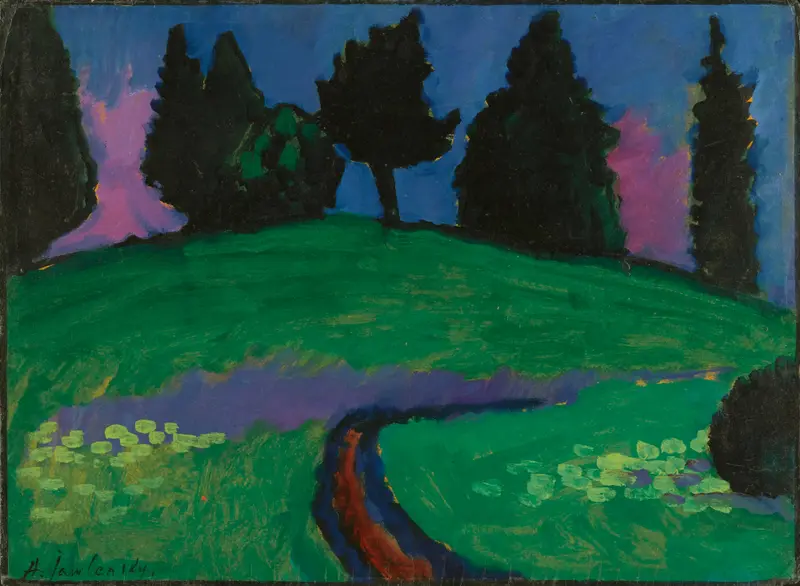
Dunkle Bäume über Grünem Hang (Dark Trees Over Green Slope)
Alexej von Jawlensky
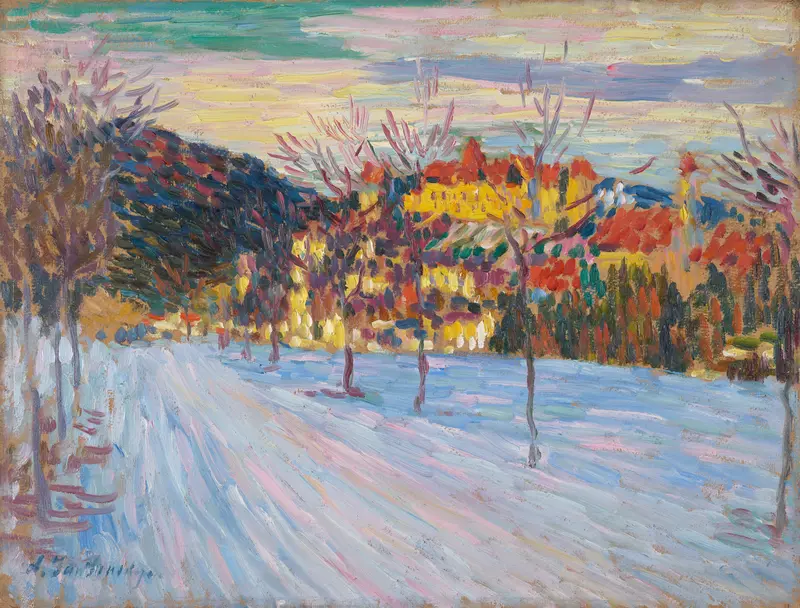
Füssen
Alexej von Jawlensky
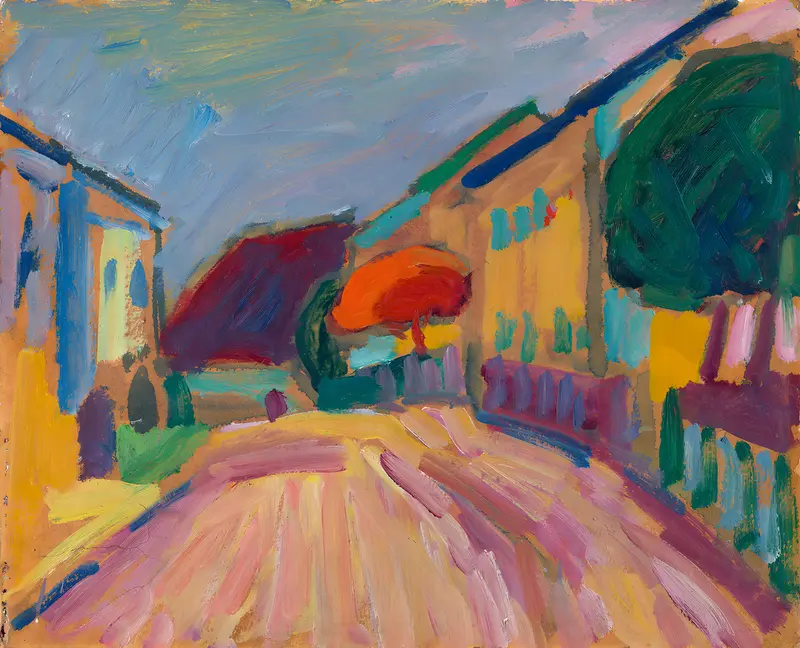
Sketch from Murnau
Alexej von Jawlensky
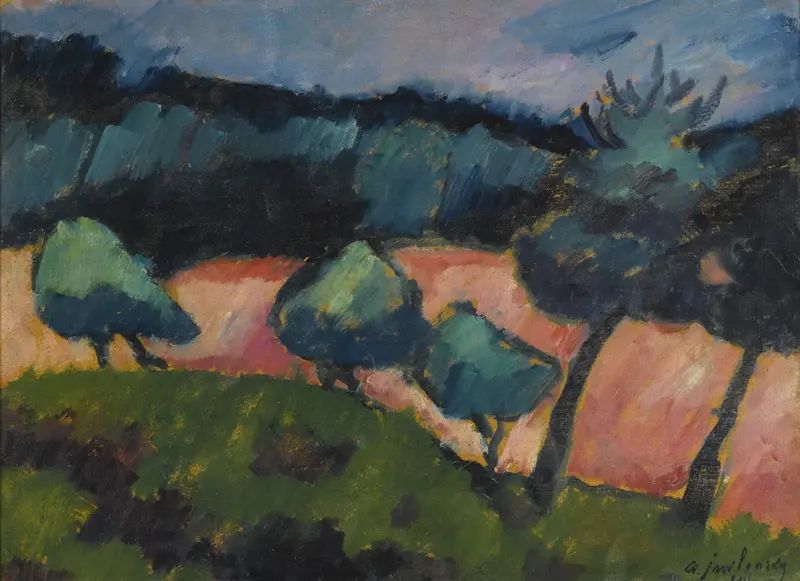
Bäume und Dünen in Prerow (Trees and dunes in Prerow)
Alexej von Jawlensky
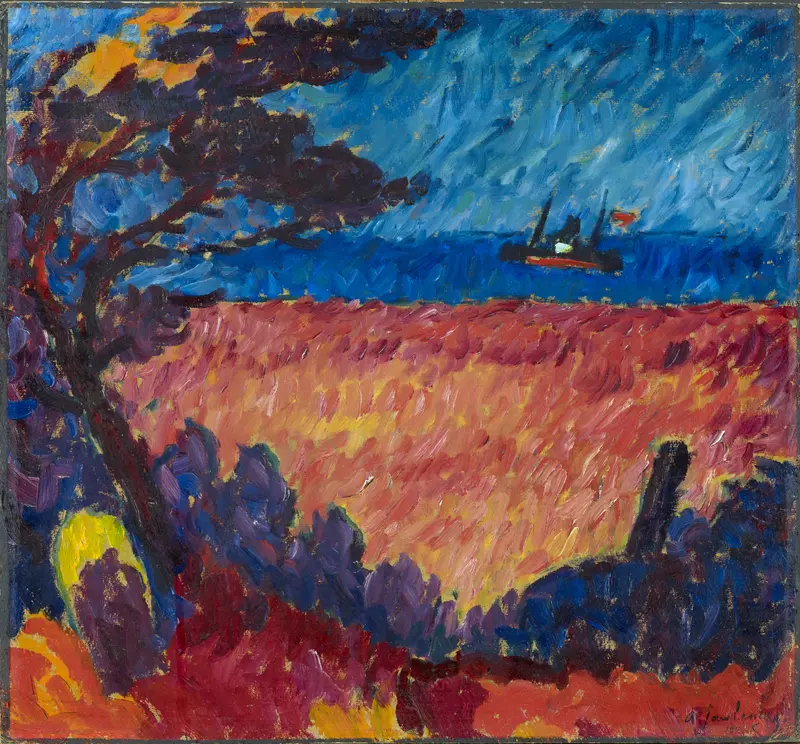
At The Baltic Sea
Alexej von Jawlensky
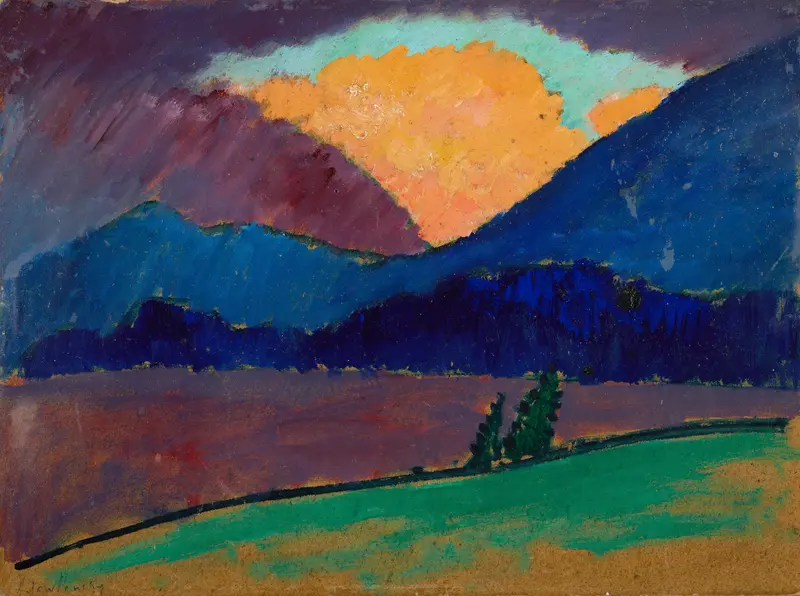
Summer evening in Murnau
Alexej von Jawlensky
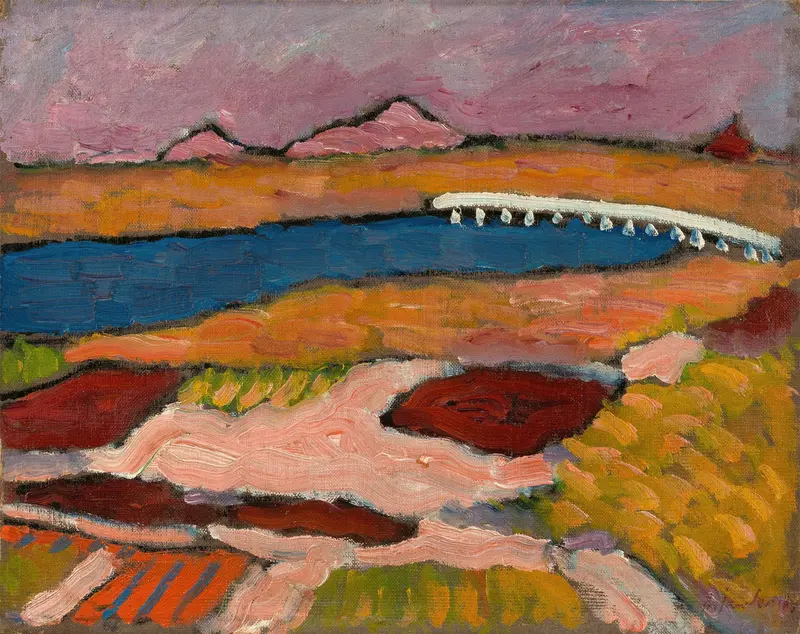
Prerow (Darß), Pommern
Alexej von Jawlensky
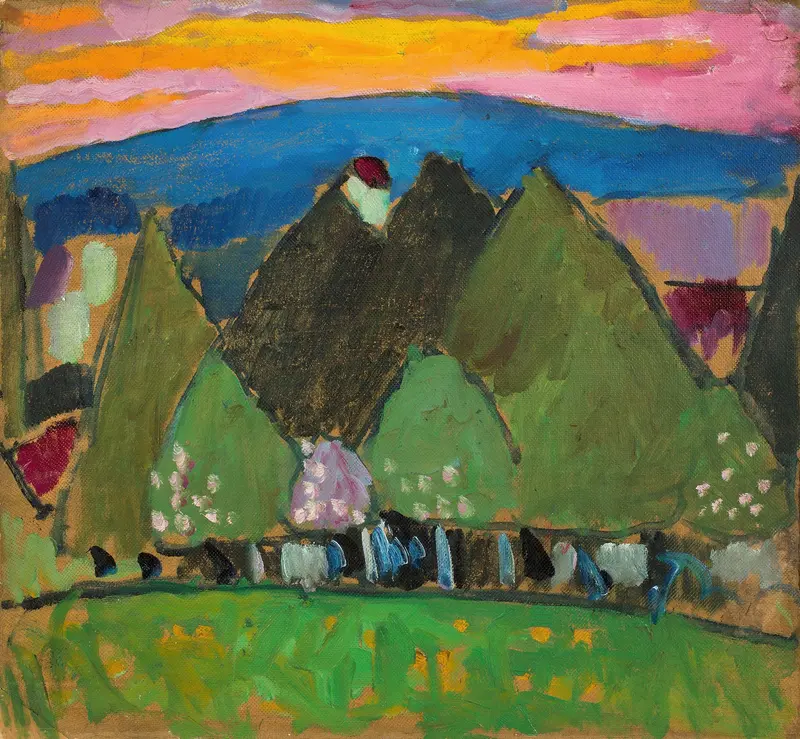
Landschaft mit Bäumen
Alexej von Jawlensky





