
Blauer Hof (Laxenburg) — History & Facts
What if silence could speak through light? In Blauer Hof (Laxenburg), the stillness envelops the viewer, evoking a profound sense of loneliness that resonates long after the gaze departs. Look to the left, where a muted blue sky stretches above a solitary structure, its soft contours cradled by lush greenery. Notice how the light bathes the scene in a gentle glow, enhancing the delicate interplay of color and shadow. The composition draws the eye forward, guiding us through the entrance of the building, as if inviting us to step into its quiet embrace.
Every brushstroke captures the tranquil yet melancholic atmosphere, crafting a space where time appears to stand still. Delve deeper, and you’ll find the contrast between the vibrant hues of nature and the cool tones of the architecture speaks to the tension between isolation and the surrounding life. The solitary building, while filled with promise, remains untouched, a metaphor for the emotional distance between the viewer and the world outside. This duality echoes the human experience of yearning for connection amidst solitude, encapsulating a moment of reflection that resonates beyond its canvas. Franz Alt painted Blauer Hof (Laxenburg) in 1859 during a period marked by artistic exploration and shifts in perception.
Living in Austria, he was influenced by Romanticism, which sought to express individual feelings and the sublime beauty of nature. This work reflects both his personal artistic journey and the broader movement of capturing the essence of fleeting moments, bridging the gap between the observer and their environment.
More Artworks by Franz Alt
Browse all →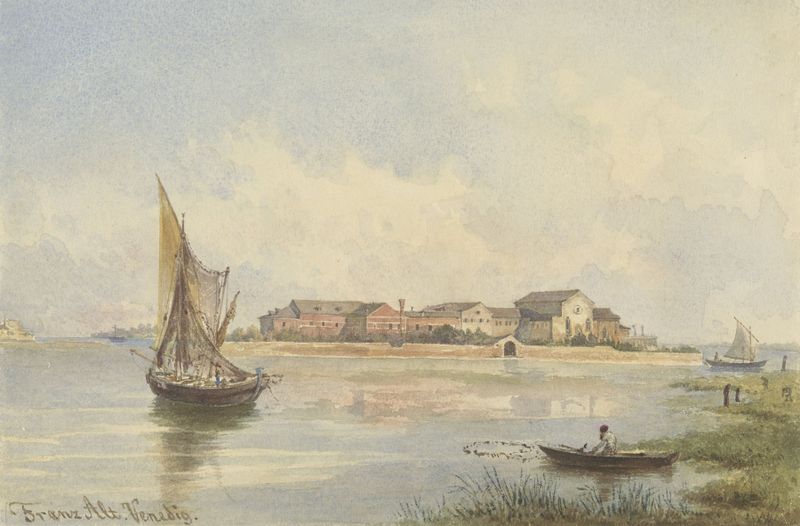
Gezicht op de Lagune te Venetië
Franz Alt
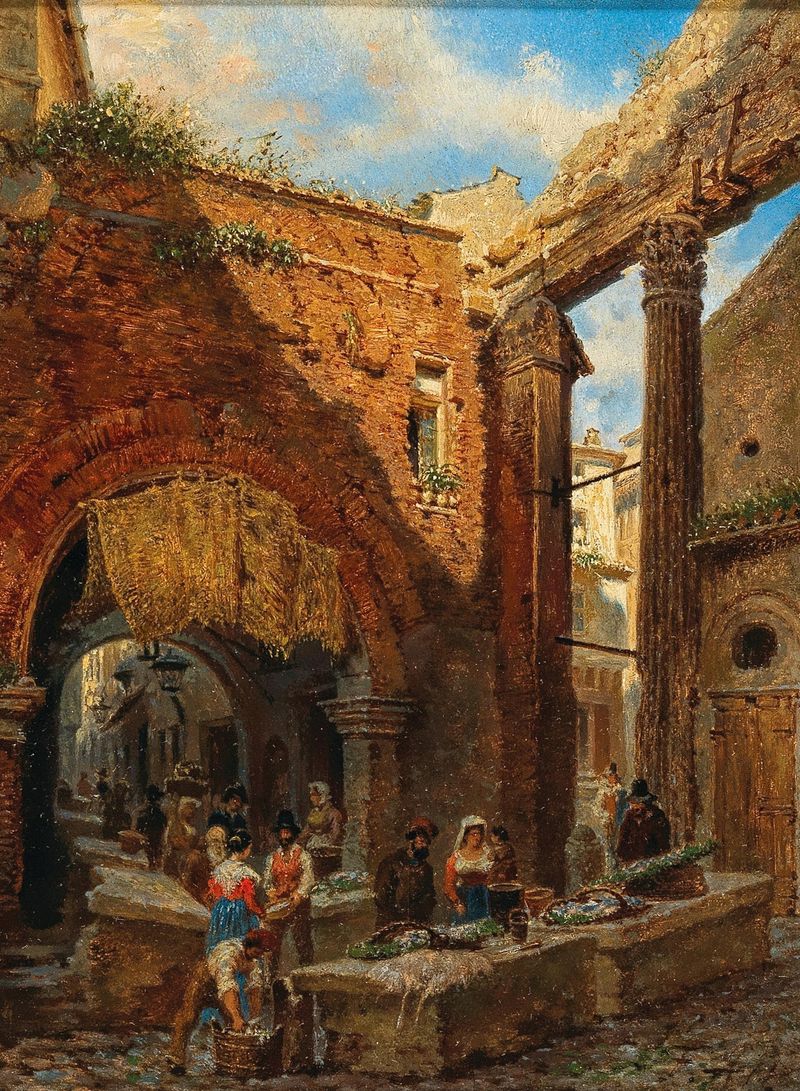
Rom Portico di Ottavia mit dem alten Fischmarkt
Franz Alt
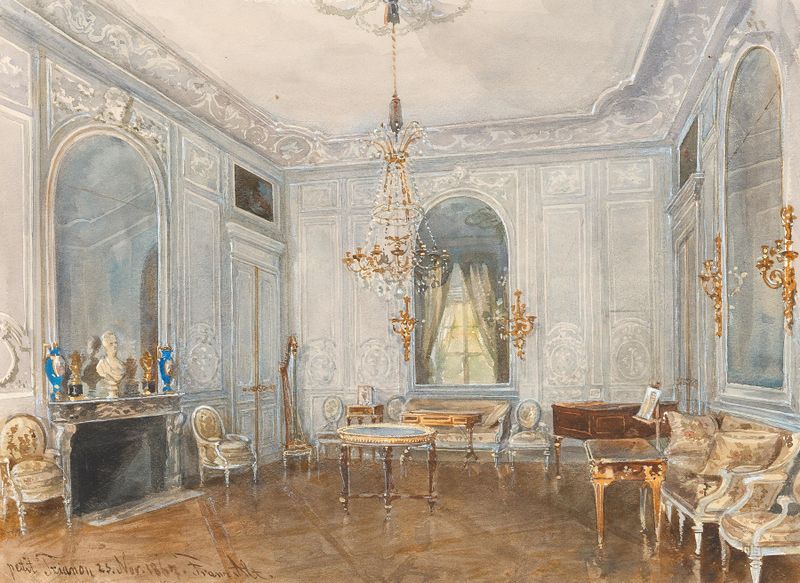
The dining room in the Petit Trianon, Versailles
Franz Alt

Blick in den Mailänder Dom
Franz Alt

Galerie d’Apollon in the Louvre, Paris
Franz Alt
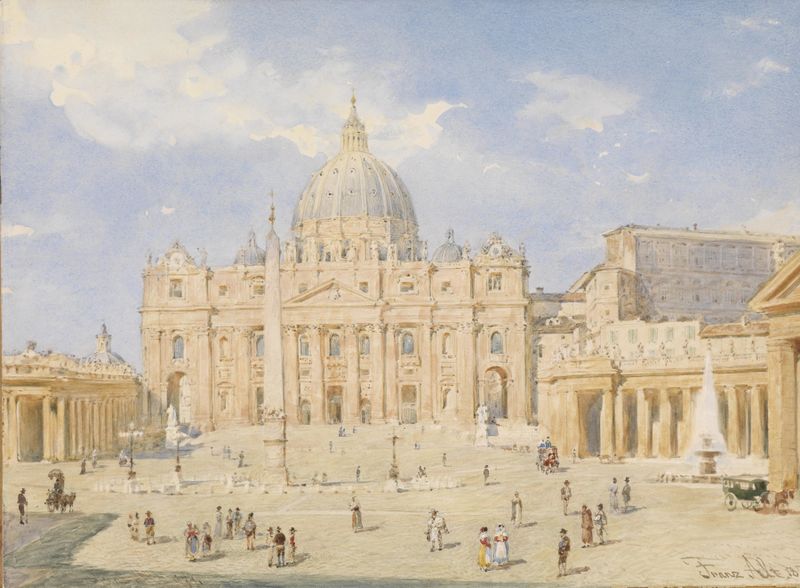
Petersplatz Rom
Franz Alt

Rome, a View of the Portico di Ottavia with the Old Fish Market
Franz Alt
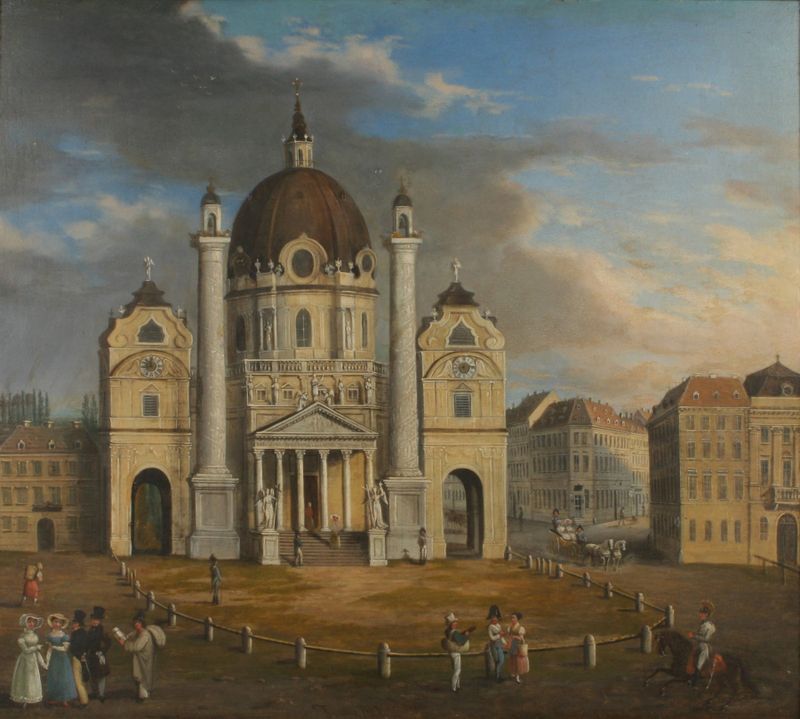
Blick auf die Karlskirche
Franz Alt

Dresden Stiege zur Brühlschen Terrasse
Franz Alt
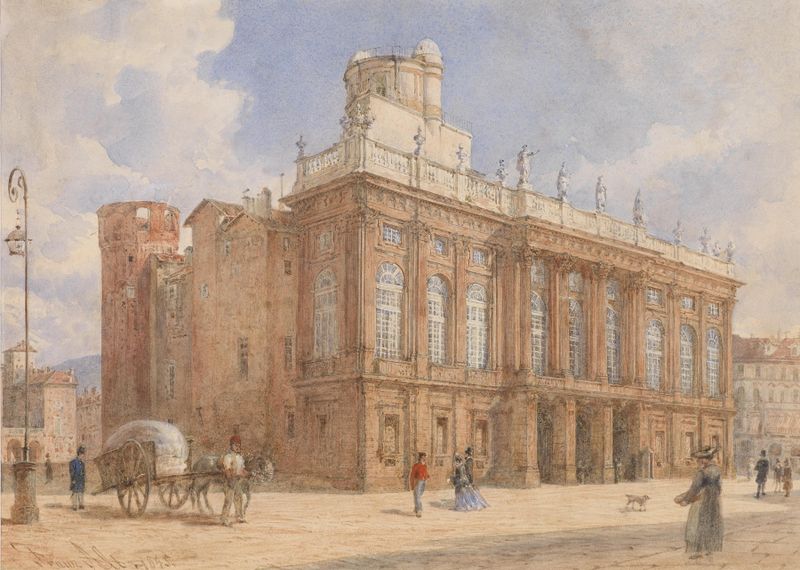
Castello Reale in Turin
Franz Alt





