
Blick in den Mailänder Dom — History & Facts
When did color learn to lie? In Blick in den Mailänder Dom, the answer unfolds in a dreamlike tapestry of hues and shadows, beckoning the viewer to ponder the duality of reality and illusion. Look to the foreground where the intricate gothic architecture of the Milan Cathedral rises, its spires reaching like fingers toward the heavens. Notice how the light filters through the stained glass, casting a kaleidoscope of colors onto the cool stone floor, creating an ethereal glow that seems to pulse with life. The artist’s meticulous attention to detail reflects both the grandeur of the structure and the delicate interplay of light and shadow, inviting a sense of reverence and wonder. As you explore further, subtle contrasts emerge within the scene.
The vibrant colors in the stained glass juxtapose the somber tones of the stone, embodying a tension between divine beauty and earthly permanence. The composition suggests a moment suspended in time, where the cathedral becomes not just a building but a vessel for dreams and aspirations, hinting at the spiritual journey of those who enter it. It invites contemplation about faith, architecture, and the essence of human experience. Franz Alt painted this work in 1846 during a period marked by a growing interest in Romanticism and the sublime.
At this time in his life, Alt was focused on capturing the essence of architecture and its emotional resonance, as industrialization began to reshape Europe’s landscapes. This painting reflects both his personal artistic pursuits and the broader cultural movements that sought to revive the awe found in nature and human creations.
More Artworks by Franz Alt
Browse all →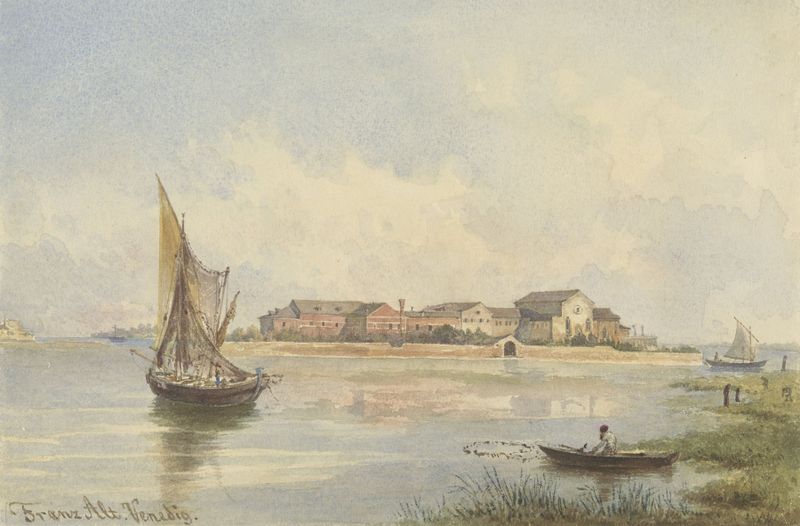
Gezicht op de Lagune te Venetië
Franz Alt
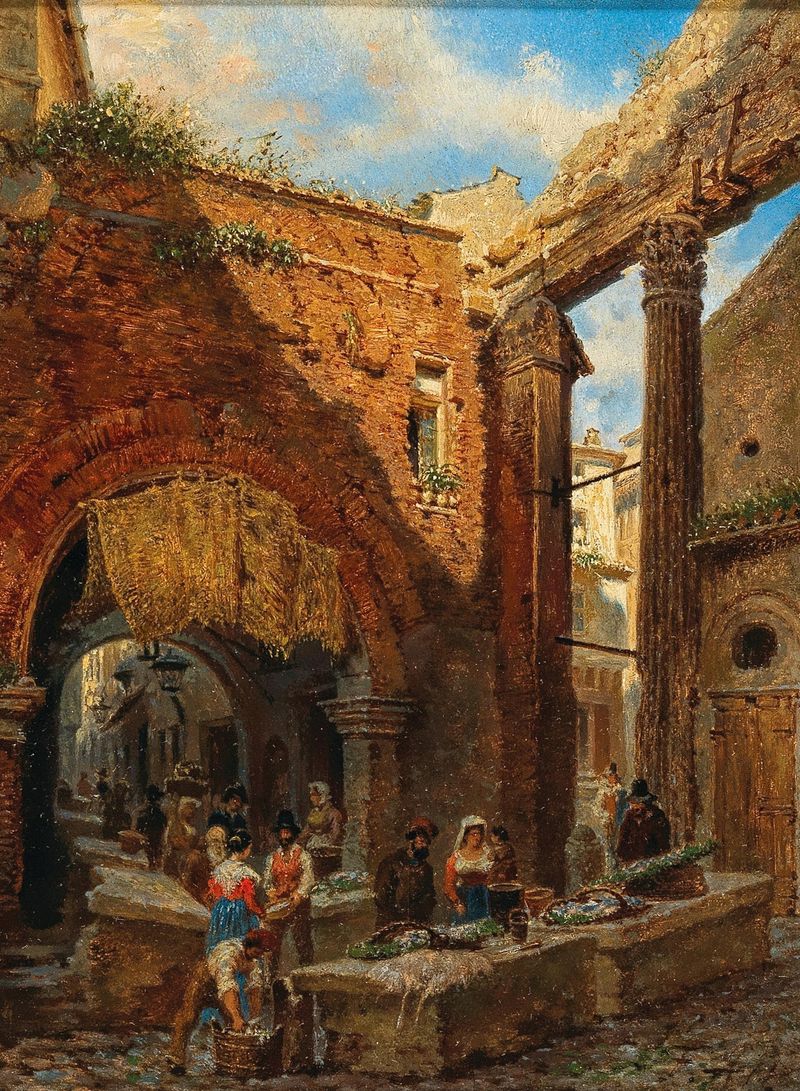
Rom Portico di Ottavia mit dem alten Fischmarkt
Franz Alt
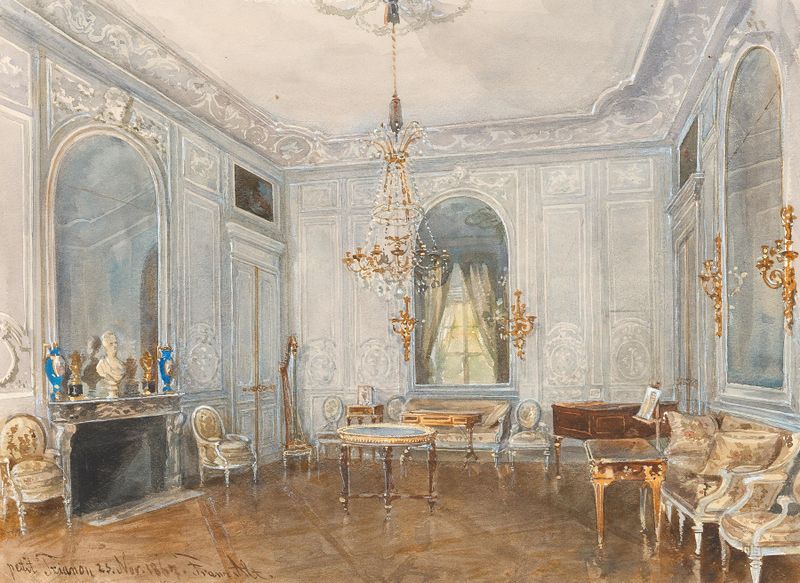
The dining room in the Petit Trianon, Versailles
Franz Alt

Galerie d’Apollon in the Louvre, Paris
Franz Alt
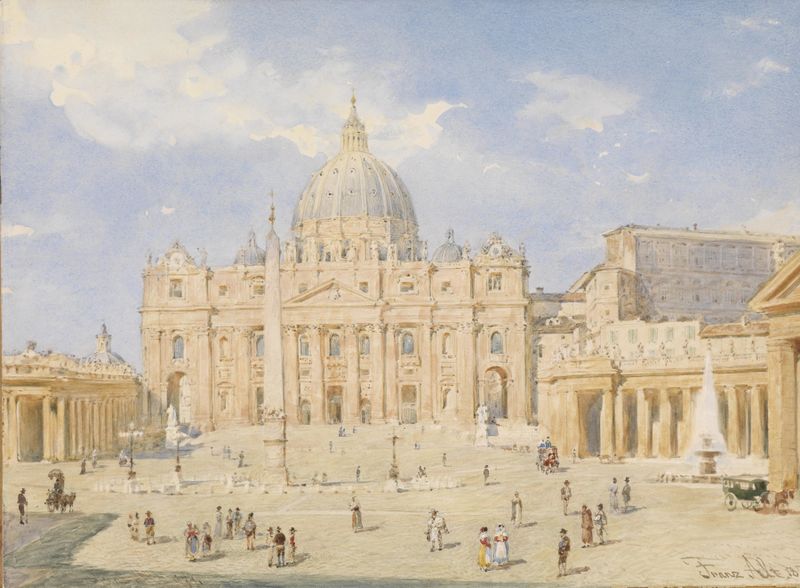
Petersplatz Rom
Franz Alt

Rome, a View of the Portico di Ottavia with the Old Fish Market
Franz Alt
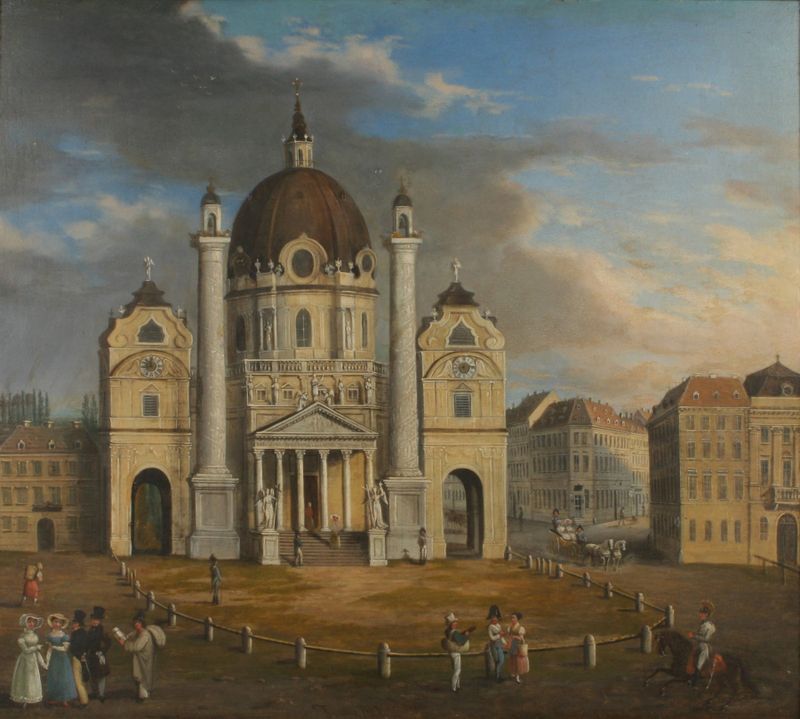
Blick auf die Karlskirche
Franz Alt

Dresden Stiege zur Brühlschen Terrasse
Franz Alt
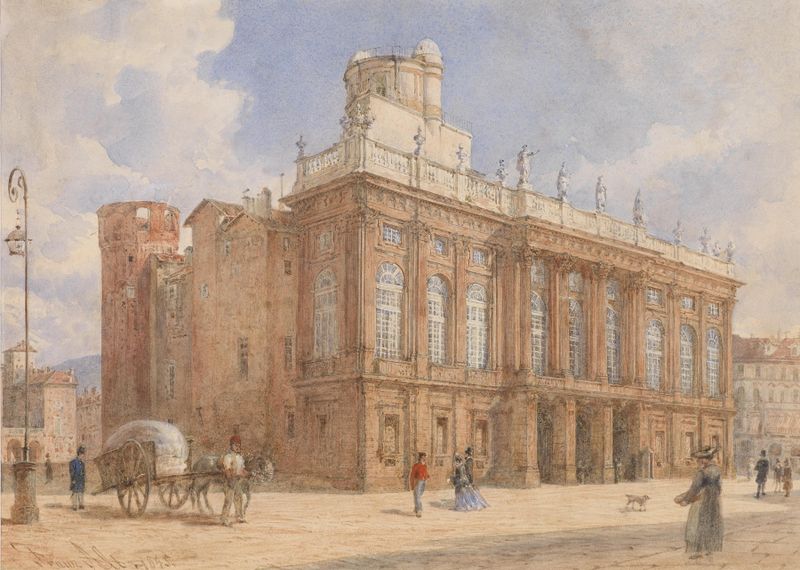
Castello Reale in Turin
Franz Alt
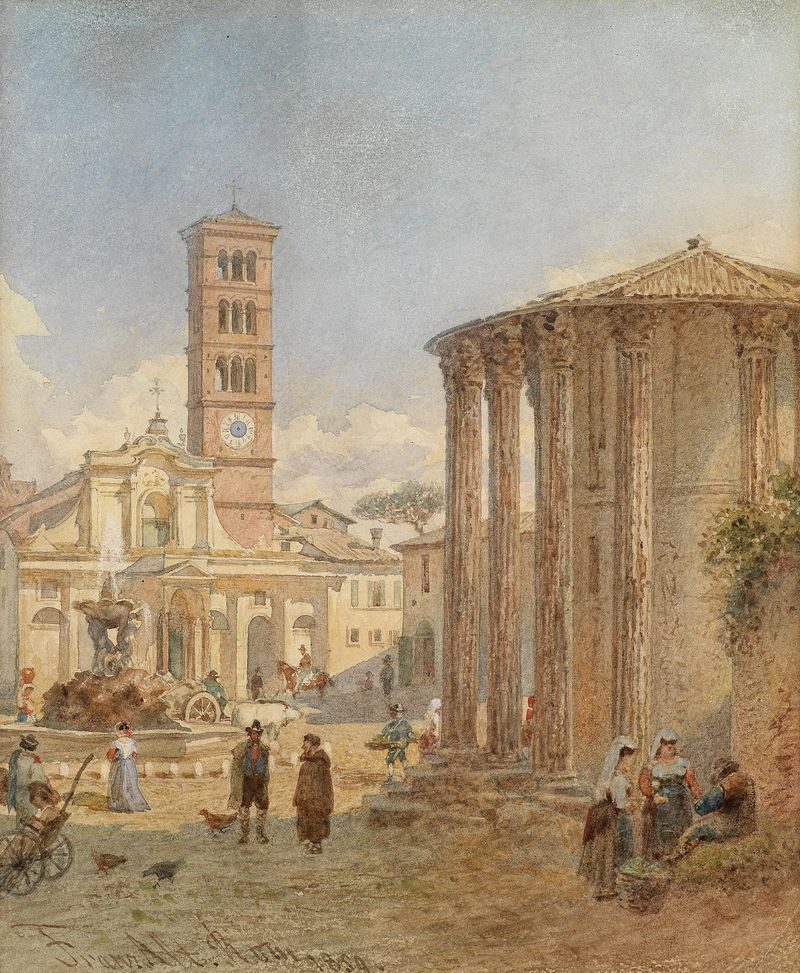
Rom Forum Boarium
Franz Alt
More Architecture Art
Browse all →
The statue of Liberty
Frédéric Auguste Bartholdi

View of Houses in Delft, Known as ‘The Little Street’
Johannes Vermeer

View of Houses in Delft, Known as ‘The Little Street’
Johannes Vermeer

The Cathedral in Rouen. The portal, Grey Weather
Claude Monet

The yellow house
Vincent van Gogh

The Church in Auvers-sur-Oise, View from the Chevet
Vincent van Gogh