Blühende Kastanien — History & Facts
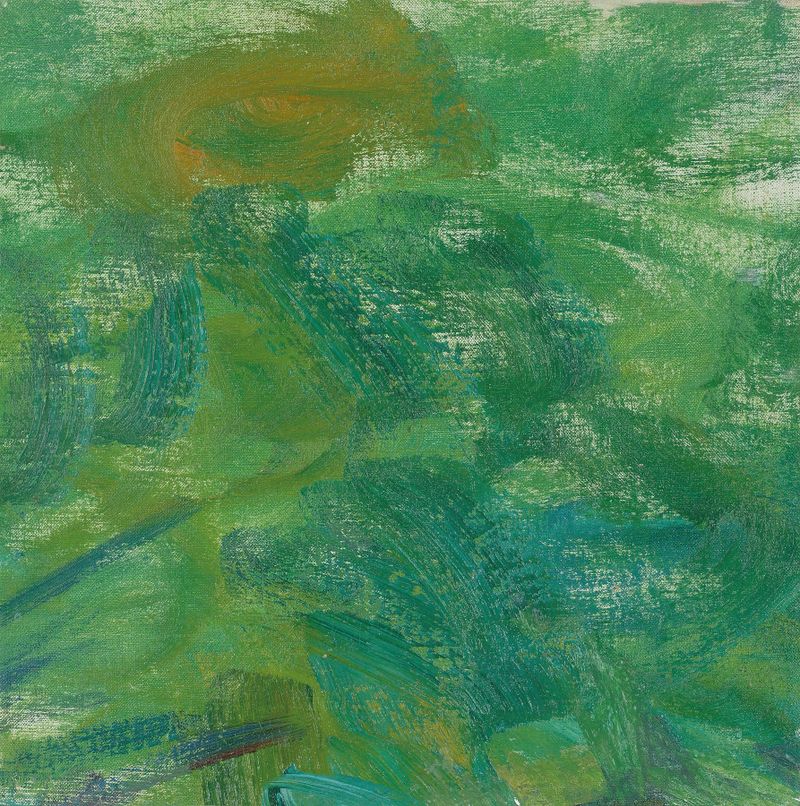
Beneath the surface of vibrant blooms lies an unsettling truth, a whisper of madness intertwined with beauty. Look to the center of the canvas where a cascade of chestnut blossoms erupts in exuberant white and pale pink, their delicate petals exuding a transient sense of joy. The artist's brushstrokes, both expressive and firm, capture the essence of each flower with a blend of realism and a hint of abstraction. Notice how the soft greens of the leaves contrast with the boldness of the blossoms, creating a visual tension that reflects the struggle between serenity and chaos.
The composition draws the eye inward, inviting contemplation amidst the apparent celebration of life. Examining the interplay of color and form reveals a deeper narrative. The blossoms, while stunning, seem to envelop a darker undercurrent; their beauty masks an unsettling fragility, suggesting that such vibrancy is often accompanied by the impending decay that nature inevitably brings. The muted background reinforces this sense of isolation, as if the flowers exist in a realm of their own, untouched yet tormented.
This duality—of exquisite beauty coupled with underlying madness—invites the viewer to question the cost of such splendor. In 1900, while she created this work, Mediz-Pelik was in Vienna, navigating the complexities of being a female artist in a male-dominated environment. This period was marked by burgeoning modernism and a re-examination of traditional artistic values. Her exploration of natural forms reflected both her personal struggles and a broader societal tension, capturing the essence of an era in transition.