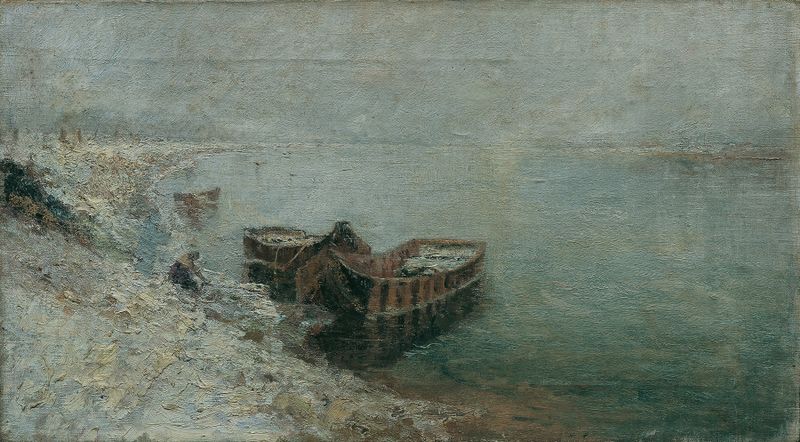
Dünen mit Stranddorn bei Knokke — History & Facts
Is this a mirror — or a memory? In Emilie Mediz-Pelik’s Dünen mit Stranddorn bei Knokke, beauty is both ephemeral and eternal, inviting contemplation on the fleeting moments of nature’s splendor. Focus your gaze on the sweeping dunes that rise softly to the horizon, where delicate grasses sway in a gentle breeze. The painter's technique deftly captures the subtle interplay of light and shadow, with sunlit patches illuminating the sand while deeper hues hint at the coolness of the shaded areas. The muted earth tones and soft greens envelop the scene, creating a tranquil atmosphere that feels both relaxing and reflective. This artwork transcends mere representation; it speaks to the duality of vulnerability and resilience found in nature.
The beach thorn, steadfast against the elements, symbolizes perseverance amid the transient. This contrast between the fragility of the landscape and the strength of its flora evokes a deeper emotional resonance, suggesting a connection between humanity and the natural world that is rich with nostalgia. Painted in 1890 while she was residing in Knokke, Mediz-Pelik was immersed in an artistic milieu that celebrated Impressionism's focus on light and atmospheric effects. This period marked a shift towards capturing the beauty of everyday landscapes, and the artist's own struggles and triumphs as a female painter in a male-dominated field influenced her commitment to representing nature with sincerity and depth.