
Blick auf den Campo d’Annibale bei Cannae — History & Facts
Could beauty survive in a century of chaos? The question lingers like the soft hues in the distance of a serene landscape painting, inviting contemplation on the fragility of innocence. Look to the left at the gentle folds of the rolling hills, where a rich tapestry of greens and ochres blend seamlessly under a breathtaking sky. The artist’s delicate brushwork brings life to the foreground, where splashes of wildflowers punctuate the verdant expanse. Notice how the light dances upon the surface of a nearby stream, creating a shimmering effect that draws your gaze deeper into the composition, revealing a tranquil haven untouched by turmoil. Beneath the tranquil surface, however, lies a palpable tension — the stillness is almost achingly poignant, suggesting a world on the brink of change.
The contrast between the idyllic landscape and the historical echoes of the Battle of Cannae looms large. Here, innocence stands in stark juxtaposition with the violent legacy that haunts this land, inviting the viewer to reflect on the transient nature of peace amid an ever-changing world. In 1880, Kanoldt painted this work during a time when the art world was moving away from Romanticism toward a more realistic representation of life. Living in Germany, he was influenced by the shifting cultural landscape wrought by industrialization and the Franco-Prussian War.
This painting captures not just a moment in nature, but also the artist’s desire to preserve beauty amidst the chaos surrounding him, a testament to the enduring allure of unblemished vistas.
More Artworks by Edmund Kanoldt
Browse all →
Felshang mit Bäumen bei Olevano
Edmund Kanoldt
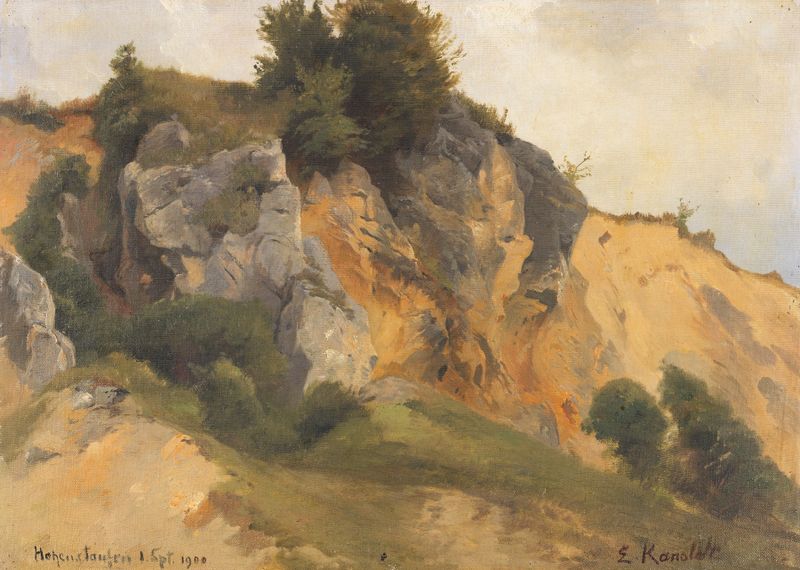
Felsterrain Bei Hohenstaufen
Edmund Kanoldt
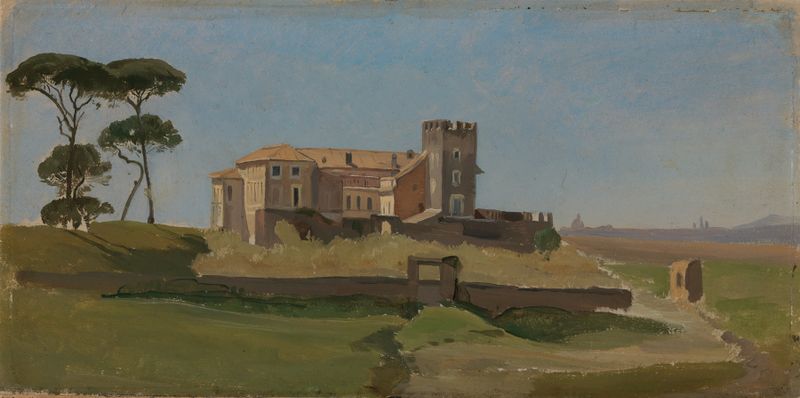
Motiv aus der römischen Campagna
Edmund Kanoldt

Im Park der Villa d’Este bei Tivoli
Edmund Kanoldt
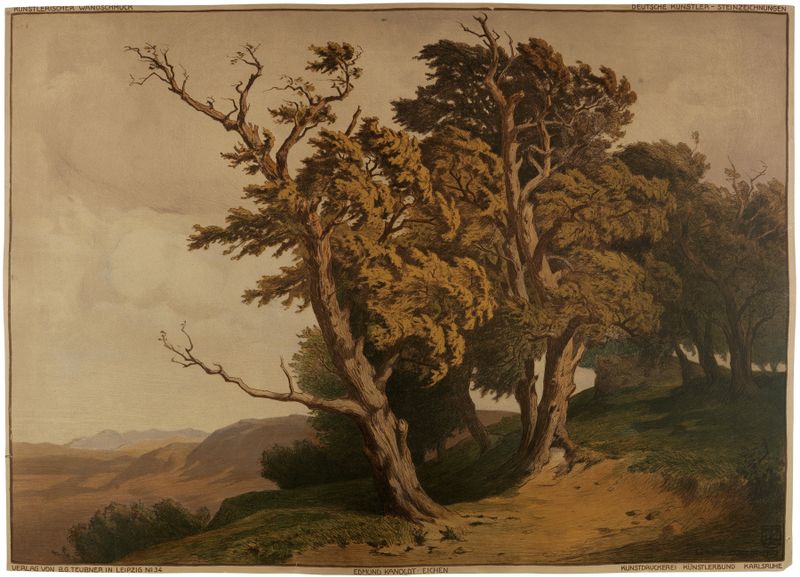
Eichen
Edmund Kanoldt
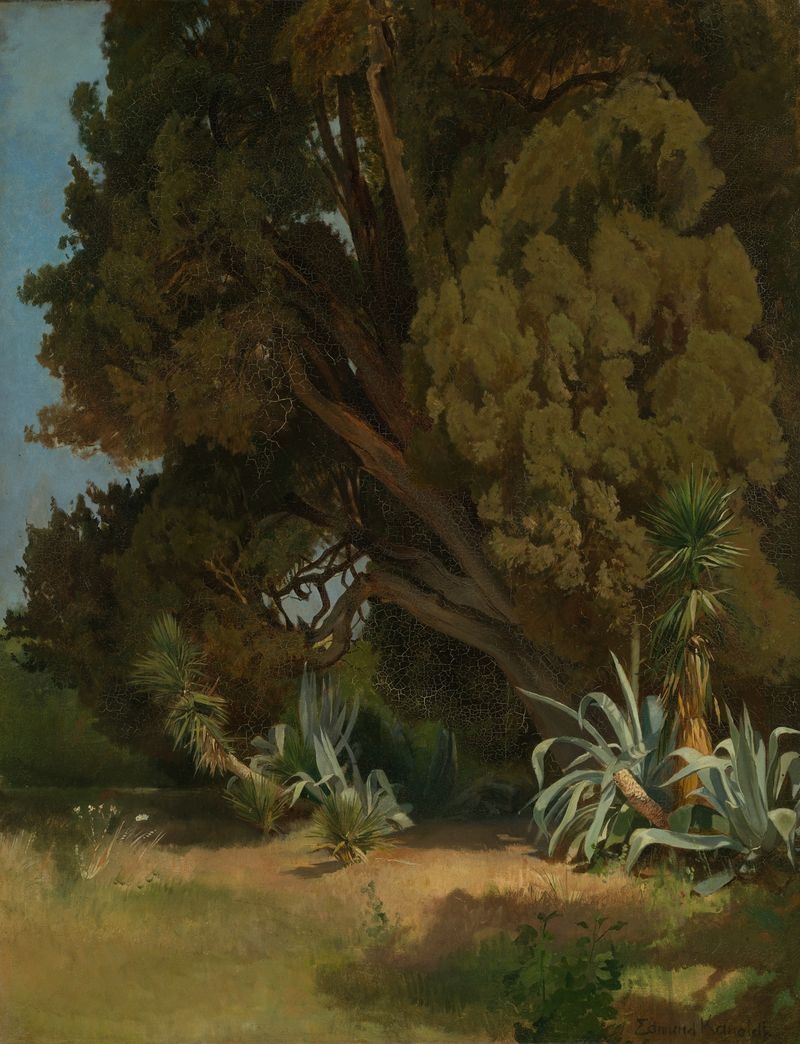
Baumstudie aus der Villa d’Este in Tivoli
Edmund Kanoldt

Italienisches Städtchen am Meer
Edmund Kanoldt
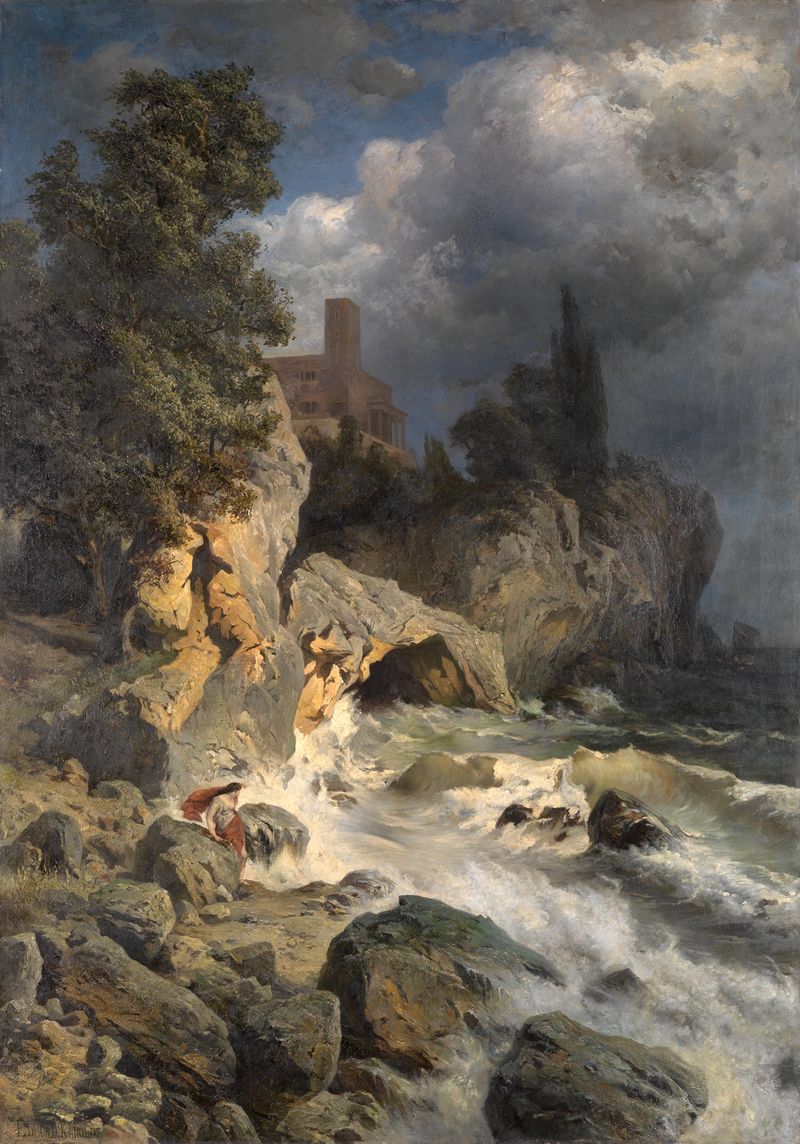
Landschaft mit Hero Leander erwartend
Edmund Kanoldt
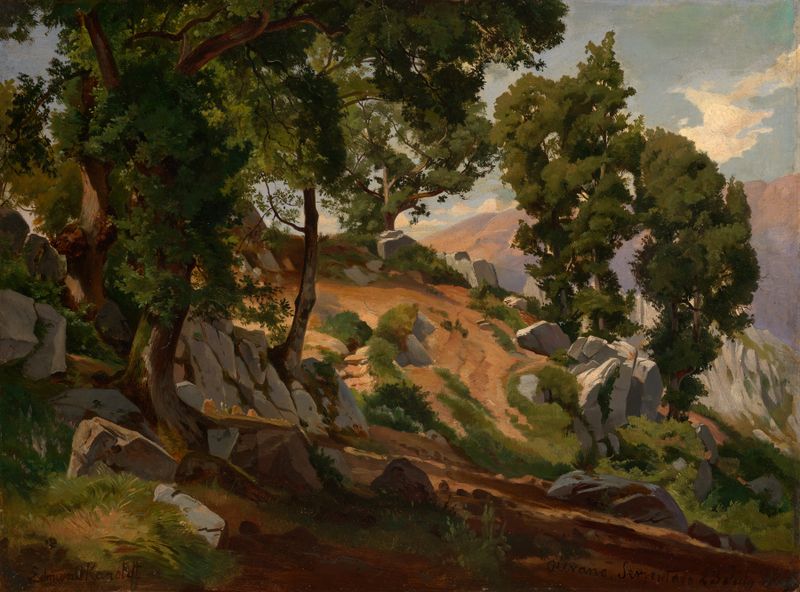
Aus der Serpentara bei Olevano
Edmund Kanoldt
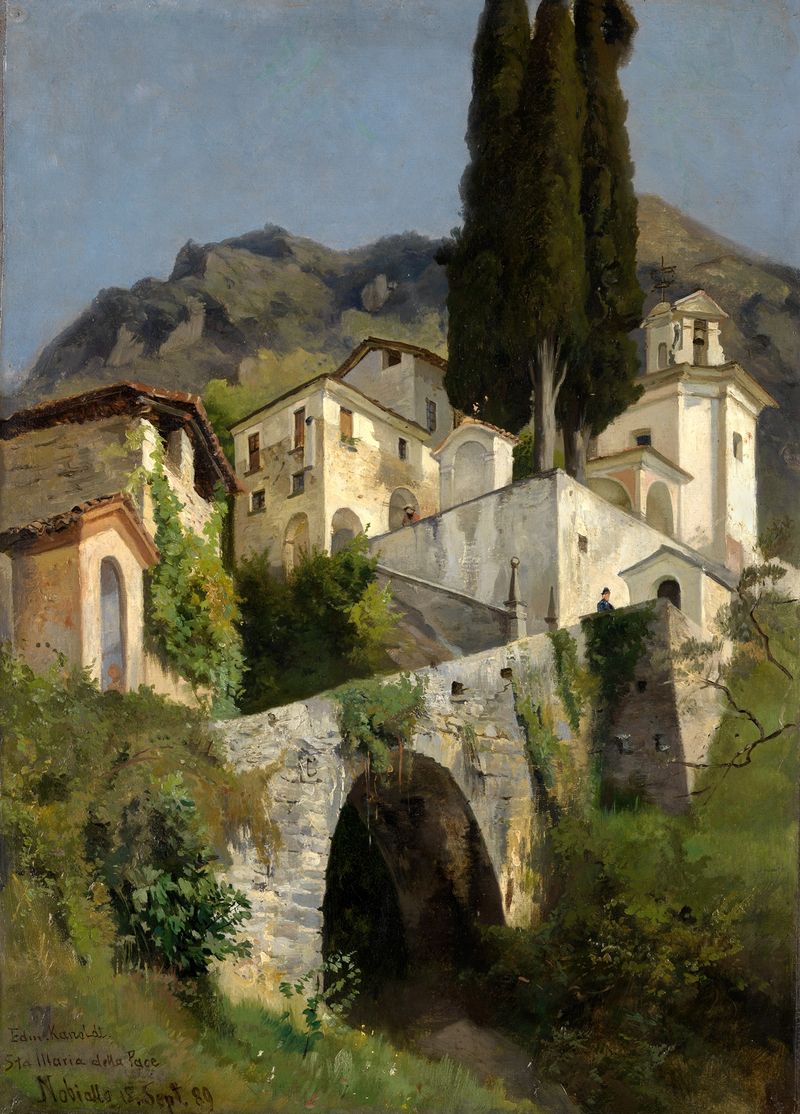
Sta. Maria della Pace in Nobiallo
Edmund Kanoldt





