
Felshang mit Bäumen bei Olevano — History & Facts
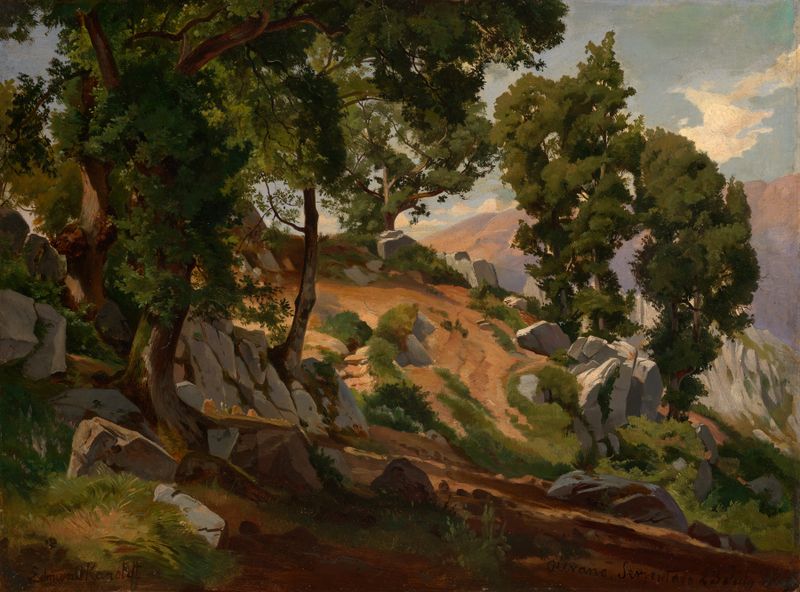
What if silence could speak through light? In Felshang mit Bäumen bei Olevano, the interplay of shadow and illumination reveals a narrative fraught with tension, suggesting a struggle beneath the serene surface. Focus first on the interplay of light that filters through the trees, casting dappled patterns onto the ground below. Notice how the artist employs a delicate palette of greens and browns, inviting the viewer to appreciate the lush foliage that sways gently in a breeze. The composition draws your eye along a path that stretches into the depths of the forest, creating a sense of both invitation and foreboding—a journey into the unknown.
Each brushstroke seems intentional, harmonizing nature’s beauty with an underlying sense of unease. As you delve deeper, observe the contrast between the tranquility of the trees and the dark shadows lurking in the corners of the canvas. This juxtaposition evokes a feeling of precariousness, as if the peaceful scene could transform at any moment. The silence, heavy with potential violence, speaks volumes about the hidden narratives that lie beneath the surface of nature.
The trees may stand tall, but their presence hints at unvoiced turmoil, echoing the conflicts of the era. In 1869, during a time of significant artistic transition in Europe, Edmund Kanoldt painted this piece while exploring the landscapes of Italy. The Romantic movement was in full swing, emphasizing emotion and the sublime in nature. As he immersed himself in the tranquil yet tumultuous Italian scenery, Kanoldt’s work reflected not only the beauty of the natural world but also the complexities and contrasts inherent in life itself—an embodiment of the tension that art can evoke.
More Artworks by Edmund Kanoldt
Browse all →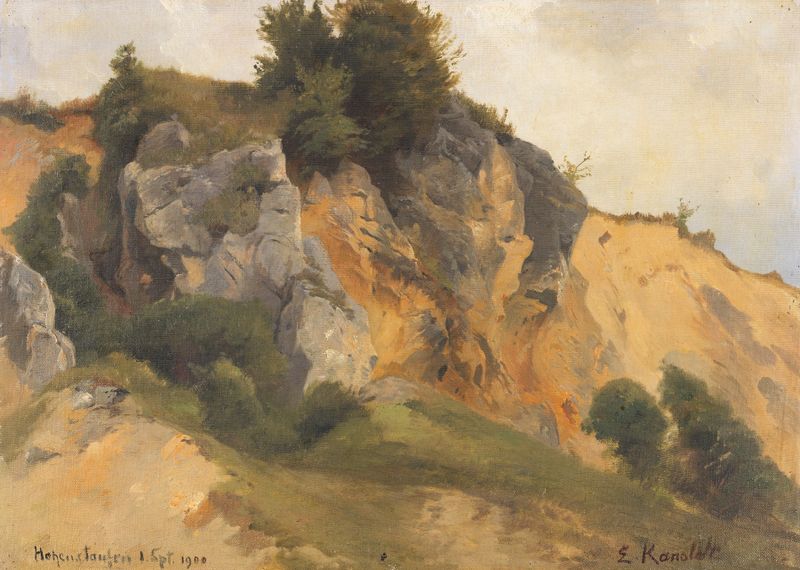
Felsterrain Bei Hohenstaufen
Edmund Kanoldt
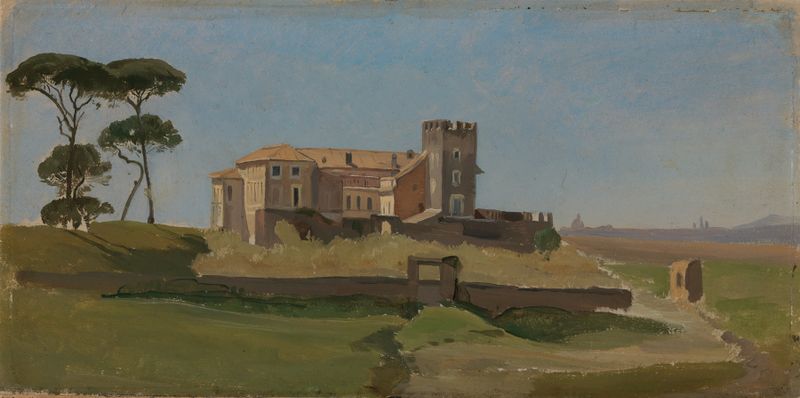
Motiv aus der römischen Campagna
Edmund Kanoldt

Im Park der Villa d’Este bei Tivoli
Edmund Kanoldt
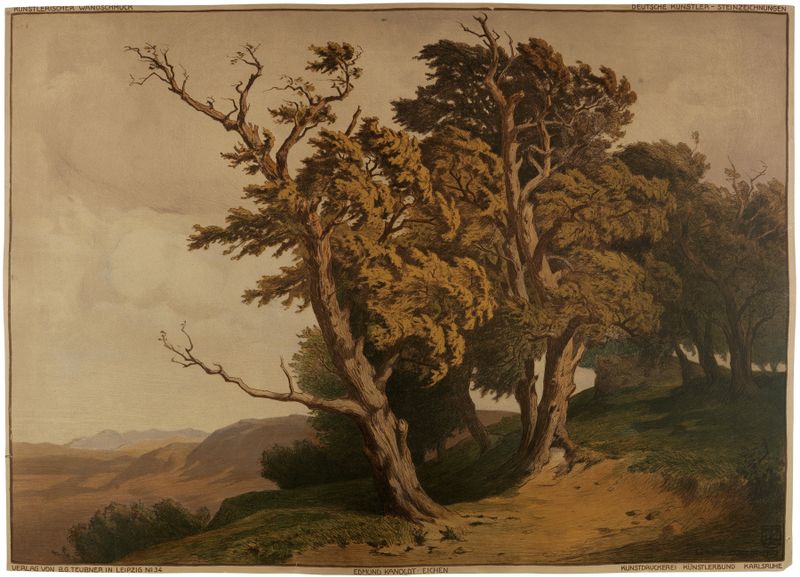
Eichen
Edmund Kanoldt
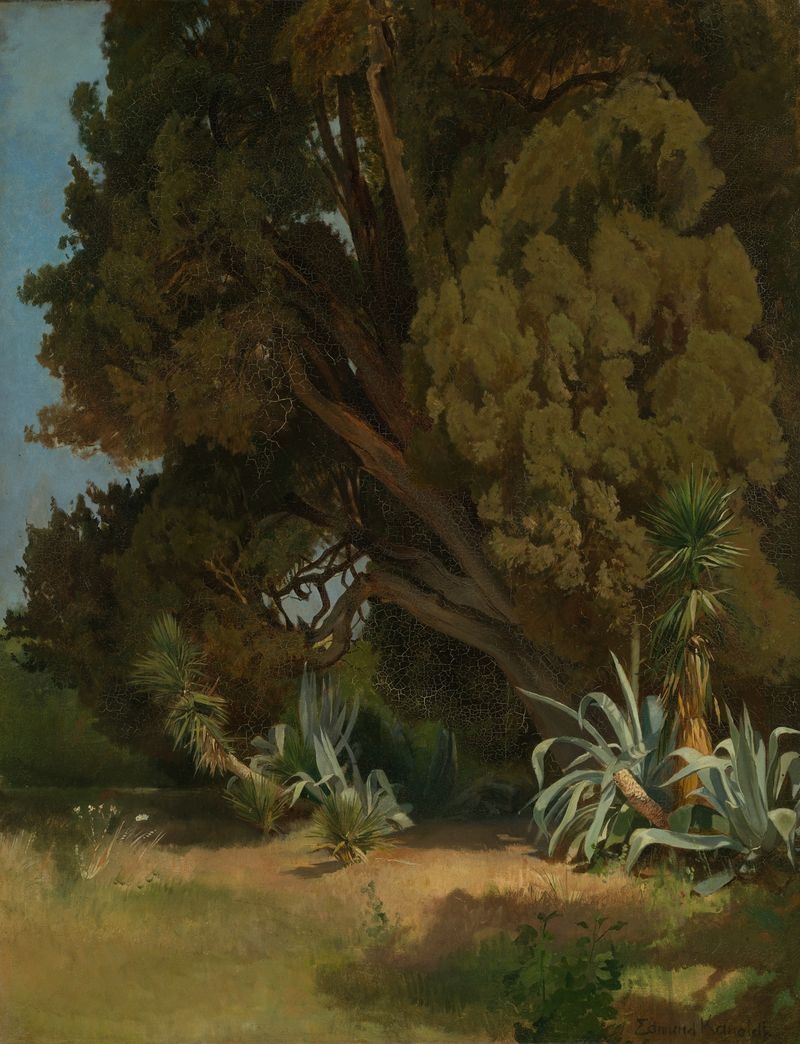
Baumstudie aus der Villa d’Este in Tivoli
Edmund Kanoldt

Italienisches Städtchen am Meer
Edmund Kanoldt
Landschaft mit Hero Leander erwartend
Edmund Kanoldt
Aus der Serpentara bei Olevano
Edmund Kanoldt
Sta. Maria della Pace in Nobiallo
Edmund Kanoldt

Abendstimmung aus der Villa Palavicini in Pegli bei Genua
Edmund Kanoldt





