Blick auf Schloß Neu-Eberstein bei Gernsbach im Murgtal — History & Facts
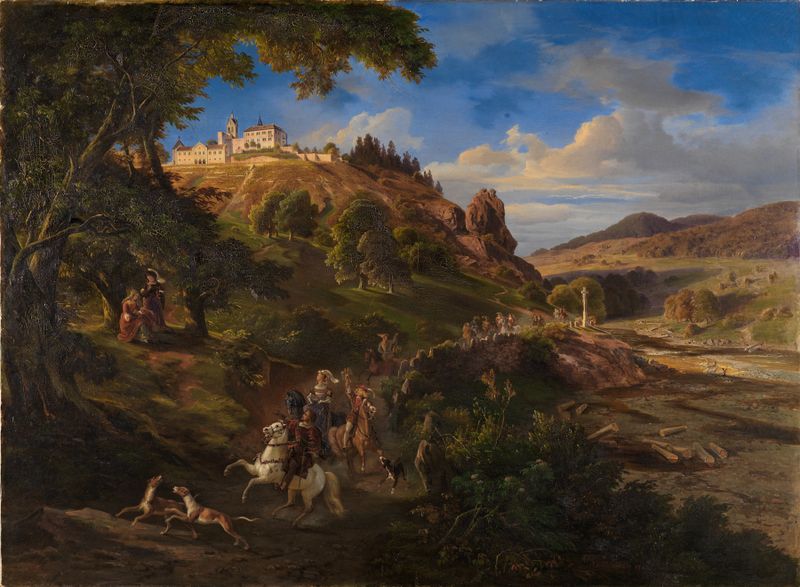
Could beauty survive in a century of chaos? The question lingers like an echo in the valleys of the Murgtal, where serene landscapes often mask underlying grief. Look to the center, where Schloss Neu-Eberstein stands majestically against a backdrop of soft hills. Notice the way warm light bathes the castle’s stone, each detail meticulously rendered to evoke a sense of timelessness. Surrounding it, the lush greens of the trees whisper stories of resilience, while the gentle ripples of the Murgt river reflect the delicate interplay of light and shadow.
The artist’s use of muted colors enhances the tranquility, inviting the viewer to linger and contemplate this harmonious coexistence. Yet, as you gaze deeper, contradictions emerge. The castle, a symbol of stability, looms over the landscape, hinting at a history of conflict and loss. The surrounding nature, vibrant yet somber, suggests an underlying tension—reminders of the turbulent times that lay just beyond the idyllic scene.
The light that seems to celebrate this beauty also casts long shadows, an invitation to reflect on what is left unsaid, a silent homage to the grief etched into the very fabric of the land. In 1846, the artist was navigating a rapidly changing world, marked by political unrest and shifting artistic movements. Working in the shadow of the romantic tradition, he sought to capture not only the surface beauty of his homeland but also the profound emotional undercurrents that defined it. This period was a time of both introspection and innovation in the arts, with many artists striving to find a balance between the natural world and the turmoil of human experience.