Schloß Eberstein bei Gernsbach mit mittelalterlichem Jagdzug — History & Facts
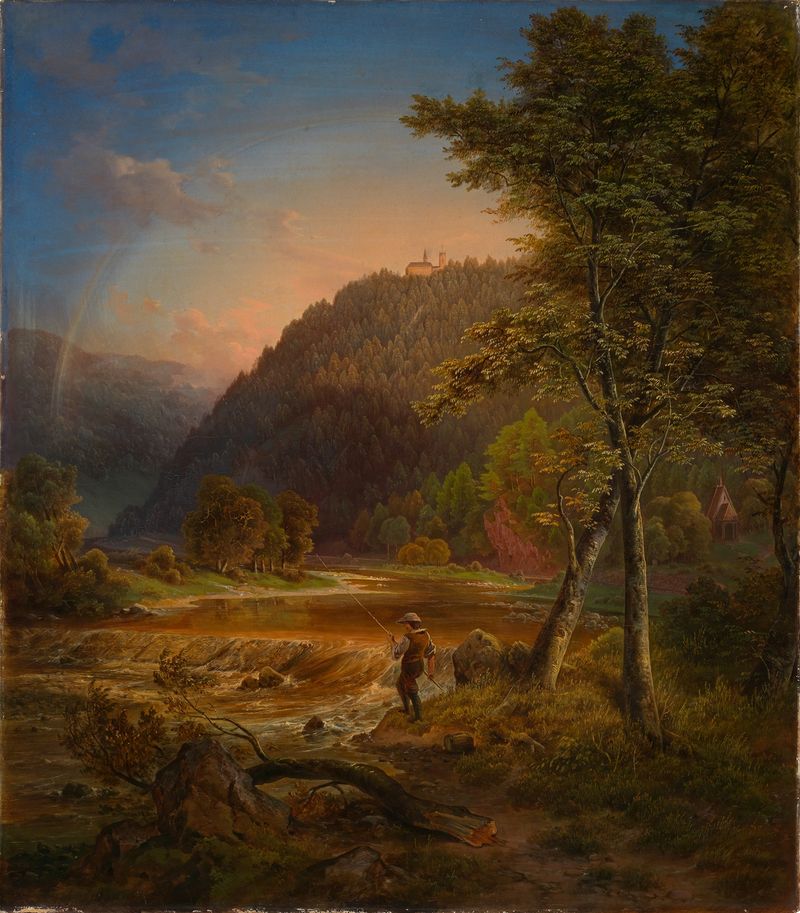
In its stillness, it captures a moment of innocence long past, inviting us to journey where time has paused, but memory endures. Look to the left at the grand castle, Schloß Eberstein, perched atop a verdant hill, its stone walls bathed in soft, golden light. The delicate strokes reveal its age, with shadows dancing in the crevices that suggest untold stories. Just beneath it, notice the hunting party, their vibrant attire contrasting with the muted greens and browns of the lush landscape, each figure meticulously crafted to exude both movement and purpose.
The careful arrangement of the composition draws the viewer's eye across the canvas, mirroring the natural flow of the scene. Beneath the surface, the painting holds a duality of innocence and ambition. The hunters’ eager gestures evoke a primal thrill, yet their purpose tinged with a hint of foreboding reminds us of the tension between nature and humankind. The interplay of light and shadow further accentuates this contrast, as the sun blesses the hunters while casting darker shades over the castle, suggesting a refuge that is both safe and distant. In 1843, Daniel Fohr painted this scene during a period of Romanticism in Germany, where landscapes became a canvas for personal reflection amid the rapid changes of the industrial age.
Living in a time of political upheaval and societal transformation, he sought solace in the familiar beauty of the past, encapsulating a world where innocence still thrived, if only on canvas.