Rübezahls Walten im Riesengebirge — History & Facts
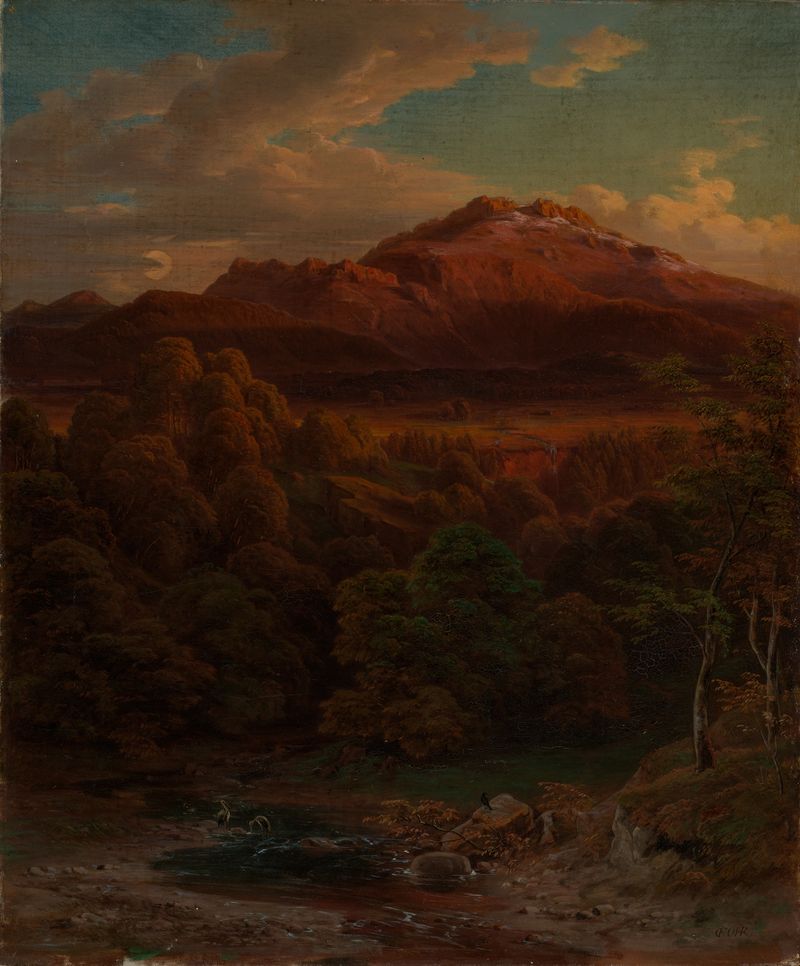
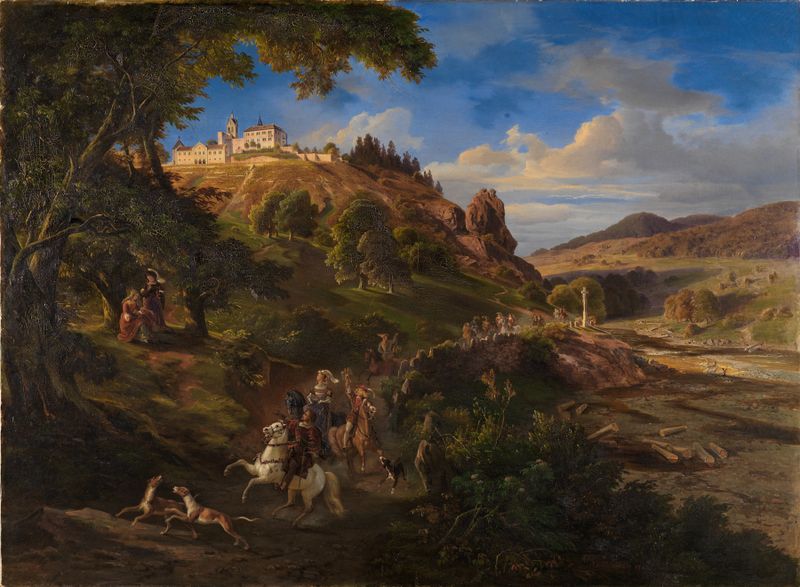
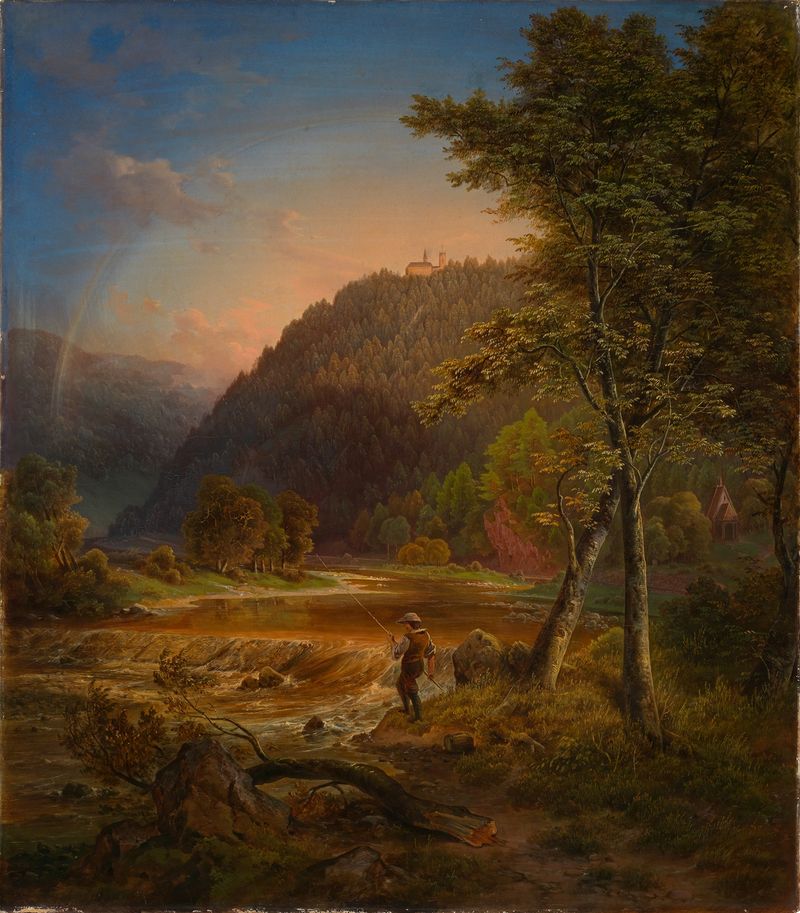
Can beauty exist without sorrow? In Rübezahls Walten im Riesengebirge, the ethereal quality of the landscape whispers the answer, suggesting that hope often emerges from the depths of despair. Look to the foreground where delicate, intertwining roots emerge from the earth, leading your gaze toward the vibrant greenery that sprawls across the hills. Notice how the artist employs a symphony of greens, mixed with earthy browns, to create a lush tapestry teeming with life. The sky, a blend of soft blues and dramatic whites, contrasts sharply with the grounded feel of the forest, wrapping the scene in a protective embrace.
Each brushstroke holds a sense of movement, as if the wind dances through the foliage, inviting you into this serene yet complex world. Within this idyllic scene lies a subtle tension between light and shadow, suggesting an ever-present duality. The interplay of brightness in the clouds hints at a hopeful dawn, while the shaded areas in the forest evoke a sense of mystery and perhaps a hint of melancholy. Scattered throughout the landscape, the hidden treasures—a forgotten path or a barely-visible figure—speak to the notion of journeys both physical and emotional, inviting contemplation on the interplay between joy and sorrow. Daniel Fohr created this work in a time when Romanticism was gaining momentum in the mid-19th century, particularly in Central Europe.
Before 1861, he was influenced by the philosophical and artistic currents that valued nature as a source of beauty and reflection. As he painted, Fohr navigated the complexities of a rapidly changing world, where the sublime and the tragic coexisted, echoing the sentiment that beauty often emerges hand-in-hand with sorrow.