Der Chiemsee — History & Facts
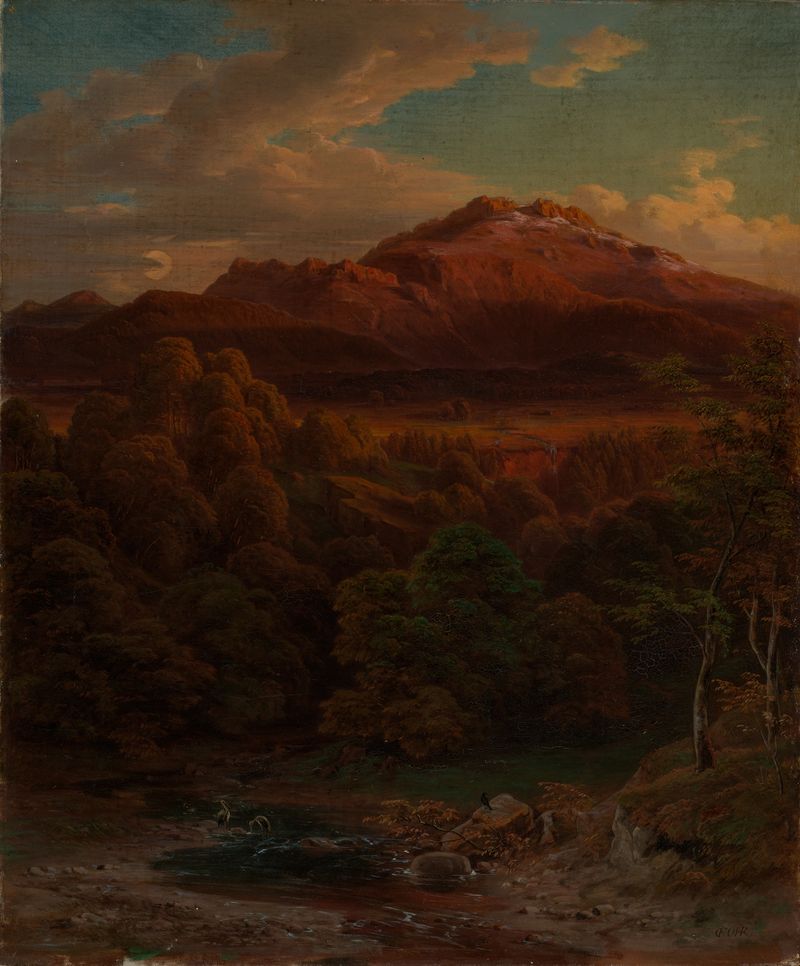
Is this a mirror — or a memory? The still waters reflect not just the landscape but the echoes of the past, inviting the viewer to question the essence of perception and reality. Look to the foreground, where the shimmering surface of the lake captures the surrounding mountains in perfect clarity. The soft blues and greens meld seamlessly, while gentle strokes of white suggest the play of light—each brushstroke alive with texture. Notice how the composition draws your gaze upwards towards the majestic peaks that loom above, their silhouettes both imposing and serene against the expansive sky. This painting embodies a profound tension between stillness and movement, as the tranquil lake evokes a sense of calm, yet its mirrored surface holds fragmented memories of what once was.
The delicate interplay of light and shadow creates a haunting atmosphere, reflecting the quiet solitude of nature. Here, the artist captures not only the beauty of the landscape but also the fleeting nature of time, suggesting that what we perceive can often be a blend of reality and nostalgia. In the years between 1830 and 1840, the artist found himself in a period of exploration amidst the Romantic movement in Germany. Fohr, influenced by the surrounding beauty of Chiemsee, painted this work during a time when artists sought to express their emotions through landscapes, capturing the sublime in a world full of industrial change.
It was a moment that defined much of his later work, as he embraced the romantic ideal of nature as a reflection of the soul.