
Rom Forum Boarium — History & Facts
In a world saturated with the hues of life, it is often in the stillness of a moment where the most profound revelations await. As you gaze at the piece, look to the vibrant cerulean sky that envelops the scene, drawing your eye upwards. Notice how the warm, golden tones of the ancient ruins beneath contrast with the coolness overhead, creating an emotional dialogue between the past and present. Observe the meticulous brushwork that brings each stone to life, capturing the weight of history while allowing the surrounding nature to breathe and flourish. Delve deeper, and you'll find the juxtaposition of permanence and transience.
The robust structure hints at the strength of civilization, yet the encroaching foliage suggests nature’s inevitable reclaiming. The play of light and shadow across the stones reveals a dance between time and memory, evoking a sense of nostalgia and longing for what has been lost yet remains immortalized in color. Franz Alt created this work in 1859, during a transformative period in his career, while living in Italy. This time was marked by personal exploration and a burgeoning appreciation for the interplay of light and landscape in art.
The mid-19th century also witnessed the rise of Romanticism, which profoundly influenced his palette and perspective, as he sought to capture not just the visual but the emotional essence of his surroundings.
More Artworks by Franz Alt
Browse all →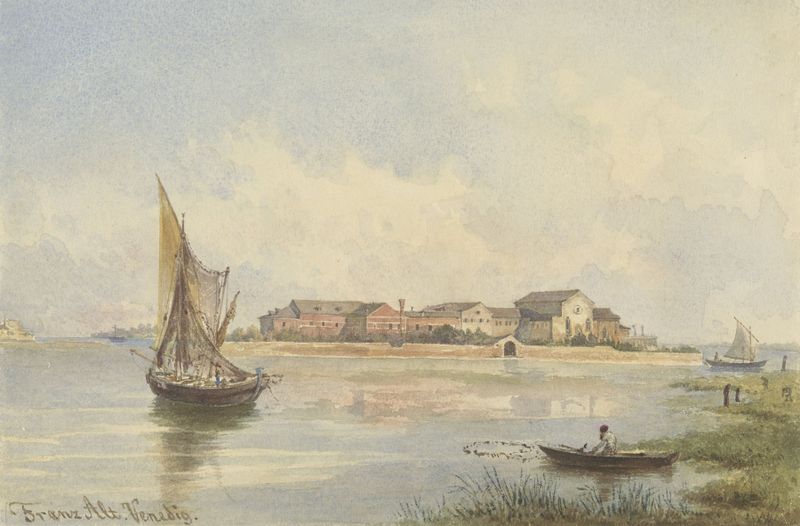
Gezicht op de Lagune te Venetië
Franz Alt
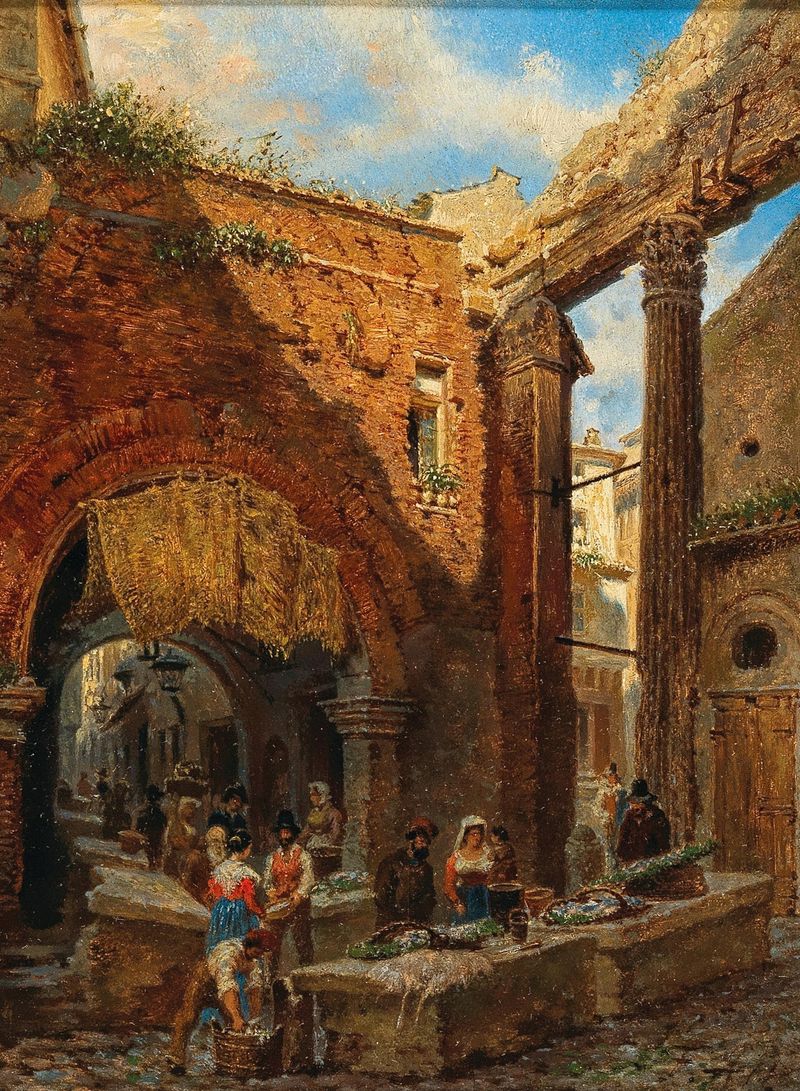
Rom Portico di Ottavia mit dem alten Fischmarkt
Franz Alt
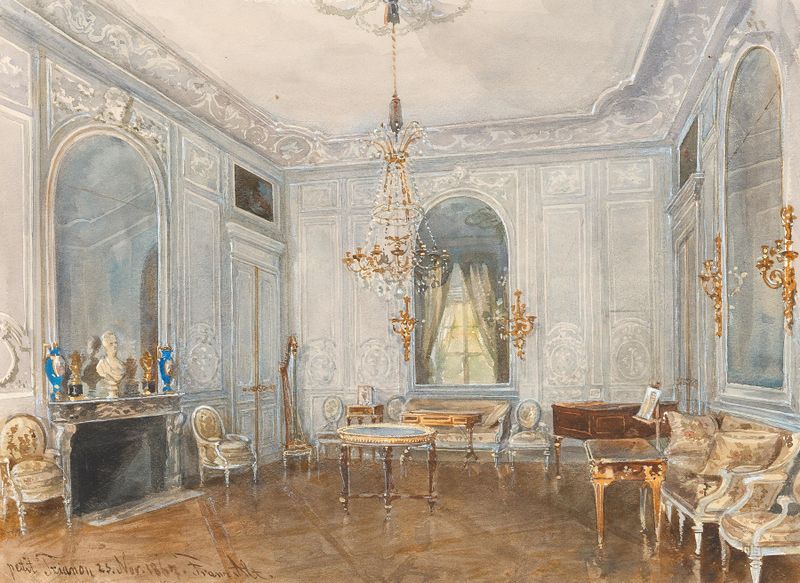
The dining room in the Petit Trianon, Versailles
Franz Alt

Blick in den Mailänder Dom
Franz Alt

Galerie d’Apollon in the Louvre, Paris
Franz Alt
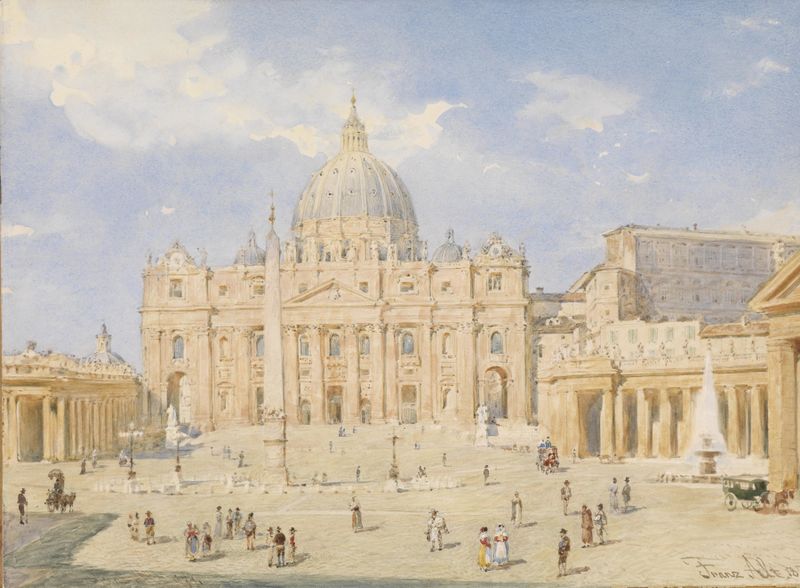
Petersplatz Rom
Franz Alt

Rome, a View of the Portico di Ottavia with the Old Fish Market
Franz Alt
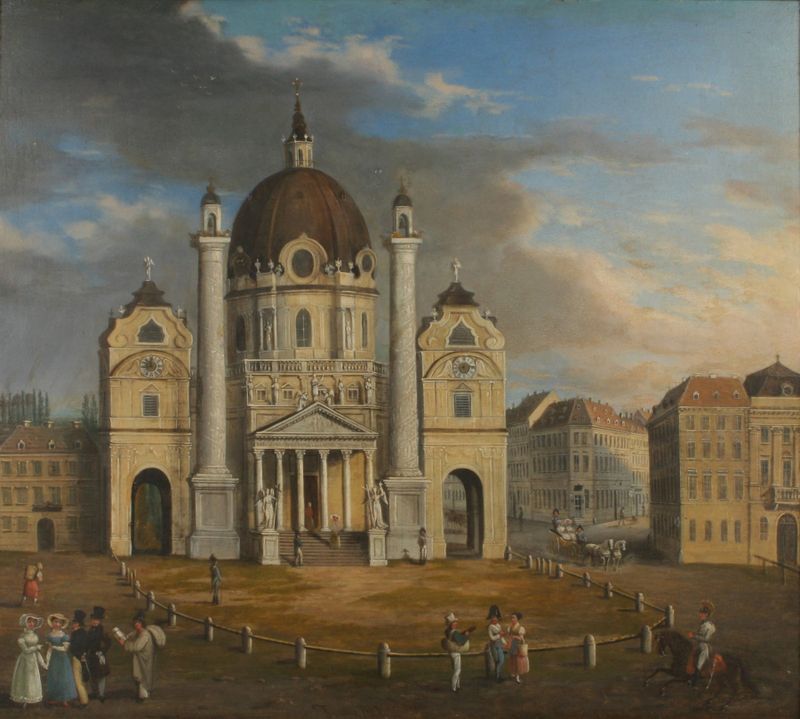
Blick auf die Karlskirche
Franz Alt

Dresden Stiege zur Brühlschen Terrasse
Franz Alt
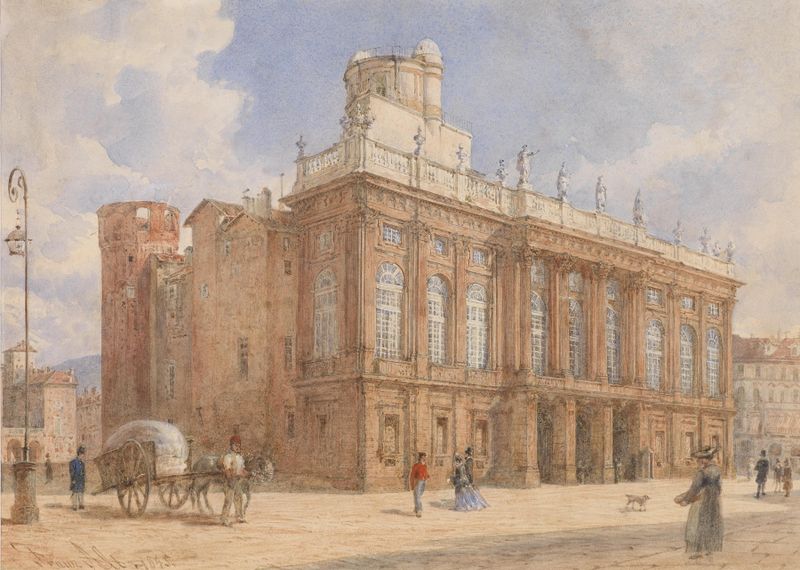
Castello Reale in Turin
Franz Alt





