
Blick In Die Bucht Von Triest — History & Facts
Is this a mirror — or a memory? In Blick In Die Bucht Von Triest, a horizon stretches toward infinity, inviting us to ponder the distance between longing and fulfillment. The tranquil bay and its gentle waves murmur promises of hope, beckoning us to traverse the unseen boundaries of our own dreams. Look to the left at the soft, pastel colors of the sky, where warm oranges and subtle blues blend harmoniously. The sun, descending toward the water, casts a golden shimmer that dances upon the surface, drawing the eye to the serene reflection of the landscape.
Notice how the detailed treatment of the trees and hills enhances the ethereal quality of the scene, each brushstroke capturing the essence of nature's quiet beauty, while the almost spectral light imbues it with a sense of yearning. Yet, beneath the serene beauty, there lies an emotional tension between the present moment and the past. The distant boats, mere silhouettes, seem caught in an eternal waiting, representing unfulfilled aspirations. The interplay between the calmness of the water and the distant mountains evokes a bittersweet nostalgia, suggesting that hope itself can be both a bridge and a barrier, connecting us to a desired future while reminding us of the distance yet to be traveled. In the summer of 1859, Rieger painted this evocative work in Trieste, a city bustling with the energy of the Austro-Hungarian Empire.
During this period, he was immersed in the Romantic ideals of nature and emotion, reflecting the collective yearning for meaning amidst industrial change. This piece captures not just a view of a bay, but also the spirit of an era, bridging the aspirations of a changing world with the timeless beauty of the landscape.
More Artworks by Albert Rieger
Browse all →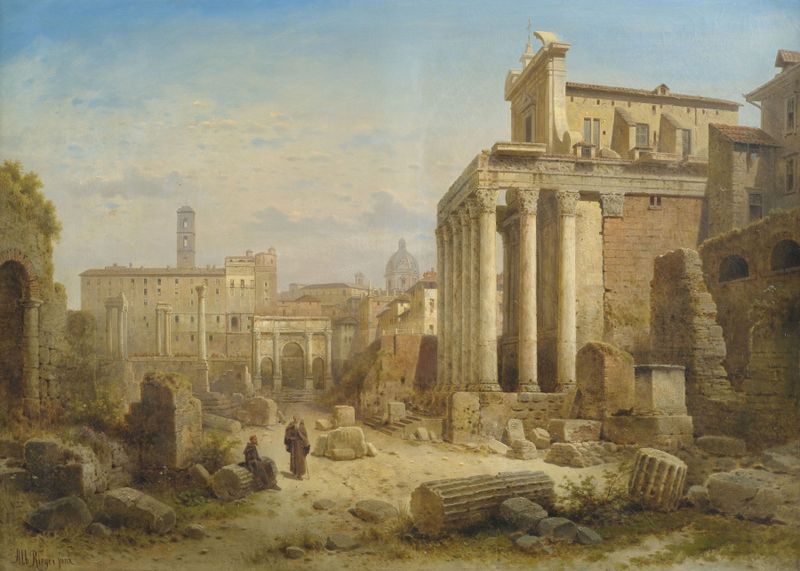
Blick auf das Forum Romanum mit dem Septimius-Severus-Bogen und dem Tempel der Faustina und des Antonius Pius
Albert Rieger

Segelschiffe Vor Venedig
Albert Rieger

The Naval Battle of Lissa
Albert Rieger

The Orient In The Evening Light
Albert Rieger
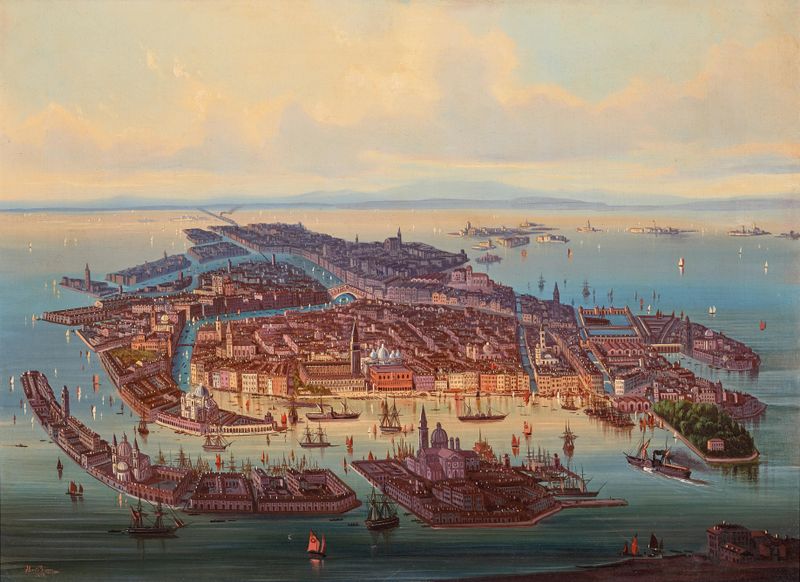
A Panoramic View Of Venice
Albert Rieger
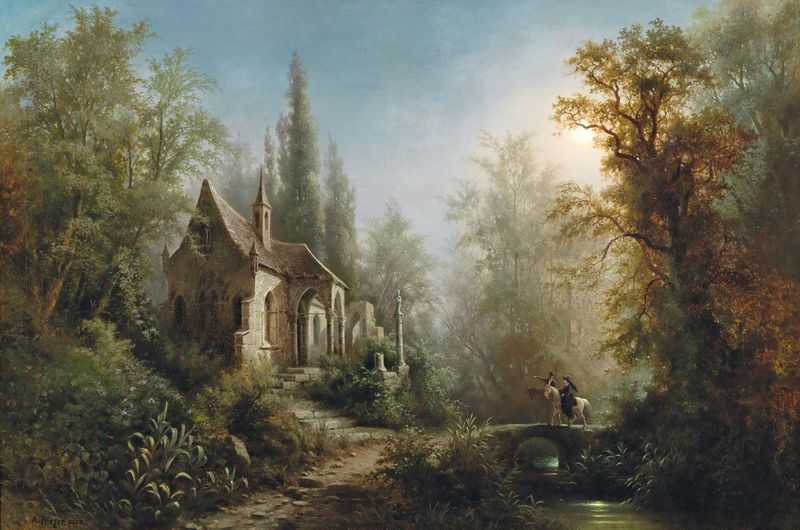
A Moonlit Night Over A Chapel And Riders
Albert Rieger
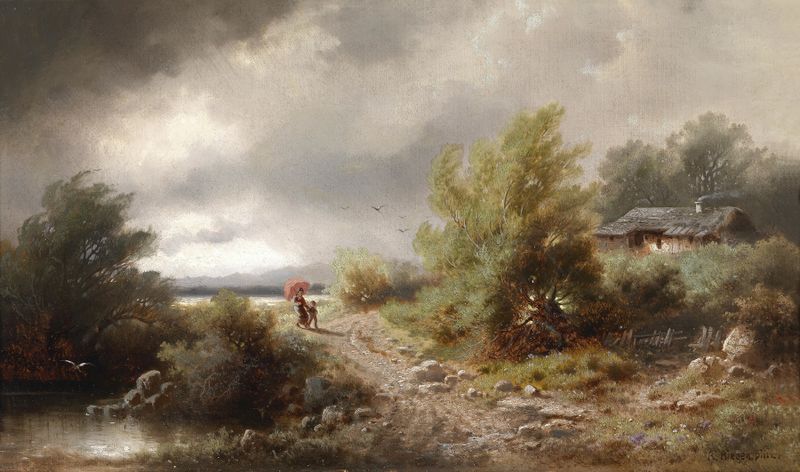
Aufziehendes Gewitter
Albert Rieger

Mountain stream
Albert Rieger
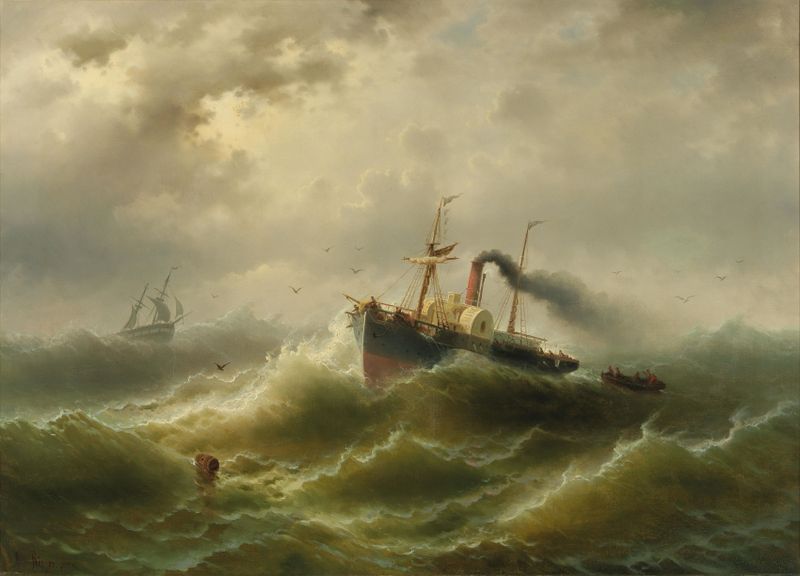
Steamboat In A Storm On The North Sea
Albert Rieger
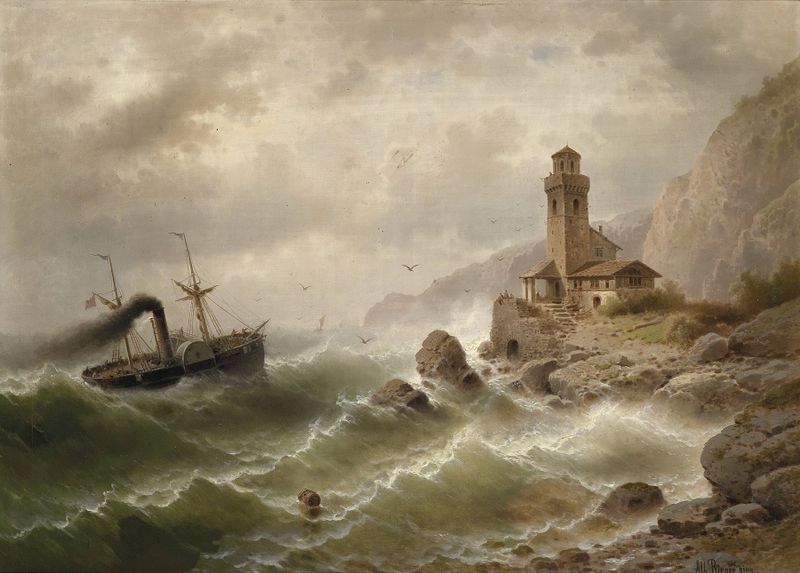
Dampfschiff vor der Küste
Albert Rieger





