Blue Jays In Winter, Study For Book Concealing Coloration In The Animal Kingdom — History & Facts
Is this a mirror — or a memory? In the interplay of nature and art, the boundaries blur, beckoning us to reconsider our relationship with the world around us. The painting echoes the complexities of existence, urging viewers to delve into the unseen connections that bind us to the beauty of life. Look to the left at the delicate contours of the blue jay, its feathers a symphony of azure and cerulean that pulse with life against a stark winter backdrop. The artist's choice of soft brushstrokes contrasts with the crisp lines of the surrounding snow, evoking a sense of serenity in a harsh landscape.
Notice how the light dances upon its wings, casting subtle shadows that enhance the depth of its plumage, bringing the bird to life while simultaneously anchoring it in its snowy environment. Beneath the surface, the painting speaks to the duality of existence. The blue jay, a vibrant symbol of vitality, stands resilient amidst the cold encroachment of winter, serving as a metaphor for faith in the face of adversity. The juxtaposition of color and monochrome reflects a deeper emotional tension, suggesting that even in bleak moments, beauty persists.
This duality invites contemplation on survival, adaptation, and the sustaining power of hope. Created between 1905 and 1909, the artist was deeply immersed in exploring the intersection of nature and camouflage at a time when the scientific community was igniting interest in natural history. Living in New Hampshire, Thayer was influenced by the surrounding landscape and animal life, positioning himself as a crucial figure in both American art and early environmental thought. His vision sought to inspire a greater appreciation for nature's subtlety and complexity, reflecting the transformative power of observation and the belief that art can reveal hidden truths.
More Artworks by Abbott Handerson Thayer
Browse all →
Mount Monadnock
Abbott Handerson Thayer

Winter, Monadnock
Abbott Handerson Thayer

Mount Monadnock
Abbott Handerson Thayer

Mount Monadnock
Abbott Handerson Thayer

Winged Figure
Abbott Handerson Thayer

Dublin Pond, New Hampshire
Abbott Handerson Thayer

The Sky Simulated By Red Flamingoes, Study For Book Concealing Coloration In The Animal Kingdom
Abbott Handerson Thayer
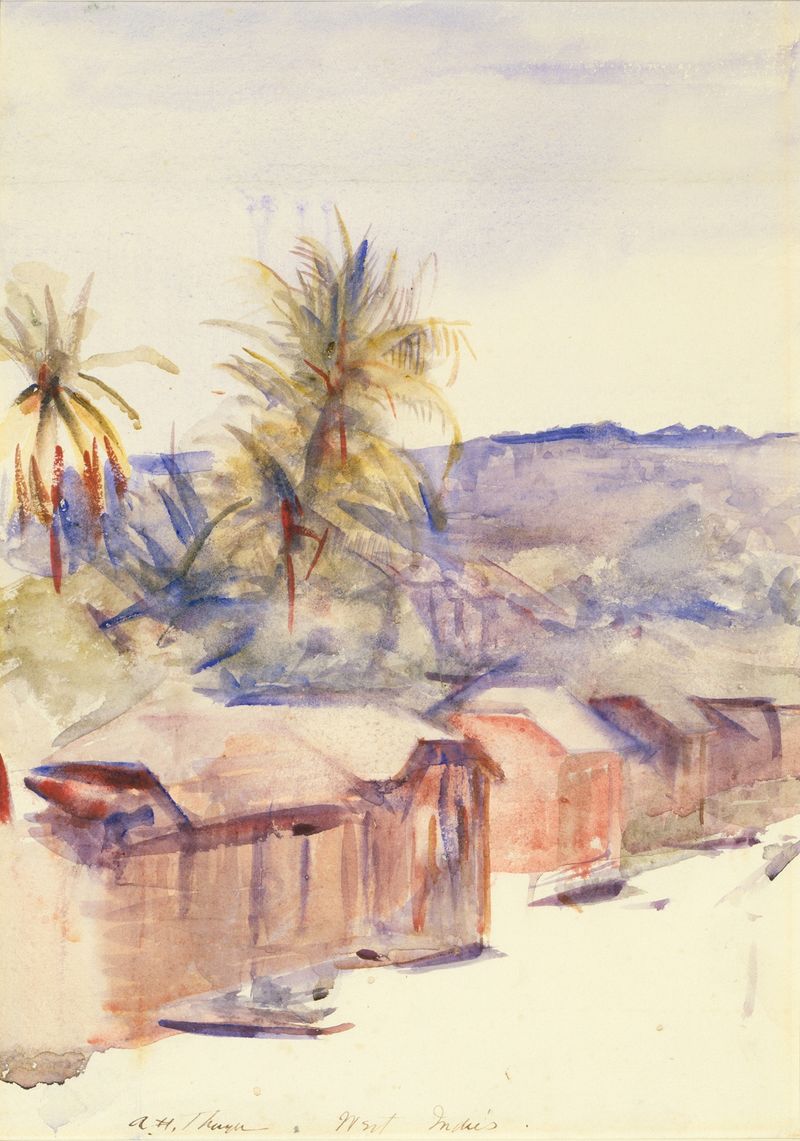
Village Street, Dominica
Abbott Handerson Thayer
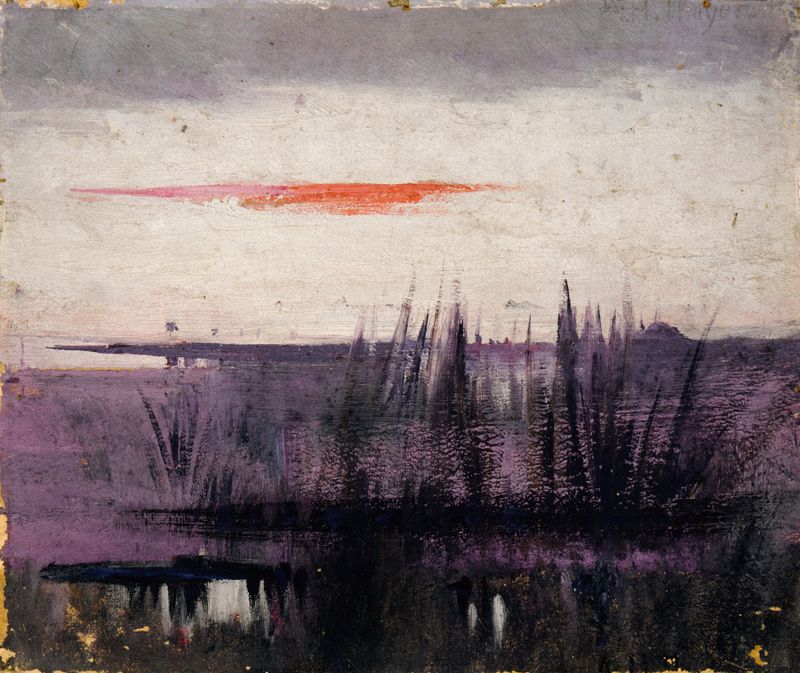
The Sky Simulated By White Flamingoes Study For Book, Concealing Coloration In The Animal Kingdom
Abbott Handerson Thayer
Angel
Abbott Handerson Thayer